

In the days of yesteryear, we would flock to video arcades, movie theatres, local convenience stores and pizzerias in order to dump quarters into our favourite arcade games. Back then, video games were made more difficult on purpose in order to make money, which is a tactic that continued into home consoles. This was partially due to the rental market, as well, and is why people often say that games have gotten easier over the years.
Mechaconda – a new bullet hell experience from solo Brazilian developer, NATO Games, and publisher QUByte Interactive – is one title that would have fit in perfectly back in those days. This is not just because of its short burst style of arcade gameplay, but also the immense challenge it presents. The game features three different modes, but none of them are easy or accessible, so be warned.
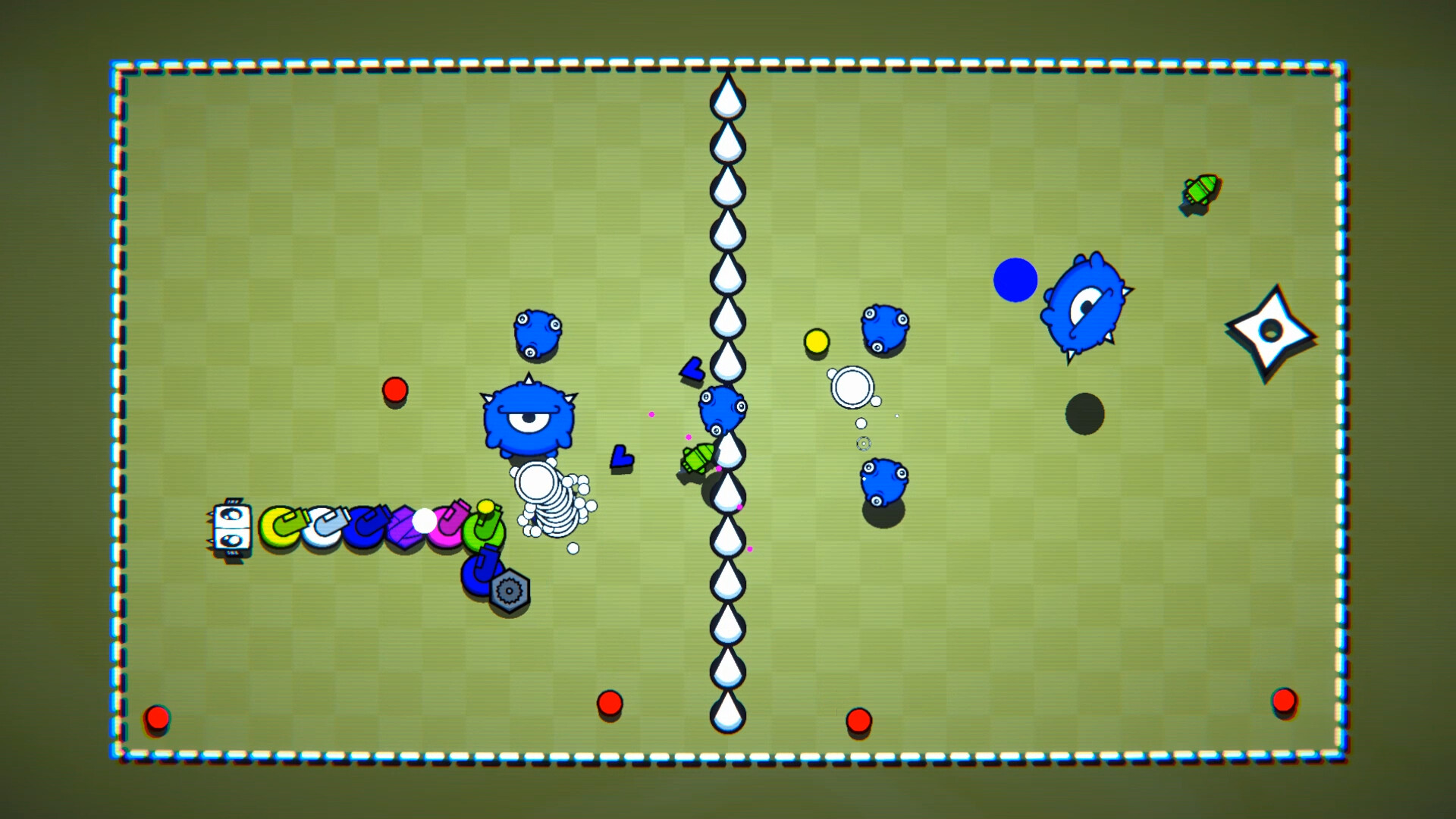
The set-up involves a young boy controlling a mechanical serpent, by way of a robot, in order to fight back against a bad guy named Dr. Evil. It’s pretty simple, but doesn’t need to be any more complex. After all, this isn’t a game that requires much of a story, or one at all.
Those who’ve been gaming for some time now will recognize the design as being a mix between the classic Snake game and a bullet hell styled experience. That’s because the goal is to kill enemies and unique bosses by winding one’s way across a grid, in a serpentine fashion. As the player does this, they must jump over and otherwise avoid random spike walls, not hit enemies and also try not to get hit by projectiles. Failure to do this will result in a quick death and game over screen.
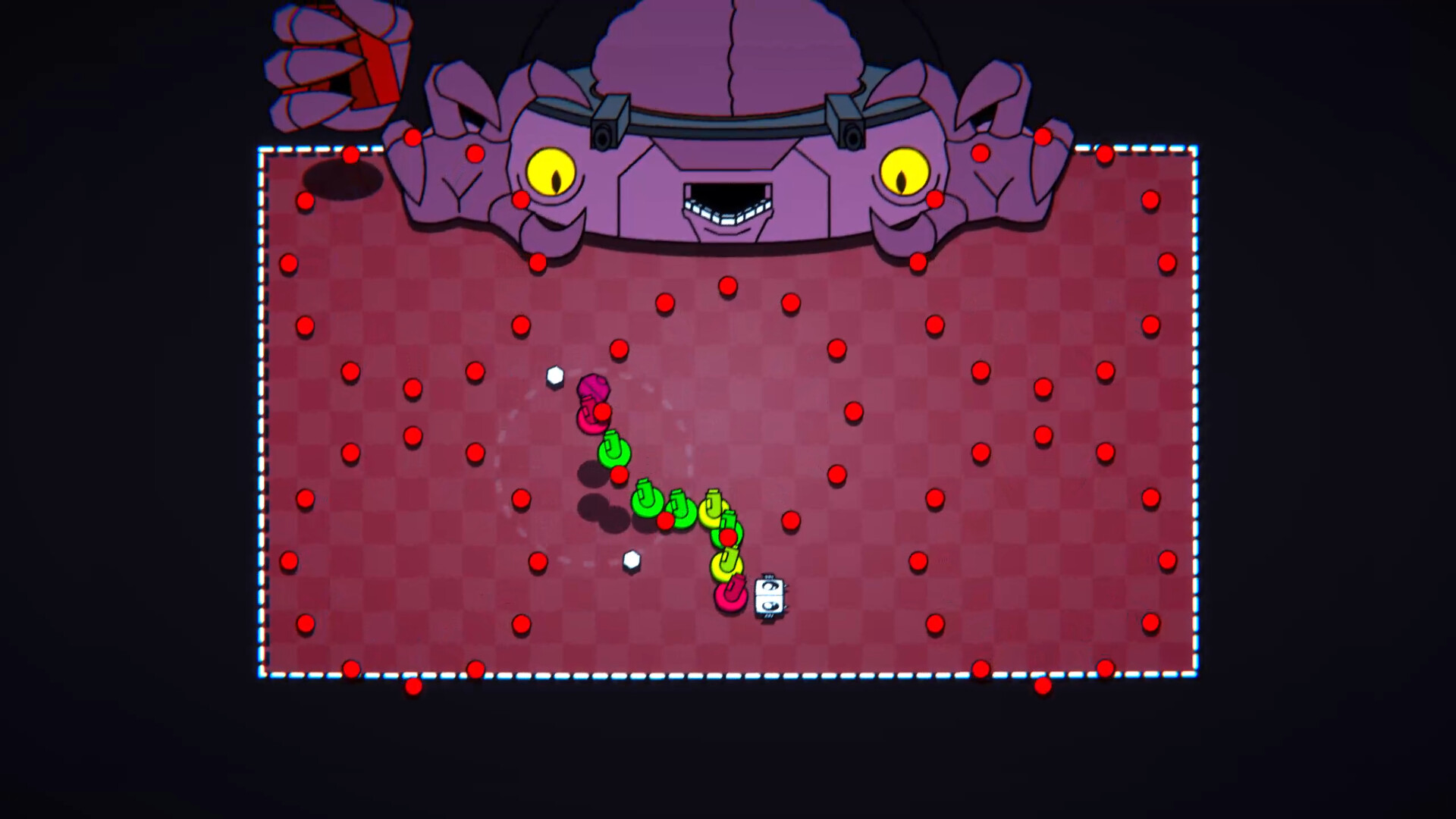
What makes this title unique is the fact that it is based around picking up different modules for your rig, all of which attach to it and make it both longer and more serpentine. The player begins with a vey small and basic one, with the ability to fire single bullets at a moderate pace. As each level progresses, more and more train cars, if you will, become available for pick up, and provide player agency. One must choose which types to pick up, be they lasers, missiles launchers, defensive shields that create protective orbital barriers or empty segments.
Getting longer obviously adds to the challenge, but there’s more to it than just that. Getting hit causes pieces to fall off and essentially scatter, and failure to pick them back up leaves one vulnerable. Being left with just the kid and his robot creates a lot of anxiety, so to speak, because it reduces things to a one hit kill scenario. This design was honestly too difficult and unforgiving, and wasn’t accessible at all, even though it’s possible to go off-screen and then reappear on the opposite side.
Having to frantically try to pick lost parts back up can lead to player error and frustration. It also doesn’t help the strategic aspect that the developer seems to promote. Nor does being forced to almost always hold the fire button. On top of that, the movement and controls can be a tad slippery or imprecise.
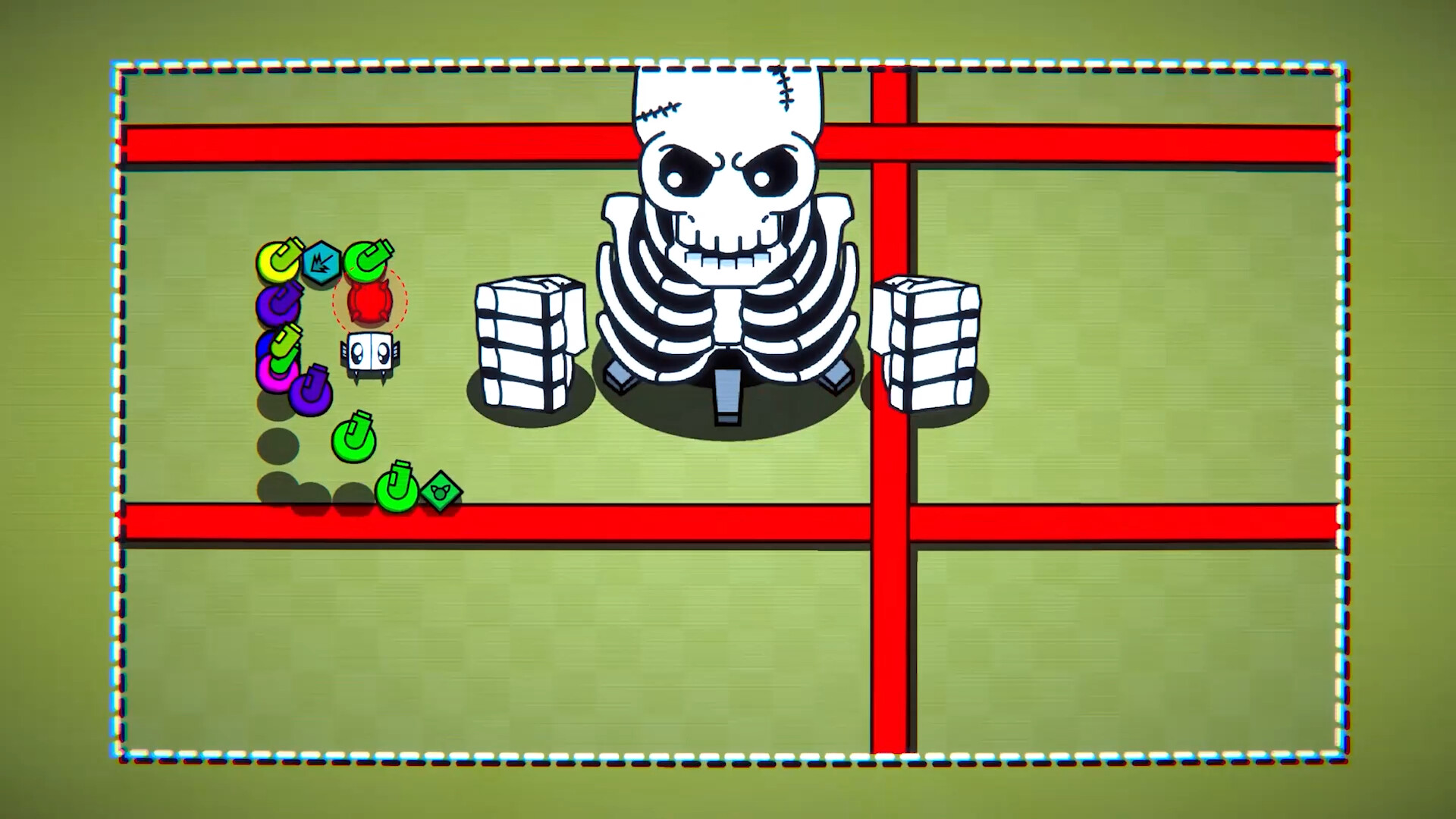
The first game type is the campaign, which introduces the basic storyline and then has the player battling through series of these grid-based stages. It starts the pilot off with a very small and basic train, but wants them to be able to take out enemies that are better suited for a more evolved one with added weaponry. It’s simply too demanding and unforgiving, and becomes frustrating as a result.
After that, the list includes a roguelike mode and a boss rush scenario. These are better, because the former randomizes your upgrades, offering much needed variety, while the latter gives the player a good starting loadout to work with. They’re both still overly difficult, though. Still, there are some creative and unique bosses, like a cat who kicks a ball of yarn out at the player.
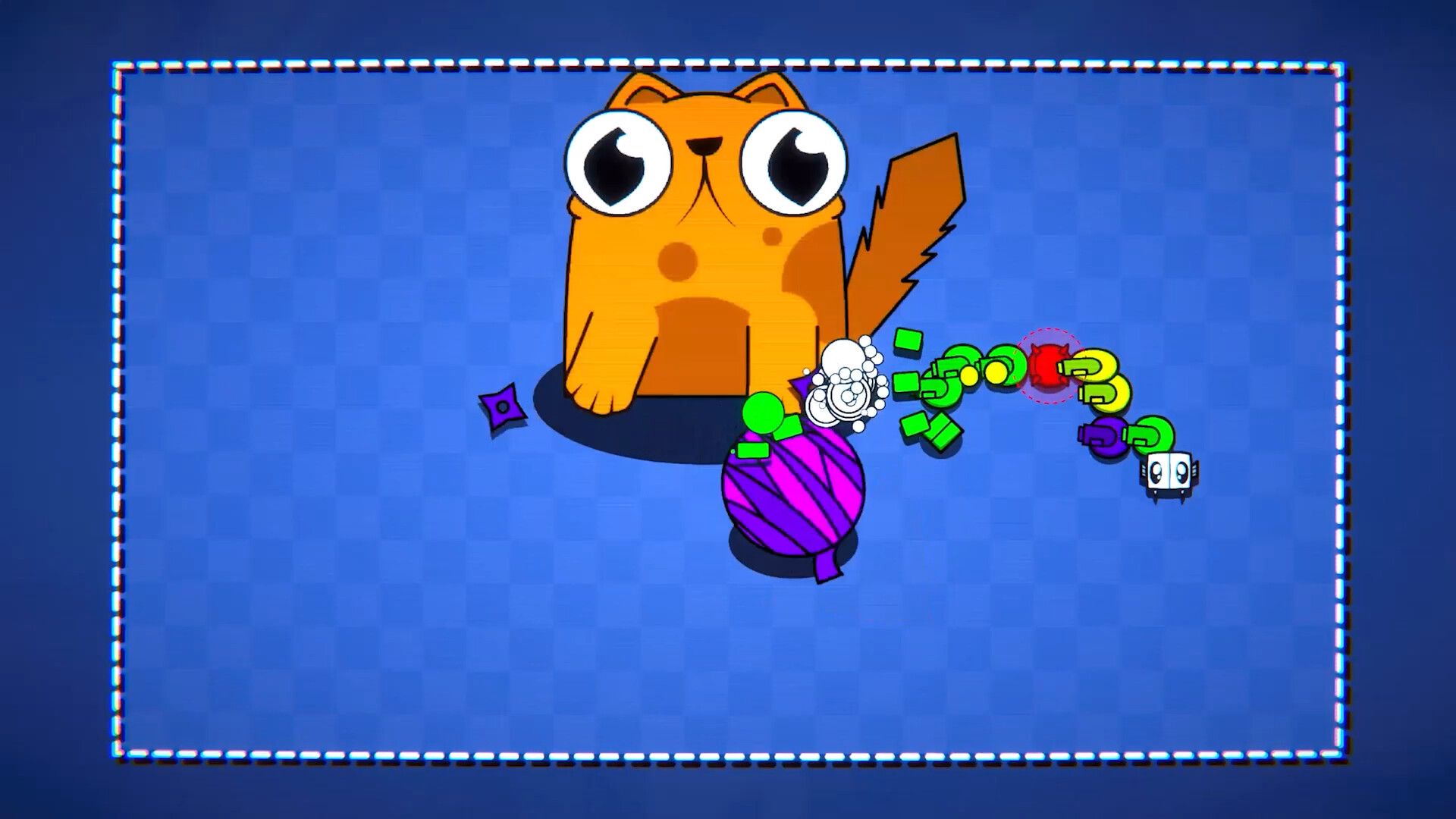
Mechaconda‘s inspirations are obvious, and this extends to its presentation. It’s a colourful game, with chunky sprites, interesting character designs and a cartoon style. The soundtrack continually thumps, and fits the game well.
With all that being said, I must admit that Mechaconda wasn’t exactly for me. While I appreciated the ideas behind it, and respected what the developer wanted to do, I found it to be too difficult, frustrating and unforgiving. There are some really good building blocks here, at an inoffensive price of $7.99 USD. However, the final product doesn’t come together as well as one would’ve hoped. I do, however, feel that this game will find a niche community that will fall in love with it.
This review is based on the PlayStation 5 version of the game, which we were provided with.