

We’ve probably all heard the stories about King Arthur and Sir Lancelot. They’ve been told over and over again, via the written word, movies and the like. It’s almost popular knowledge at this point, or at least is in certain parts of the world.
When I started the relatively new game, Blades & Battles, I didn’t realize that it was based on those two. It is, though, and in a relatively odd way. You see, this retro styled experience begins as a scantily clad jungle priestess, of some sort, comes to their village (or, maybe, their kingdom) and destroys some of it. This leads to the iconic and historical King and soldier heading out to defeat the evildoers.
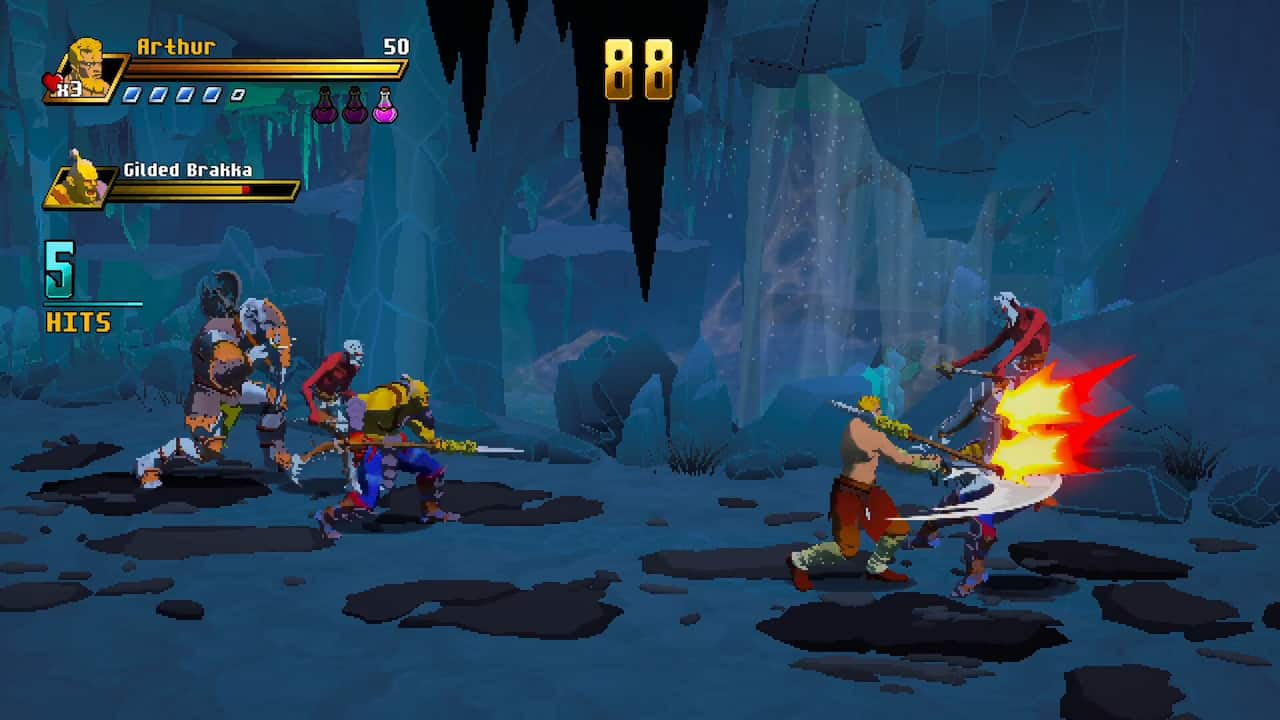
The result is a two player beat ‘em up, which trades fisticuffs, special weapons or unique characters for historical humans carrying big swords. Solo, or as a duo, they must venture through a small assortment of themed stages, including Camelot, Sherwood Forest, Camlann Mountain, the Valley of No Return and the depths of a castle. In total, there are maybe eight stages, and they aren’t long. The game actually has a map with branching paths, too, meaning that you won’t experience them all in one play through. At the end of certain stages, you’ll have to choose an upwards or downwards path, or a straight one. It doesn’t tell you where they’ll lead, either.
That said, there is a level select option that appears once players have finished this game once. It can be helpful for those who maybe missed an achievement or trophy or something, or for those who’d like to experience any stages they may have missed.
I originally played through Blades & Battles as King Arthur, on the normal difficulty. It took maybe an hour or just shy of it. I had to restart one or two stages, including the last one, because the game can be a bit challenging on that difficulty as a solo person. You also only get a limited amount of lives (3), and the same amount of continues.
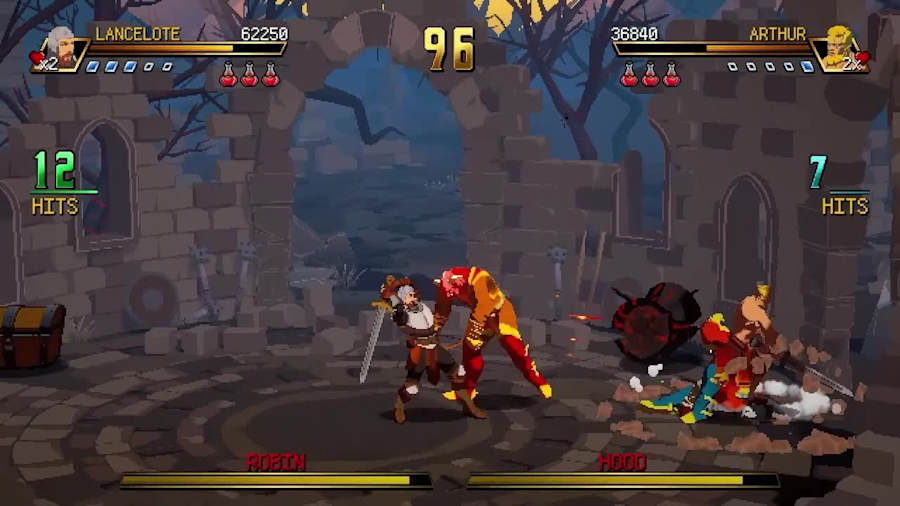
After seeing the credits roll in a surprisingly short amount of time, I started over as Lancelot, and did so on easy. That was much easier, and was pretty much a cakewalk. It allowed me to experience playing as both characters, and I also made the right choices so that I was able to see all eight of the game’s levels over two play throughs.
Blades & Battles is a basic beat ‘em up, which features the lanes and movement of a 2.5D game. You’re always going from the left side of the screen to the right, and defeating any enemies that get in your way, but can also go up and down. There’s also one section that takes place on an elevator, during which it’s best to let the annoying, heavy, enemies run off the platform.
Both characters have swords, and they each share a common move set, which involves basic attacks, limited heavy ones and a desperation attack that can send enemies flying away and provide a brief breather. However, when Lancelot uses his heavier attack, he can bring two bolts of lightning down from the sky. It’s not always as helpful as you’d think. Meanwhile, King Arthur uses his sword to deliver heavy attacks in varied directions.
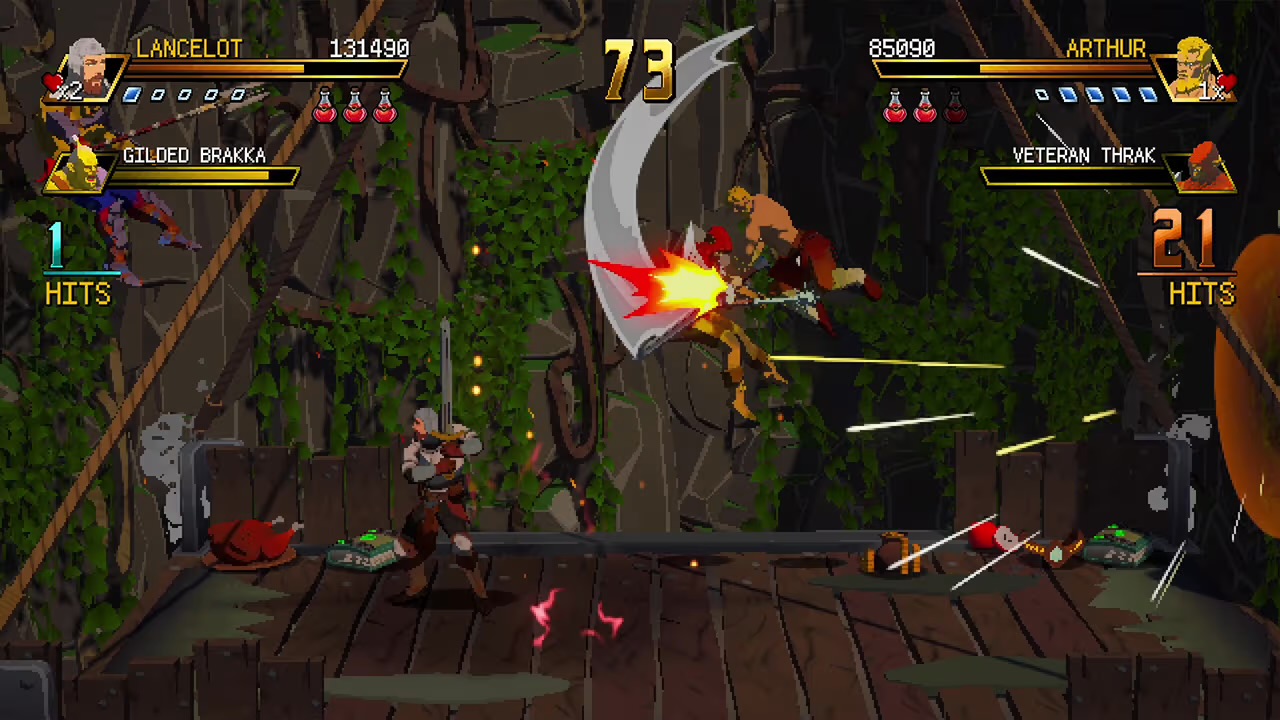
This game features a lot of breakable chests, which offer apples or whole turkeys to eat for health replenishment, as well as money to collect for higher scores (that end up on a leaderboard when you run out of continues or complete the game). Some of these breakable chests (and occasionally breakable dinosaur skulls) also contain red potions. However, unlike most red potions in the history of video games, the ones found here tie into the characters’ special ability, which causes damage across the screen. How powerful, and visually intense, it is depends on how many potions you have equipped. One is weaker than two or three, which makes sense. I don’t know why they chose to use red potions for this though.
Blades & Battles is a slower, and not very flashy beat ‘em-up. It’s surprisingly basic, shockingly short (for a genre that’s known for arcade machines, quarters and shorter campaigns), and doesn’t feature a lot of enemies on screen at one time. There is a good amount of variety to be found within them, though, as they can take the forms of goblins, skeletons, flying cyclops heads, and other things from mythology. However, they aren’t all that fun to fight.
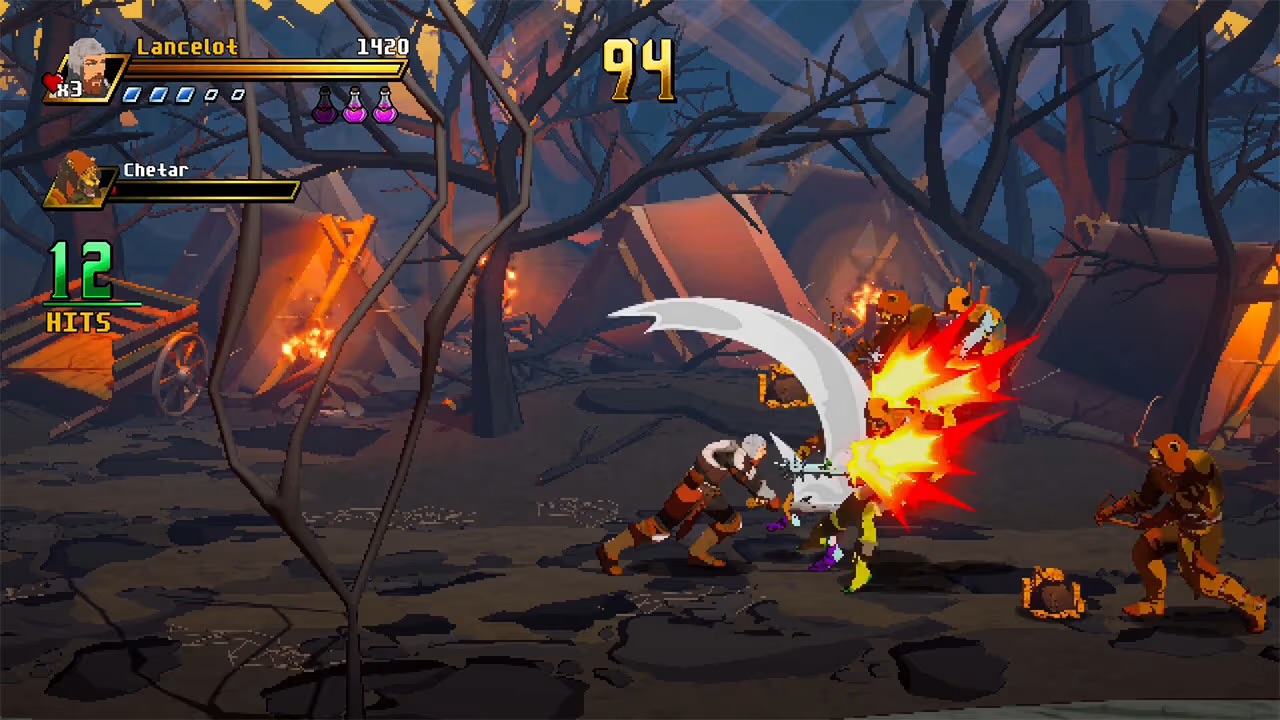
The game can also be frustrating when it introduces multiple ranged enemies at once, or they appear and then disappear after hurting you, such as a dragon I couldn’t avoid. The most common of these are archers and priestesses, which repeatedly blanket all lanes of the path with blue, ice like, energy. It’s tough to avoid until you go way up to the top, and is annoying, plus poorly designed in my opinion.
Every stage features a boss, but the last one has two. They’re interesting types of creatures, but the boss battles end up being very basic and simplistic. You try to avoid their attacks, then attempt to deal a lot of damage when they’re not attacking. Eventually, they will become stunned and more open to damage. It’s all very bland, and unoriginal, and honestly not that good. The entire game feels this way, and is so basic, slow and clunky that it’s not all that fun to play. I can’t see people wanting to go back to it.
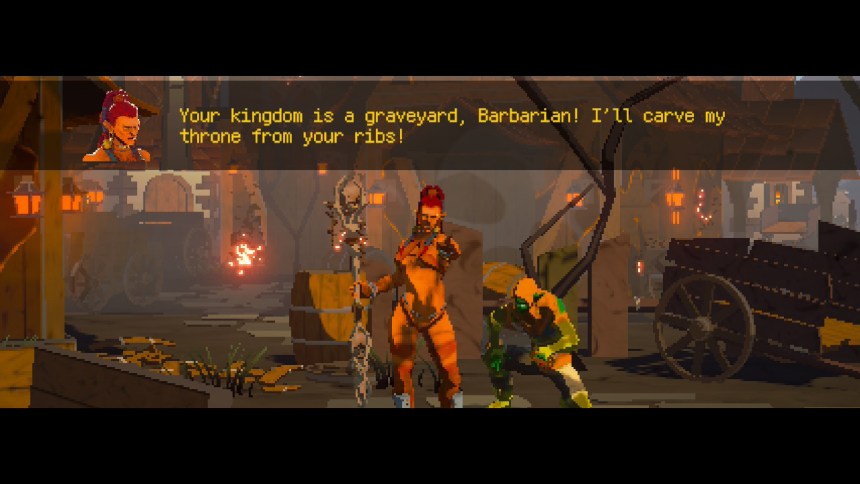
The story is honestly nonsensical too. The two knights are training and talking, and then the camera pans over to a scantily clad priestess in a skimpy bikini leading monsters in an attack on the village. Then, the two heroes say they’ll get revenge. Thus begins this short and odd game.
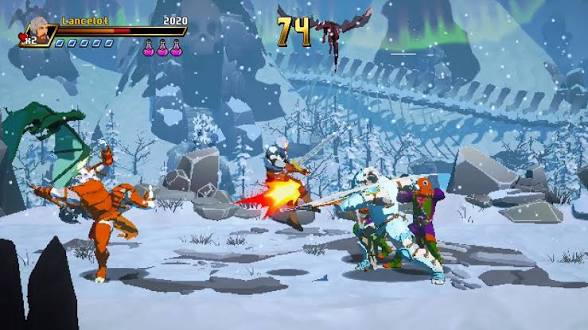
The levels are visually varied, in terms of setting, and there is a good assortment of enemies, as mentioned already. However, when the core gameplay is so bland, basic and forgettable, all of that doesn’t matter as much.
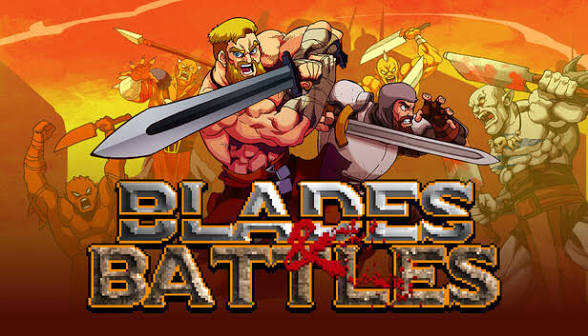
Based on the cartoony box art, I expected that kind of art style within the game proper. Instead, it featured an odd mix of cartoon realism and a retro, PlayStation 1 style, filter. It made things look odd, and the animations were also stiff and basic. I appreciate the effort, but did not find this game to look very good. Sure, I got used to it after a while, but it is not an art style that I’m a fan of.
That last paragraph was written by someone who started gaming with Atari and NES, and spent a lot of time playing many releases on N64 and PS1. Hell, I essentially lived at multiple video stores, and had a bag full of N64 games. I am not against games that try to go back to any of those eras, and enjoy them when they’re done well. That is, sadly, not the case with this one. I wanted to like it, and looked forward to playing a beat ‘em-up, but it wasn’t what I had thought or hoped for.
The sound is honestly kind of forgettable. It does the job, and serves a purpose, but nothing stood out or was all that noticeable. The sound effects are repetitive and basic, and it’s all simply nothing to write home about.
Blades & Battles is an odd, retro-styled, beat ‘em up that doesn’t really work, and isn’t fun. The campaign is very brief, things are slow and cumbersome, and it features an odd visual style. The most important part of the experience — the combat — isn’t very enjoyable, and doesn’t offer anything noteworthy or all that interesting, either. As such, it’s tough to recommend this game, which is pretty forgettable overall.
This review is based on the XBOX Series X version of the game, which we were provided with.