

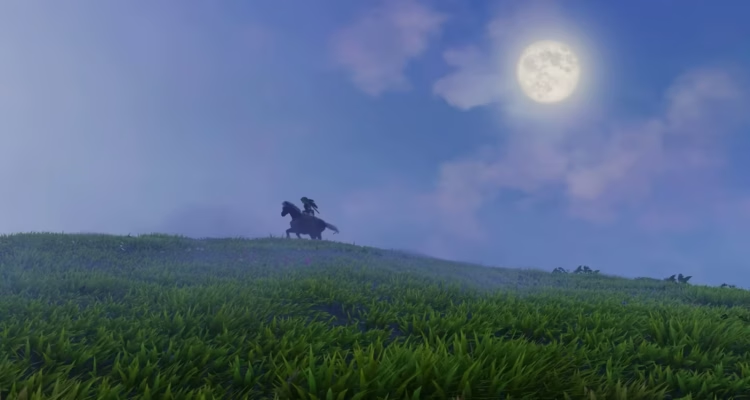
Some games age like fine red wine potion, while some age like Lon Lon Milk left outside the castle in the July sun. The original The Legend of Zelda: Ocarina of Time has always been a bit of both, but we’ve looked past its flaws for decades with rose-coloured glasses. Look, I’ve got a Triforce tattoo on my wrist, so I’m certainly no Zelda hater. The original Ocarina of Time is an absolute masterpiece and is, beyond a Shadow Temple of a doubt, one of my favourite games of all time. But reviewing its remake means being honest and as unbiased as possible.
The original game’s ideas are timeless, while its murky fog, stubborn camera and that infamous Water Temple menu shuffle have been showing their wrinkles for a while now. So, for the series’ 40th anniversary, Nintendo set out to answer a simple question: what happens if you keep the potion and toss the milk?
The answer is a Switch 2 remake that is nothing short of remarkable, and one that we’ve had a very hard time putting down. Except to weep tears of joy. (Seriously, I’ve spent probably six hours with the title screen music on repeat in the background.)
Before going any further, it’s worth being clear about what this is (and isn’t). This is, fortunately and unfortunately (more on that in a bit), not a reimagining. The story, the dungeons, the seven-year jump, and the order you’ll tackle things in are all exactly where you left them back in 1998. What’s changed is everything wrapped around that adventure, and while that may sound like a reskin, this is anything but.
Let’s start there, with the visuals, because they’re truly stunning. This is the best-looking game on Switch 2, full stop. We can all stop saying “Nintendo should hire this guy” every time someone does an Unreal 5 reimagining of Ocarina of Time, because they clearly have all the talent and skill to know exactly what they’re doing in that department. It’s going to be another decade before someone can make something look meaningfully more impressive than this in their own time, and the law of diminishing returns on that one is going to be an even tougher Deku Nut to crack.
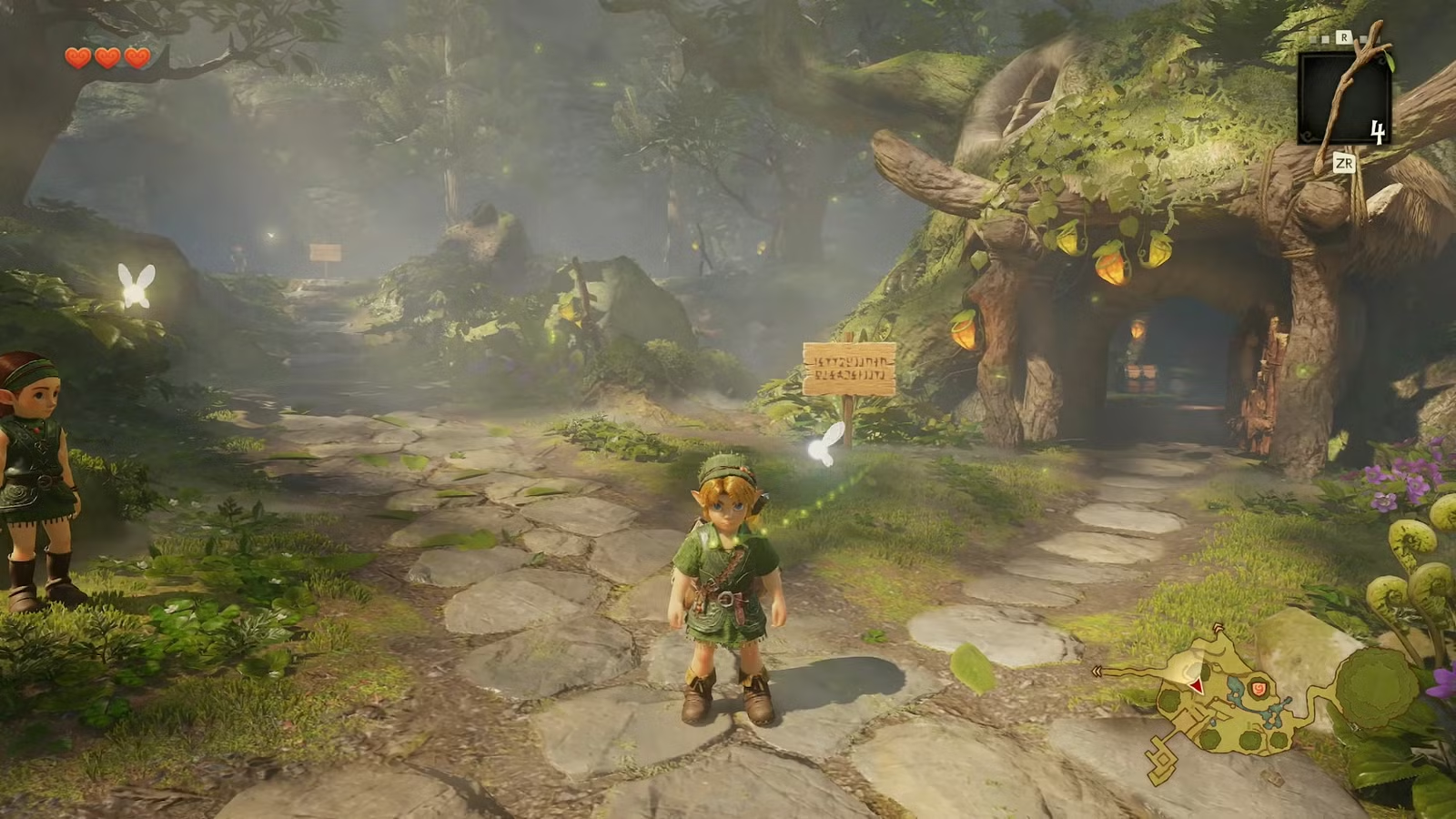
Kokiri Forest is lush and overgrown, fog curls around Link as he creeps through dungeons, and light pours into the Temple of Time in a way our younger selves thought that N64 was rendering, but were really only imagining (there are those rose-coloured glasses again). The ReDeads are also far creepier than they have any right to be (thanks for that, Nintendo), and this near-40-year-old is perhaps even more afraid of them than the nine-year-old playing the original was back in 1998.
The game holds a smooth 60 frames per second docked, while handheld play gets a little soft around the edges as the resolution dips, a mode which almost seemed to bring back a bit of the slower charm of the original. Not nearly as slow as the original’s dips to what felt like 12 frames per second during a dead man’s volley with Ganondorf, but less polished nonetheless. With all the graphical upgrades, even Nintendo can’t help but have a few character faces wander a bit too close to the uncanny valley, but those early worries fade pretty quickly once you’re actually playing.
But of course, the thing that made this game famous in the first place: the move from two dimensions into three, which brings us to the gameplay. Link can now jump on command, sprint, and look around with a fully independent camera. Gyro-aiming makes the bow and Hookshot feel precise (like they did on the 3DS remaster), and gear swaps happen through a quick overlay from more modern Zelda games like Echoes of Wisdom rather than the pause menu.
Muscle memory will trip you up for the first hour or so. I walked off more than a few ledges expecting an auto-jump. Once it clicked in my brain that a button needed pressing to jump, it was mostly fine, but I’d somehow still manage to walk off ledges every now and again into the late stages of the game. Perhaps watching hours of Games Done Quick for the last decade and a half has led me to envision automatic jumps, which still nabbed me, even well into the final throes of Ganon’s Castle.
And yes, the Iron Boots are now mapped to the D-pad.
That one change, combined with some smarter tweaks to the layout, turns the Water Temple from arguably one of the most dreaded dungeons in all of gaming into a genuinely fantastic experience. That’s a sentence I would have never expected to type, but it really does turn one of the most backtracking-heavy dungeons into a chance to appreciate how masterfully designed it actually is, without the temptation to glitch into Morpha’s room and skip 80% of it.
There are a few other tweaks that are perhaps a mixed bag based on personal preference and reverence for the original game. A new quest log called Threads of Time keeps track of what you’re supposed to be doing, Navi is far less chatty (or, at least, has more varied sounds), and you can now play the ocarina by humming into the Switch 2’s microphone. It’s silly, and that’s kind of the whole point. It also works surprisingly well, though anyone else in the room will likely raise an eyebrow. Luckily, my family knows how much of a Zelda nerd I am, and how much I don’t care what they think when I’m enthralled in an adventure like this.
The soundtrack is perhaps the biggest testament to how much care went into this project. As expected, every track has been re-recorded with a live orchestra, yet they all remain instantly recognizable. No extraneous flourishes have been added for the sake of adding something new to classic tunes, but areas that used to go quiet at night have entirely new and unique themes, with Kakariko Village after dark really turning into something special. Most of the cast is also voiced now, though the performances are a bit hit or miss. Ganondorf is actually a clear standout, with a few new lines of dialogue that make him feel far more menacing. Link, thankfully, keeps to his grunts and sounds rather than speaking a word. If you’re not a fan of voiceovers, we recommend playing through the game in Japanese if you don’t speak the language, as it maintains the air of fantasy and mystery in the dialogue that captures the same feeling from the original.
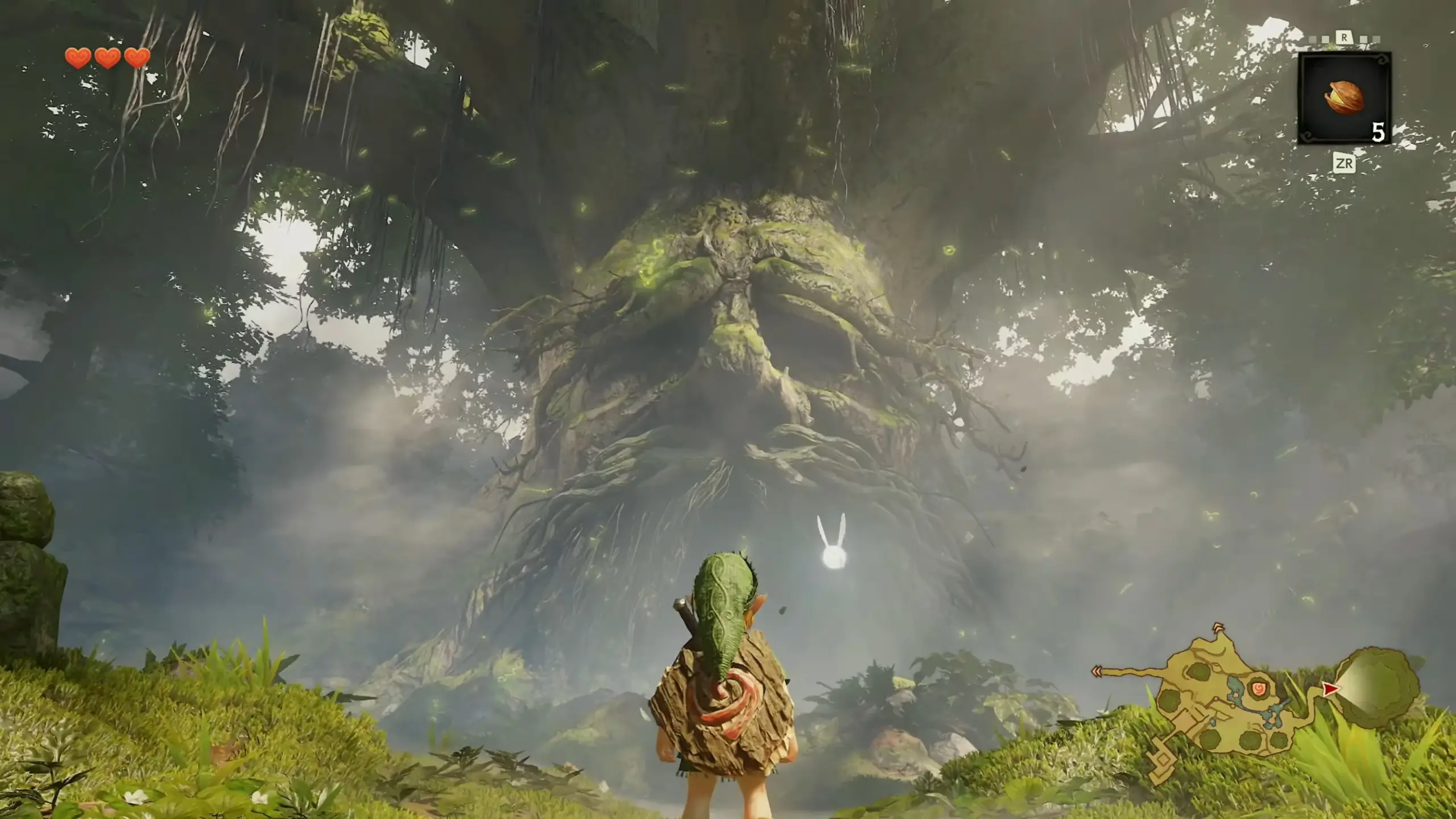
There are certain bits that add a bit more charm… okay, they’re flaws that we’re sugarcoating, so let’s go back to being unbiased. Sprint lives on the A button, which can get awkward because your thumb is also needed to control the camera. Our sugarcoating will tell you that it’s actually a slight nod to the original having less-than-ideal camera controls, but that’s a stretch, even for us.
Perhaps our biggest gripe is that Master Quest is nowhere to be found, and the new Master Mode simply removes the HUD rather than making things tougher, so veterans may breeze right through. The original Master Quest, released nearly a half-decade later, introduced slightly redesigned dungeons, and the 3DS remaster even went so far as to mirror the Master Quest version of Hyrule, which did just enough to trick the brain sometimes, especially for those of us who had the game effectively memorized.
Here’s hoping that this is added as DLC down the road. Nintendo has a mixed track record there, doing a ton of content for Mario Kart 8 Deluxe, but nothing for Super Mario Odyssey, likewise with a bunch of downloadable content for Breath of the Wild, but not Tears of the Kingdom. Predicting Nintendo’s post-launch plan is impossible, so we’re just holding out hope that the Big N shakes out a few more morsels of Ocarina down the line.
Speaking of Tears, Nintendo managed to keep the Depths a complete secret, despite being a third of the world in that game. They left the magic and secrets to be discovered by players on their own, as witnessed in countless playthroughs on YouTube with an incredible amount of wonder and some shock that they managed to keep it under wraps.
We were sure that something similar would have happened here with the Temple of Light or Light Dungeon that has been all-but-confirmed to have been cut from the original N64 game. Adding this in would have closed a multi-decade chapter of speedrunners, ROM hackers, and reverse engineers trying to piece together anything from the original cartridge. There’s also no Star Fox Arwing test asset. That would’ve been a cool addition, too.
Another small but important quibble is the single manual save slot, an odd choice for a game that is clearly designed to reignite passions for 30-, 40-, and 50-somethings, while bringing their kids (and maybe grandkids) into the fold with their own playthroughs. Yes, this is per profile, but no long-time Zelda fan wants to delete an entire save file just to start a new game. You want me to delete Saria and Rauru? Is that what you’re saying, Nintendo? Because that’s what it feels like! Even Breath and Tears got second save slots on the Nintendo Switch 2 Editions of the games.
So, who is this for? If you or your family members (I’m looking at you, Niko) grew up with Breath of the Wild and never played the original, this is the best possible way into what is the true Zelda formula with proper dungeons. If you’re a long-time fan, it’s the version of Hyrule you’ve been carrying around in your head for nearly three decades, and your brain no longer has to fill in the gaps; Nintendo has made it all a reality once again.
Look, they didn’t need to reinvent Ocarina of Time, and they didn’t. But now, we’re looking at Ocarina through a cleaned Lens of Truth. The result is a remake that looks and plays the way we always remembered it, which is to say, it’s exactly the same and better than it ever was. Nostalgia sells, and this is somehow both nostalgic in all the right ways, and brand new all over again.
Sort of like putting the Master Sword back, splitting the timeline, and retracing our steps again, 28 years later.
This review is based on a copy of The Legend of Zelda: Ocarina of Time for Nintendo Switch 2, provided by Nintendo. Read our reviews policy here.