

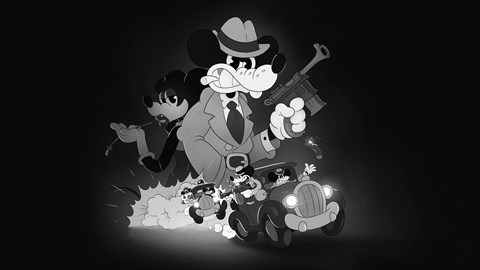
When I first heard about Mouse: P.I. For Hire, I thought that it would be a decently fun game, but it ended up exceeding my expectations in a very pleasant way. Although we were denied a review code, I wanted to share my thoughts and help spread the word about how fun this game is. I bought it, and feel like the money was well spent, especially since it was hard to put the controller down, even when I needed to go out.
Mouse: P.I. For Hire was developed by Fumi Games, and was published by PlaySide Studios. It was originally supposed to release last year, after being revealed in 2025, but got pushed to the middle of this past April. That’s when I bought it, but other reviews and life circumstances prevented me from getting to it until this past week.
Featuring a really neat aesthetic, great art design and really unique looking characters despite limitations, this is one of the most visual appealing and memorable games I’ve played. That’s because, instead of going for any sort of realistic approach, which wouldn’t have worked, the developers made everything look like a 1930s cartoon. Think of the one where Mickey Mouse is on a steamboat, and you’ll have an idea. As such, almost the entire experience is in black and white, with a mix of 2D and 3D characters, environments, items and animations. The result is striking, and I loved it.
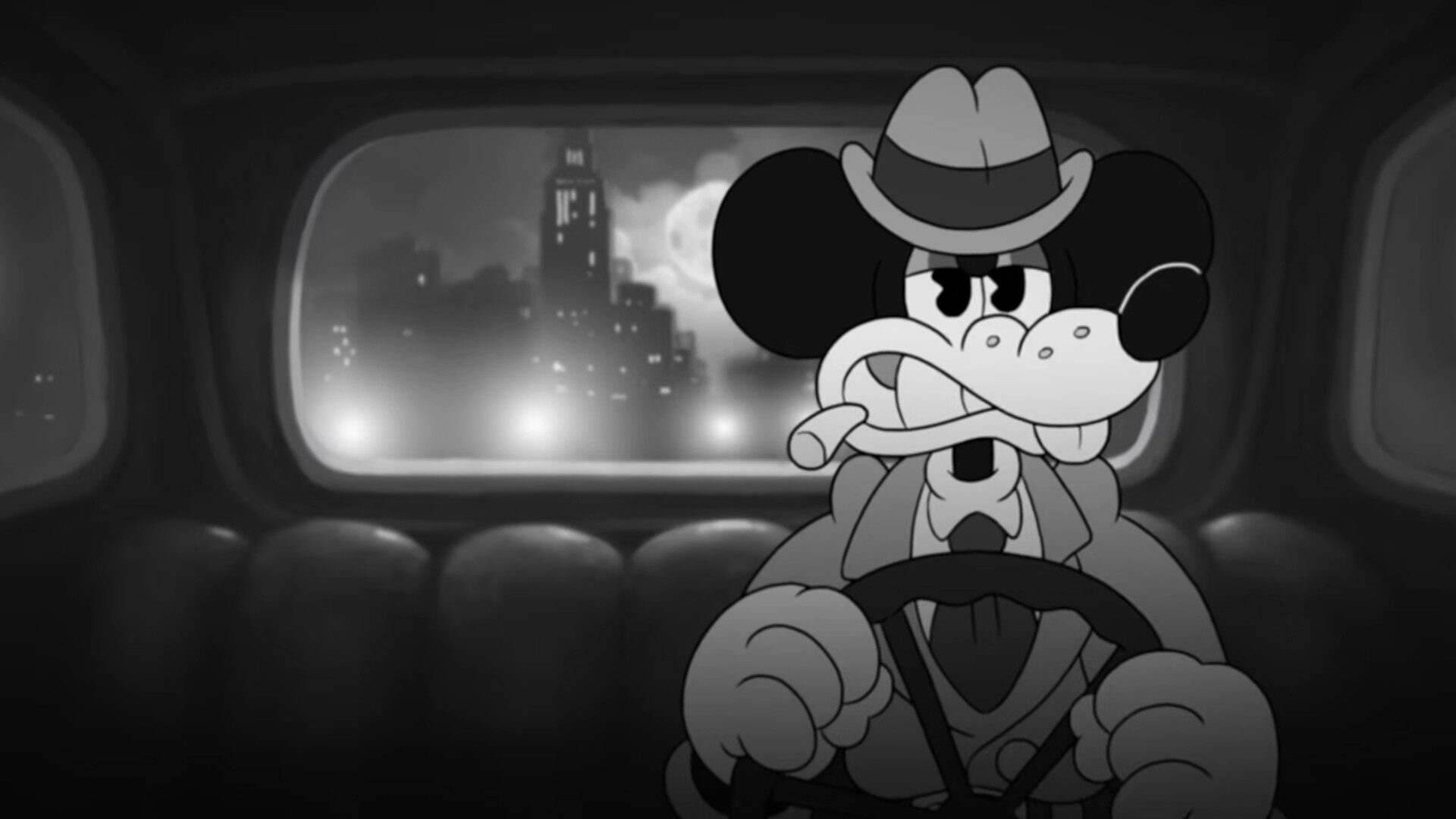
The story begins in 1934, in a fictional city named Mouseburg. The city is inhabited by talking mice, rats, shrews and some other types of animals, though those are limited. There, we find Jack Pepper — an anthropomorphic, hard boiled mouse, who earns a living as a private detective. His office and living quarters are located on the second floor of an apartment building, which is conveniently situated across from a bar, a store and a shop that upgrades weapons.
As you’d surmise, the game centres upon a few different cases that Jack is working on, or approached about, including a missing magician, kidnapped shrews, fake policemen and a missing woman. These aren’t tackled on a one-by-one basis, though, so don’t expect to finish one and then move on to another. As the game progresses so, too, will the cases. One will find clues, undertake missions and venture out of the city to look into leads. Then, after completing said stages, one must return to the office to pin clues (photos, letters, receipts, etc.) onto an evidence board, to generate new leads. It’s a simple mechanic.
Jack has an old car, so when you’re ready to leave the city block, you can hop into it and then transition to an overworld map showing the city and its outskirts from above. All of the important locations, be it the opera house, a riverboat, the sewers or a movie studio’s lot — begin locked, but unlock as you need to visit them.
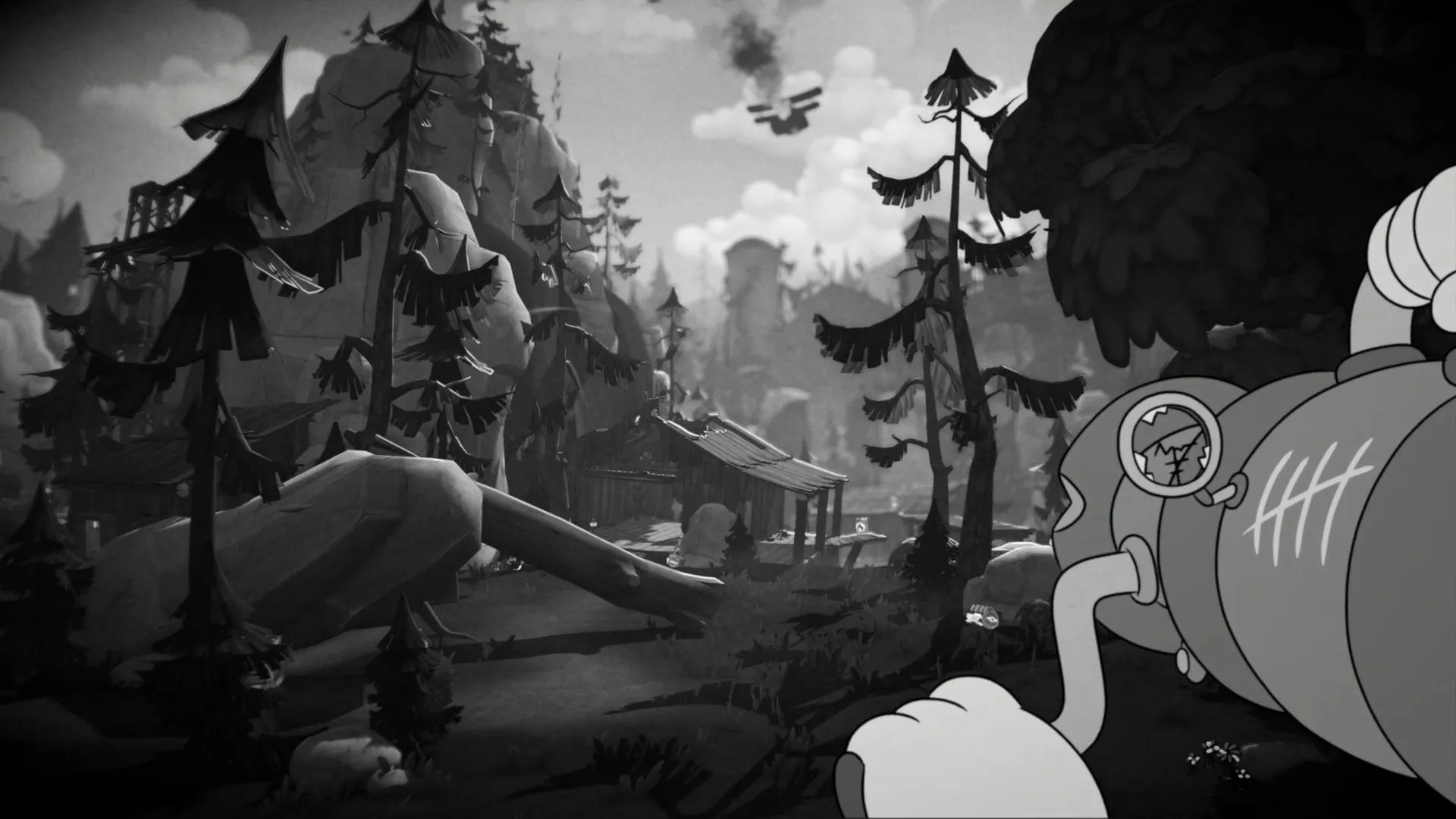
What’s neat is that Jack’s car is drivable, allowing players to move it around the map in order to get from one place to another, then back again. The city looks great, and it has some nice touches like smoke coming out of chimneys, planes flying overhead and an underground subway that can be seen moving quickly. There are also roadhouses, where one can stop to upgrade weapons, buy things (like ammo or collectibles), play a minigame we will talk about later, and the like. These are mostly unnecessary, though, because the shop beside Jack’s apartment offers the same things, as do the other two locations (bar and weapons shop).
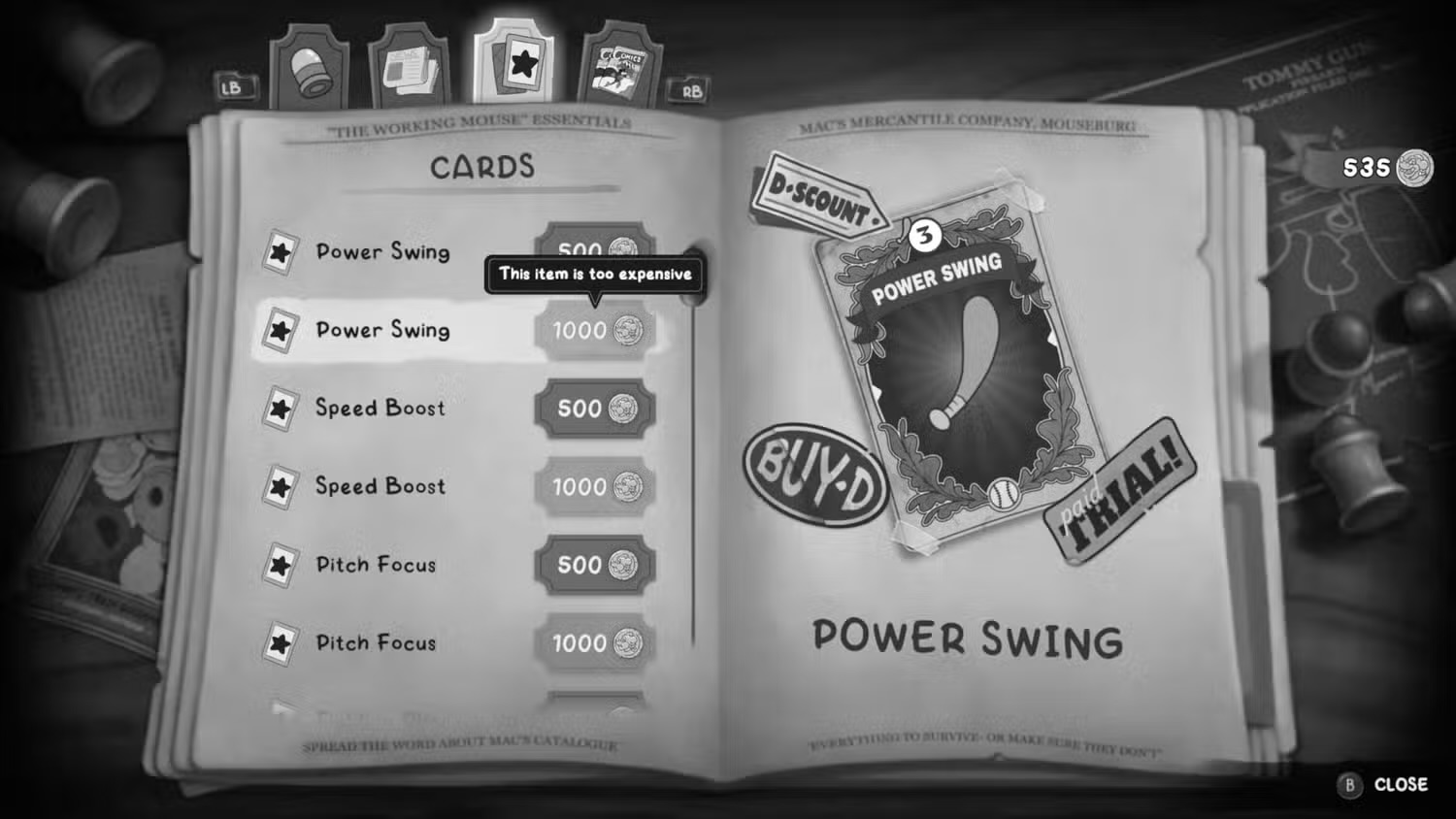
There’s lots of money to be found throughout each level, and more can be discovered by going into vents, looking behind boxes, breaking other boxes and generally searching everywhere. This money can buy ammunition, but a number of the game’s many collectibles must also be bought. These include newspapers, old-fashioned comic strips featuring Jack and baseball cards. However, there are also figures to collect, though I only found one despite feeling like I searched every inch of the game.
In the end, I only missed one newspaper and one comic strip, which was annoying. However, given how many there are (as in around 36-38), I felt pretty proud of myself. I didn’t collect all of the baseball cards, but part of that was running out of money, since some cost upwards of $1000.
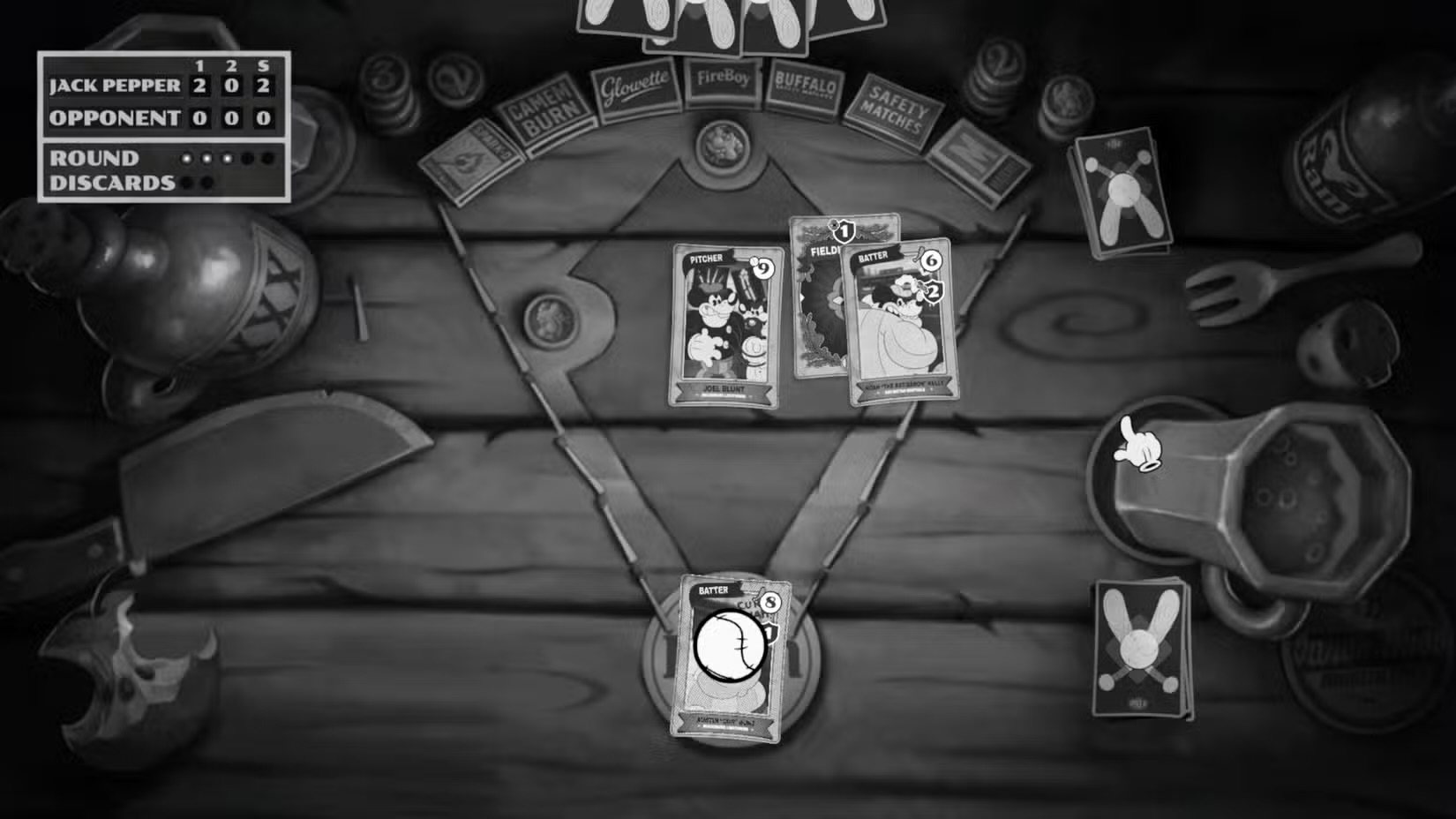
The baseball cards are used in the aforementioned minigame, which takes place in the bar, or the bars found in each roadhouse pit stop. Played on a table, with a handmade baseball diamond created out of matchsticks, match boxes and other things, it’s a one-on-one card game that only lasts one full inning. During it, each player gets a turn to hit and pitch, using the cards they’ve collected and been dealt. The thing is, though, that the cards differ outside of who’s been drawn on them. Each pitcher and hitter has a power level (from 1-9), as well as a secondary booster. Plus, assist cards appear in the form of boosted defence (to keep runners stranded), extra power and a more powerful pitching arm.
Each half of said inning goes for five rounds, allowing the two players to duel to see who can score the most runs. If the batter players stronger cards, he or she will get a hit, or maybe even a home run. However, a stronger pitcher means one strike and you’re out. Ties are decided by the flip of a coin, making things a bit unpredictable. That said, once someone collects a good amount of cards, the minigame becomes nearly impossible to lose. It also gets very repetitive, which will affect achievement and trophy hunters, since there are some for winning just one game and winning thirty of them. This costs $50 per game.
The more I played this baseball activity, the more I started to notice glitches within it. At first, things seemed fine, but after a while there were noticeable errors, like base runners lapping their teammates, batters not moving after getting a home run, cards stacking on top of each other and things like that. It didn’t hurt my performance though.
In addition to the main storyline and all of these collectibles, which are also spread throughout the game world, Mouse: P.I. for Hire also features around 15 side quests, if I’m not mistaken. These can be easy to miss until you notice them, as you have to go around the block and talk to certain characters to get them, although they do appear on the compass. I missed the first one, as well as some others, but finished several of the side quests. I wanted to try to do them all, though that didn’t happen. I didn’t see some, but also failed others by missing things.
The side quests aren’t all that deep or involved, and task players with doing things like taking a picture of a cheating wife, finding a poster in the movie studio’s lot, and picking up strange ingredients for the bar owner who’s got a kitchen in back. One also wanted me to find a dead body, but despite looking everywhere, I couldn’t spot it.
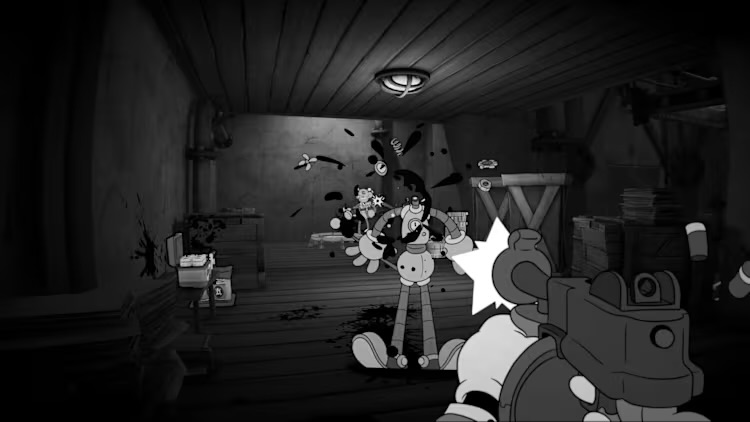
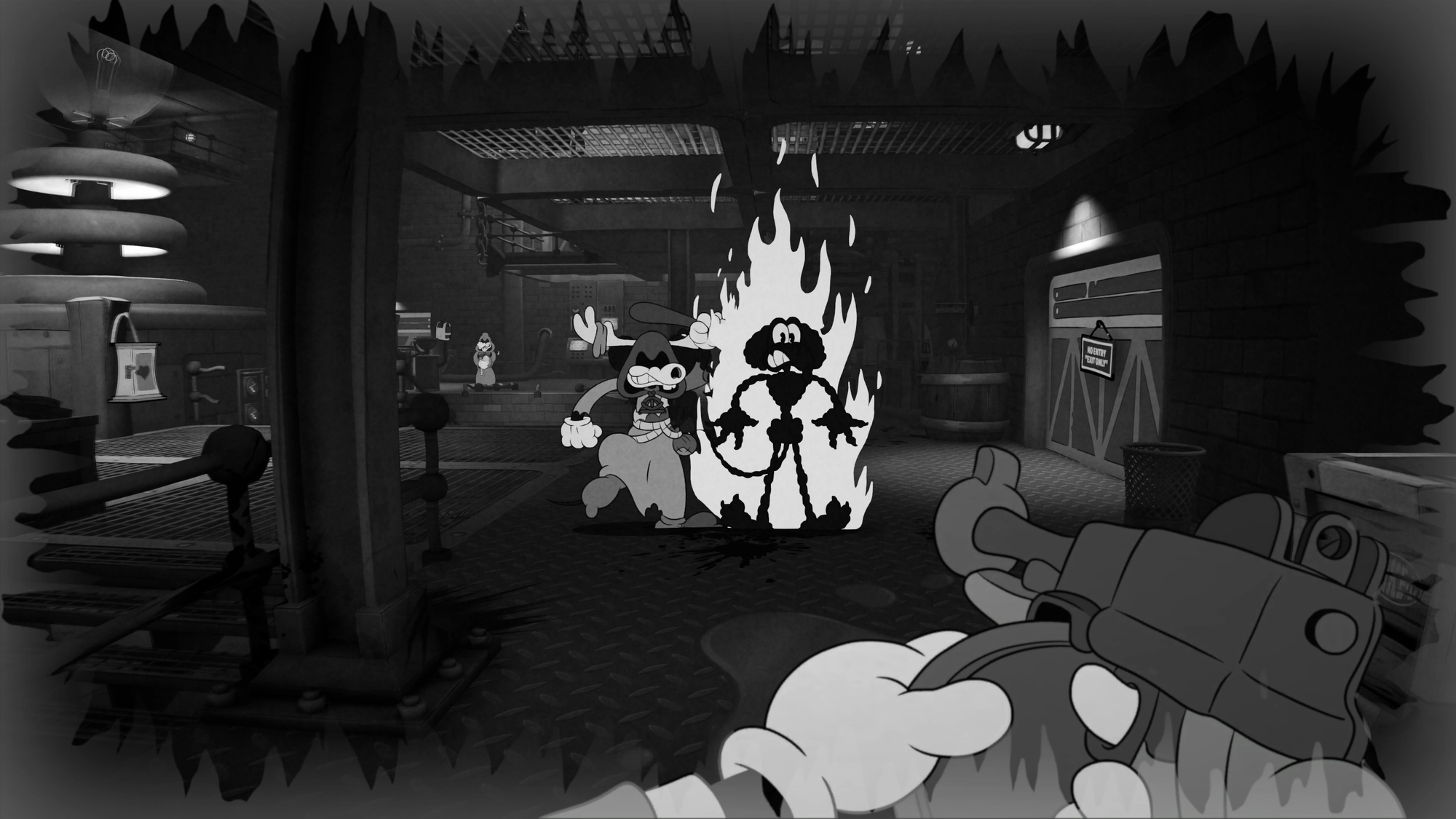
Since we haven’t, let’s talk about the gameplay. You see, Mouse: P.I. For Hire is a ‘boomer shooter,’ which has mechanics that are similar to some old-school first-person shooters. There are a bunch of weapons to find and use, including one that is locked behind winning twenty baseball games. These are traditional offerings, like a pistol, a couple shotguns and a Tommy gun. That said, there are a number of unique weapons to pick up, including one that shoots big rocks and dynamite (both of which can destroy damaged walls), a freezing gun and something that basically acts like acid and turns enemies into skeletons. The latter was my favourite, alongside the trusty shotgun and Tommy gun.
Aiming isn’t very important, because the action is meant to be fast and is essentially arena based a lot of the time. You’ll enter into a room, a back lot or a roadway, and will see lots of explosive and freezing barrels, ammunition, health bottles and the like, and then numerous enemies will come out of doors. That’s not always the case, but it often is. It all works really well, though, and is fun as well as chaotic. Being able to throw or kick barrels is a helpful option, as is Jack’s dash. He can also kick enemies to hurt or stun them, run across walls, climb marked boxes, use a grappling hook and more.
Switching weapons can be a pain, because the weapon wheel doesn’t respond at times. Furthermore, it’s only possible to quickly cycle through the one being used and the last one that was equipped. It’s not a big issue, but can be a nuisance. I am glad, though, that they have secondary fire modes (which I often forgot about), and can be upgraded by using collected weapon schematics. Each regular weapon can be upgraded three times.
When hurt, there are health bottles aplenty, although this can still be a challenging game at times. In DOOM fashion, armour can also be picked up, and cheese wedges can be hoarded for a bit of health in a pinch. Dying isn’t too bad, though, because there are plenty of checkpoints and many typewriters to use for manual saves. Almost too many at times, to be honest.
At times, the aforementioned arenas will offer special enhancements, like being able to turn every shot enemy into a walking campfire. Sometimes, Jack will even use finger guns to dispatch of foes.
Over the course of this surprisingly lengthy campaign, which took me maybe 10 hours to beat, one will come across unique boss fights. These range from being really good, and quite fun, to being frustrating and annoying. They were mostly good, though.
Lastly, in terms of gameplay, it’s important to mention that there’s some platforming. This can be as simple as jumping onto a platform, or using one box to get to another, but there’s also wall running (in limited amounts, later on), the grappling hook and a late game section that involves jumping from one vehicle to another and is easy to fail, and can be frustrating. The grappling hook didn’t always work perfectly for me, so I died more than I should have.
With the help of full voice acting, including Jack being played by Troy Baker, the city found within Mouse: P.I. for Hire feels alive. The writing is really strong, albeit a bit wordy, and there are some really fun nods to iconic games and movies, like Pitfall. There’s also some licensed music that really adds to things, alongside good one-liners, great sound effects and memorable characters.
As mentioned above, the game’s 1930s, black and white, cartoon style is absolutely perfect for its contents. It’s all a treat for the eyes, and never gets old. This is one of the better looking titles I’ve played.
There’s also a great amount of enemy variety to be found within, both in terms of varied approaches and visual styles. At first, one will mostly deal with bad mice of various sizes and strengths, but as things progress the game will introduce robots, flying bastards, cultists and even mutants. You can blow them up, set them on fire, kick them, shoot them, freeze them or drop heavy things on them.
A patch is needed, however, to fix some glitches like those mentioned above. I completed the game in full, but didn’t get the achievements for wrapping up two of its three cases. Good thing they’re meaningless.
Mouse: P.I. for Hire was a wonderful and welcome surprise, which ended up being a lot better than I’d even hoped it would be. Yes, it got repetitive at times, and may be best in shorter bursts than I played, but it was also hard to put the controller down. Here’s hoping there will be a sequel, or that this is just the start of a franchise, because I’ll be there day one.
This review is based on the Xbox Series X version of the game.