


Sometimes things escape one’s radar, which is what happened with myself and the latest release from Square Enix, that being The Adventures of Elliot: The Millennium Tales. As a result, it ended up being a nice surprise when I found out about it, and an even nicer one when I started playing it.
The Adventures of Elliot: The Millennium Tales is a bit of a departure from the norm for Square Enix. That’s because it’s more of a Zelda-style game than anything else, and isn’t a turn-based RPG, or even one that features a more modern combat system. Think of it as being similar to A Link to the Past, and other classic (2D) The Legend of Zelda games, with an art style that reminds one of the Mana games and the recent Dragon Quest HD-2D remakes. That’s the best way I can describe it.
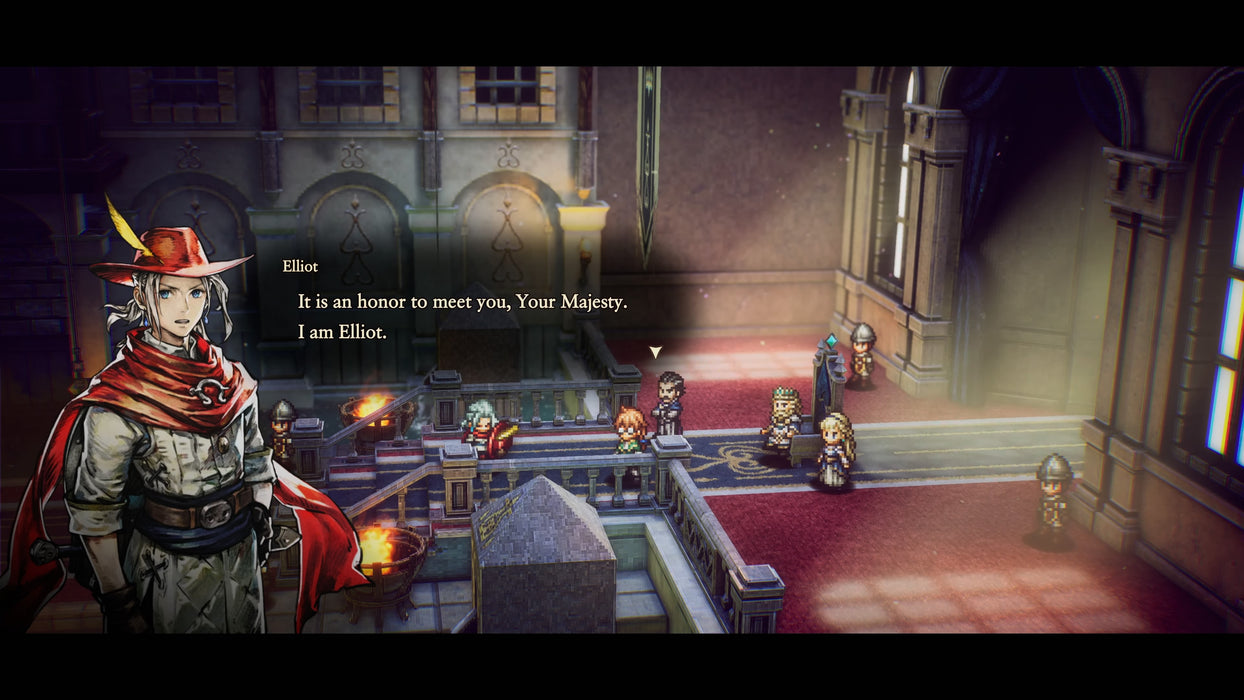
A former orphan, Elliot is a nice, easygoing and caring lad who looks after the kids who stay at the orphanage he was taken to as a baby. He does this by helping people and adventuring. However, at the beginning of this campaign, he’s summoned to the nearby castle to talk to the king, who’s got a job for him. Soon after, a bad guy (who factors into the story less than expected) steals a key, and uses it to open a door that should have been sealed. Through it, he escapes into a different part of the world’s history, beginning a key aspect of this experience: time travel. That’s why the title is as it is. It’s because this narrative takes place over a thousand years.
Don’t worry. That’s not a spoiler. It’s important to know.
Over the course of this 18-25 hour long campaign, players will travel between ages in order to follow the bad guy, complete quests and attempt to restore order. This is done by finding time doors, but once you’ve made it to a different time period it’s easy to go back and forth through fast travel. You see, there are many guide posts throughout the world of Philabeilda, which isn’t massive. Granted, one must explore the map several times, as things are slightly different in each age. It isn’t like the map is fully discovered, cloud free and available for fast travel after exploring it once. This creates repetition, which may bother and annoy some, but I didn’t mind it too much. I liked the map.
At the beginning of the campaign, Elliot only has access to a sword and a shield, which allows for limited blocking, but was something that I often forgot to use. However, there are multiple weapons to find and use, including a bow, a boomerang, a slow but powerful hammer, a spear with good range, and a scythe on a chain. Of course, there are also bombs (which are used to blow up damaged walls, defeat enemies and to stun certain bosses). The game rewards you for killing 100-200 enemies with each one, and they all have their pros and cons. I eventually went back to the sword and boomerang combo, though, as two weapons can be equipped at one time. One is used by pressing X, while the other requires you to press Y.
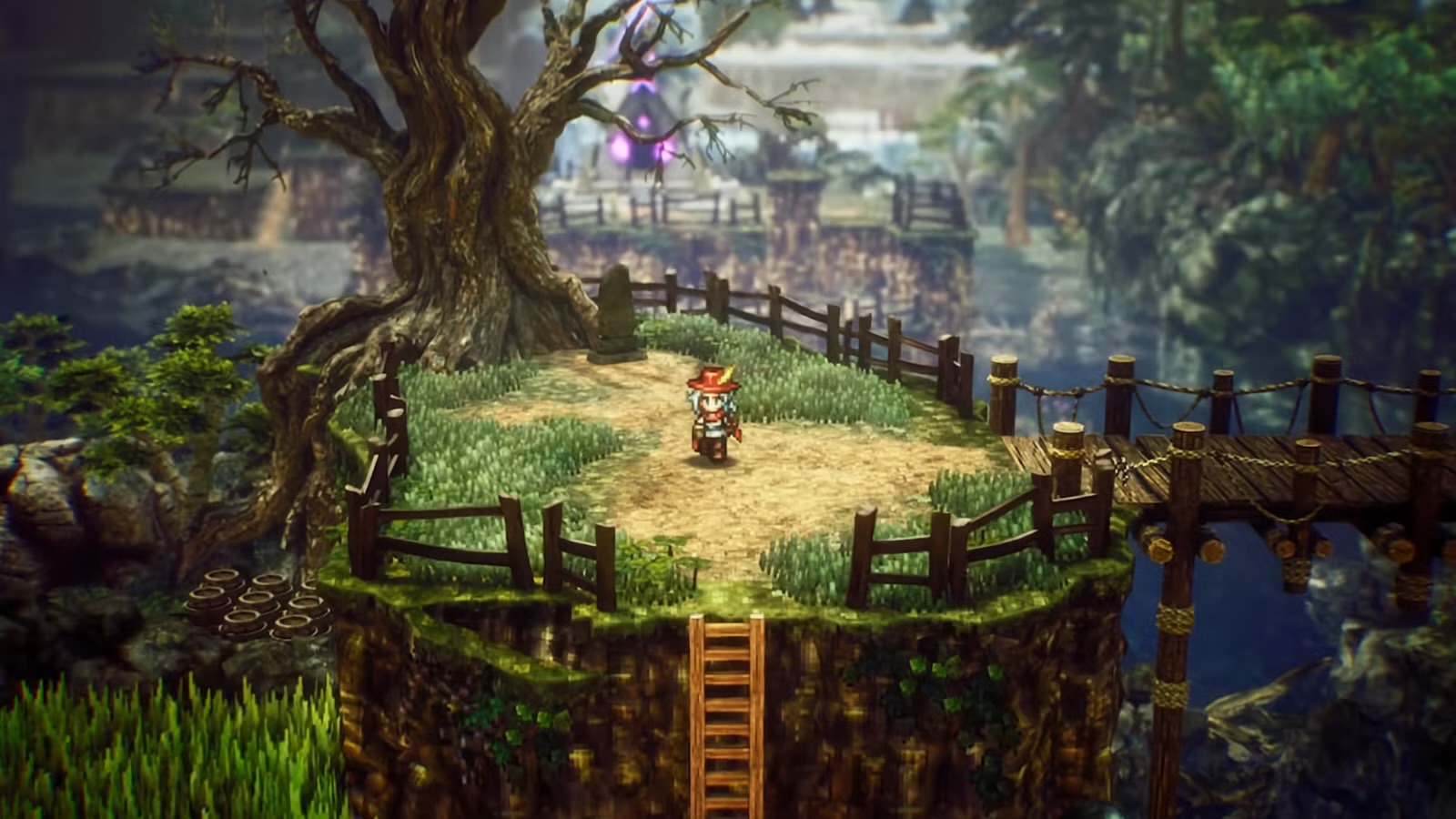
Like the bombs —which can expose ‘hidden’ caves and shortcuts — the hammer can be used to smash large nails that block one’s path. The scythe chain can also be utilized to pull enemies closer, but it doesn’t always register a hit if a pot, barrel or foe is right beside Elliot.
Ranged weapons can also be utilized to hit switches, as one would expect.
Those who take their time and explore thoroughly will find advanced versions of these weapons. Generally, they’re found in the depths of a cave or dungeon, and at times they’re also preceded by challenging bosses. It’s worth trying to collect them all. Granted, I came across a number of these upgrades without even knowing that I was in their vicinity, and later unlocked a needle that would tell me where they all were.
The combat is fun, fast and simple, not to mention accessible. However, it does get kind of repetitive. The Adventures of Elliot isn’t a very challenging game, outside of some of its later bosses, though it does offer different difficulty levels that can be changed to at any time. I played on normal, and didn’t die too often. There were only a handful of challenging sections, and I always carried as much medicine as possible. There’s medicine for health, some for added damage and more. It’s stored in empty vials that can be bought or earned by completing side quests.
Dotted throughout the map are temples, wherein one can complete challenges to unlock life shards. As with the Zelda games, collecting four pieces will lead to one new blood droplet (which represents health in this game) being added to Elliot’s life bar. These challenges usually involve defeating enemies, making one’s way across crumbling pathways, or completing platforming challenges, sometimes involving moving ones. That’s because, unlike in Nintendo’s iconic franchise, the main character here can jump and even float, with the help of an equipped accessory.
There are also timed challenges with multiple rooms or rounds. Rewards depend on how fast one dispatches of each room’s enemies, with a gold, silver and bronze style rating system.
At the beginning of the game, Elliot can speak to and receive help from a young princess through some magical earrings. She’s able to not only assist, but can also heal Elliot when asked. This changes when the player goes to the second time period, but don’t worry: a second companion is found. Named Faie, she’s a fairy who likes to talk, a lot. Some will get annoyed by how much she talks, as well as how she provides obvious and sometimes unnecessary hints. Hell, after I’d completed the, she still reminded me to activate as many guide posts as possible.
Faie’s talking can be adjusted, so that she’s more ‘reticent,’ but it doesn’t do a whole lot or make much of a difference. I switched to that setting several hours before completing the campaign.
Faie eventually learns magic, and there are several different types to unlock. The first makes it so that she can catch fire, allowing her to burn enemies or light fires in dark caves. Another allows Elliot to teleport to where she is (as she’s controlled by the right thumb stick), while a third provides a massive, dashing, speed boost for the main character. Others allow the player to create a second, ghost-like, Elliot, and also allow for a vacuum like power to be used for a brief time. These abilities can be unlocked in shrines, and there are trials involved for them too, some of which provide upgrades. Furthermore, it’s also possible to practice her magical abilities and unlock songs to listen to, by completing several really fun but too short mini-games.
Faie can also revive Elliot when he falls in battle, but it’ll cost you. The more you ask for it, the more expensive it gets. However, checkpoints (those guide posts) are usually nearby.
Of course, there are some light puzzles to solve. This can involve standing on switches, moving statues and hitting crystals that change the nearby environment. Most of the dungeons and caves are pretty simple, though, and you’ll revisit the same ones over the course of the story. They’ll be at least slightly different in each time period, though, and some are only accessible in a certain age.
Another element of The Adventures of Elliot: The Millennium Tales involves collecting crystals called magicite. Enemies and bosses drop lots of it, along with coloured currency that looks like rupees. While the money allows one to buy new accessories, potions, empty tubes to carry them in and things like arrows and bombs, magicite must be transformed by visiting a specific merchant in town. By transforming it, one unlocks perks that can be equipped on a weapon specific basis. These provide things like increased attack power, a higher likelihood of critical damage, the ability to throw a second boomerang and more. Each weapon can have a few equipped at one time, but they all have different costs associated with them, and one can only spend twenty per weapon.
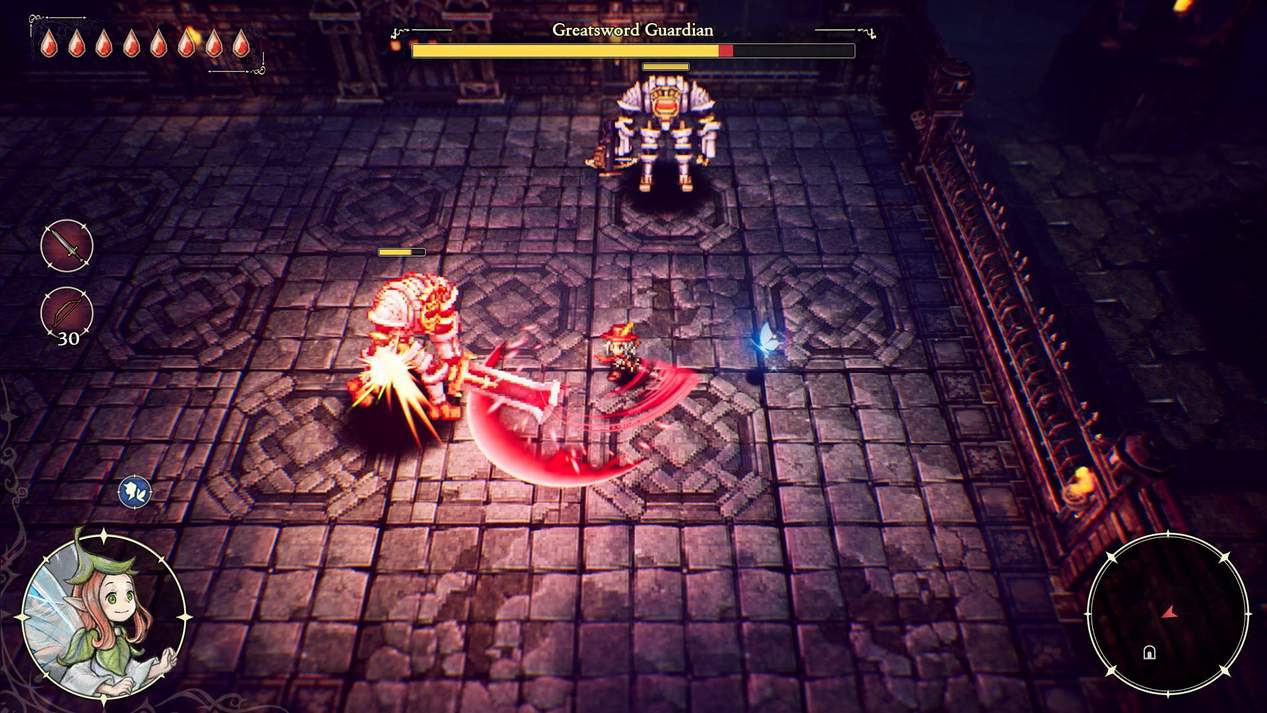
As the player transforms more and more magicite, their form level will increase. Once it gets to a certain point, weapon specific transformation options will unlock. For the first while, it’s all random and you’ll get what you get.
There are also fifty cats spread throughout the game, and Elliot can find, pet, feed, play with and collect them. There’s an NPC whose life dream is to pet a cat, and he or she asks him to collect as many as possible. Doing so unlocks rewards, like a bigger bomb pouch. Similar rewards can also be earned in other ways.
What’s funny about the cats is that they don’t sound like actual felines. Instead, there’s a short clip of a human being saying “meow” that plays every time you collect a cat, or interact with one, and it’s not always the same. It’s comical.
Another way that The Adventures of Elliot differs from The Legend of Zelda is that it features quests. There are numerous side quests to undertake, including finding a comb for an old man, collecting resources to make a healing balm, defeating enemies crowding a region of the map, saving a young girl, finding musicians to finish a composition and more. I tried to do them all, but didn’t find a few of them before they became inaccessible. Thankfully, this game offers around 20 save slots, and I used about half of those.
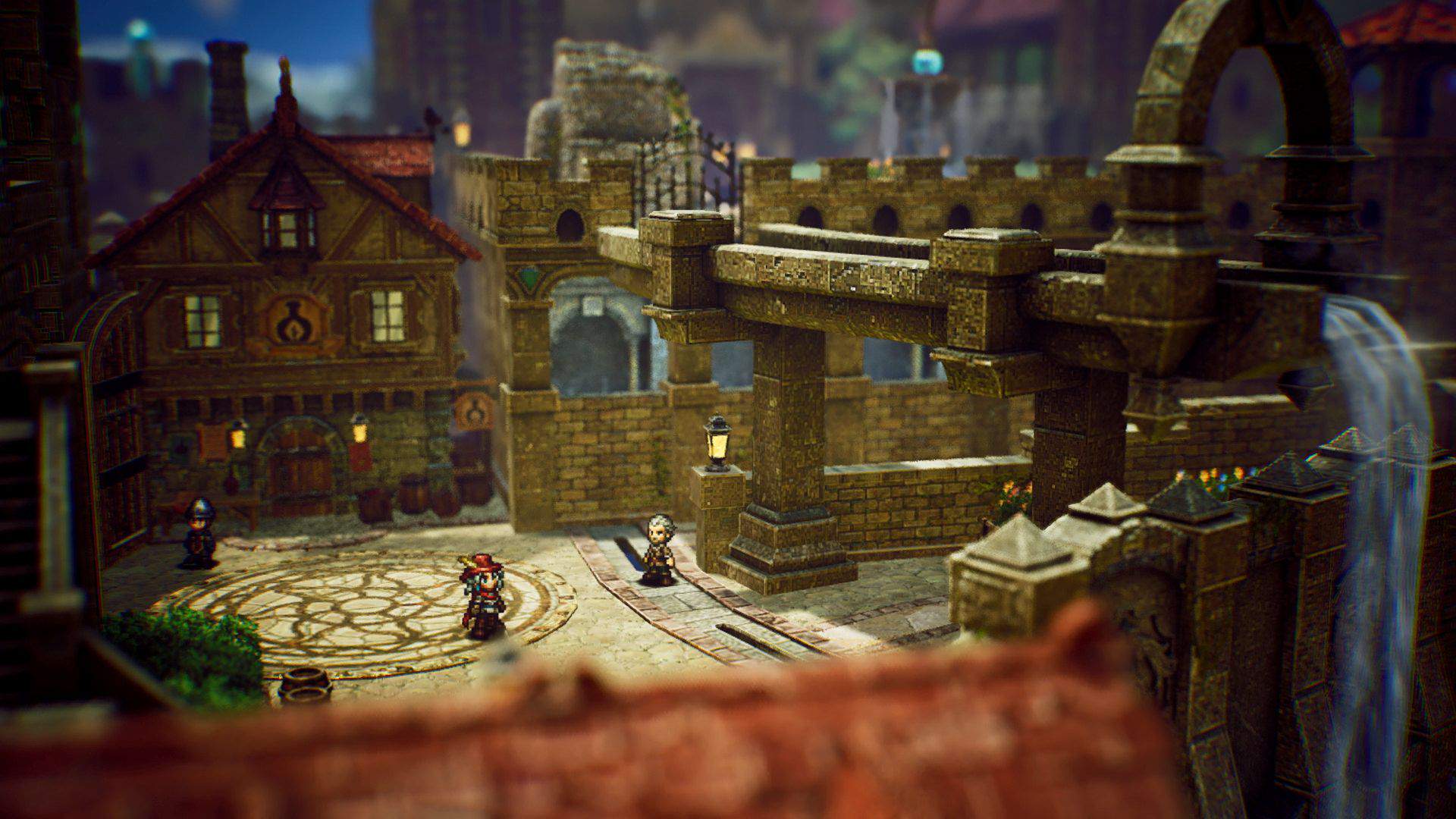
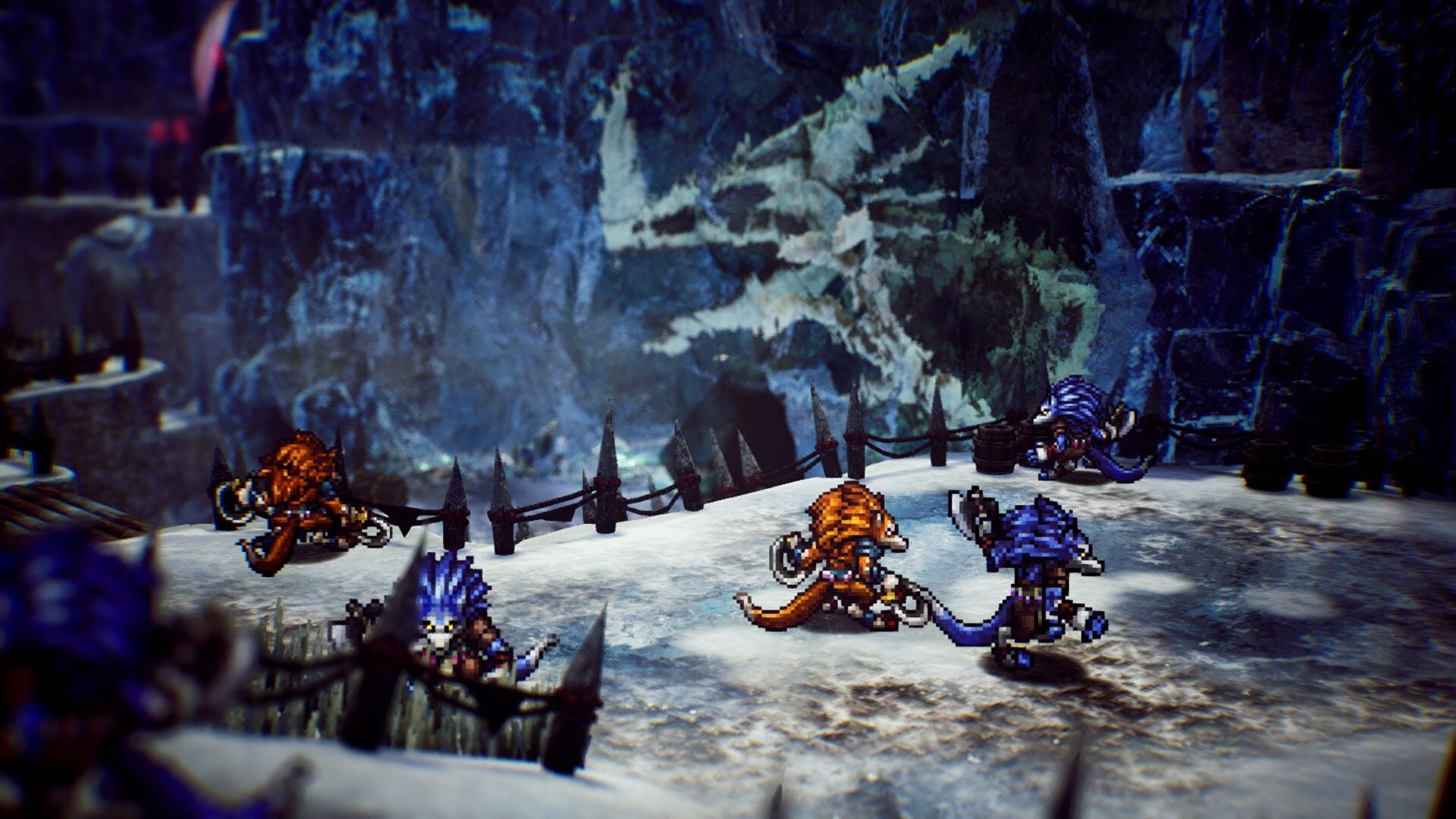
As mentioned above, this title features an HD-2D visual style, which is similar to the recent Dragon Quest remakes. It’s a really beautiful approach, which pops off the screen. The world of Philabeilda is very pretty, and has several different regions, each of which look different. There’s a desert with dangerous cacti, the typical forest area, a meadow with luminescent water, and a snowy region to the north. Of course, exploring a very similar map multiple times does get repetitive, even if it is pretty.
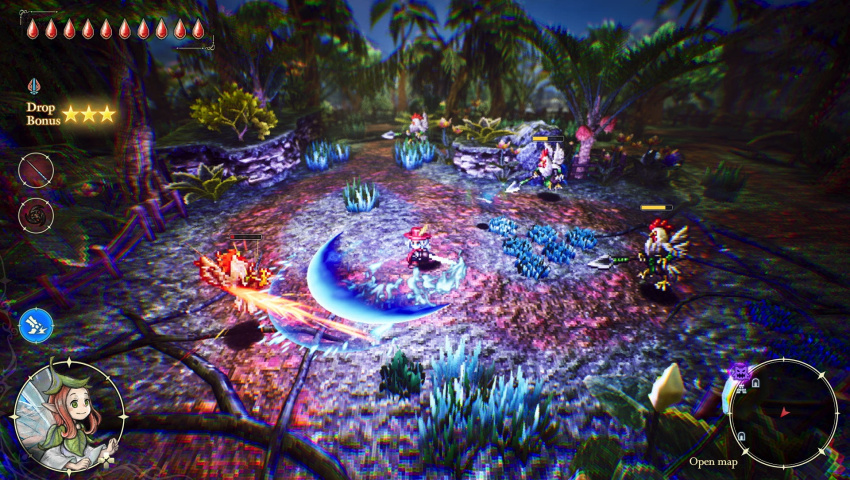
The characters are all sprites, and they’re nicely detailed. They look unique, and resemble the larger, drawn versions that appear beside text bubbles. What’s nice, too, is that checkmarks appear beside those who you’ve spoken to.
Unlike some of its peers, this action-RPG style experience is almost fully voiced. The voice acting is good, too. The same is true of the music and sound effects, both of which can be downright great. Those who like the soundtrack can even easily listen to its music by going to the options menu and scrolling down to ‘music,’ provided that they’ve unlocked the music by playing Faie’s mini-games.
Although The Adventures of Elliot: The Millennium Tales’ release wasn’t on my radar, I’m glad that I heard about it. Playing through it was an enjoyable time for me, and it ended up being the type of game I was needing to play. I love this style of game, much more-so than JRPGs or anything like that.
If you like this type of game, I highly recommend this one. Sure, it can be repetitive, but it’s a nice, cozy, fun and memorable experience. I enjoyed it so much that I continued on after the credits originally rolled, in order to unlock the true ending.
I sure hope that a sequel will be made, or at least some sort of similar experience. If so, I’ll be there day one.
This review is based on the Xbox Series X version of the game, which we were provided.