


My most formative years were lived during the heyday of the 2D and 3D platformer. I can’t count the hours I ‘lost’ to games like Super Mario Bros., Super Mario World, Banjo-Kazooie, Super Mario 64 and Rayman. Now, it seems like those genres are having a resurgence, decades later and on varied consoles.
Recently, I was given a review code for a game called Teeto. However, due to being out of town with family, it unfortunately didn’t get played right away. I’ve rectified that now, and can share my thoughts; having played through the entire game in one sitting.
Put simply: It’s good!
Teeto begins in an underground lab. There, a white rabbit named Nory completes the finishing touches on her latest experiment: a blue, blob-like, creature she names Teeto. It’s at this point where we’re introduced to a world that has been different, ever since an event happened and all of humanity disappeared. The Earth was then left to all of the objects, animals, items and the like that we once owned, cared for or used. These creatures and things gained sentience, making them able to speak, want, move and act like people.
When the Event happened, shadow creatures also came out of nowhere, and started to wreak havoc on the world. They’re mean, they’re dangerous and they must be stopped. The problem is that nobody knows where they came from, what they are or why.
To try to put an end to the shadows, Nory and Teeto venture out into the world, and must complete four different acts, each filled with approximately 5 or 6 unique stages. Said levels are contained worlds, almost, like you’d find in the paintings of Super Mario 64 or in Banjo-Kazooie (except smaller). The characters even jump into images.
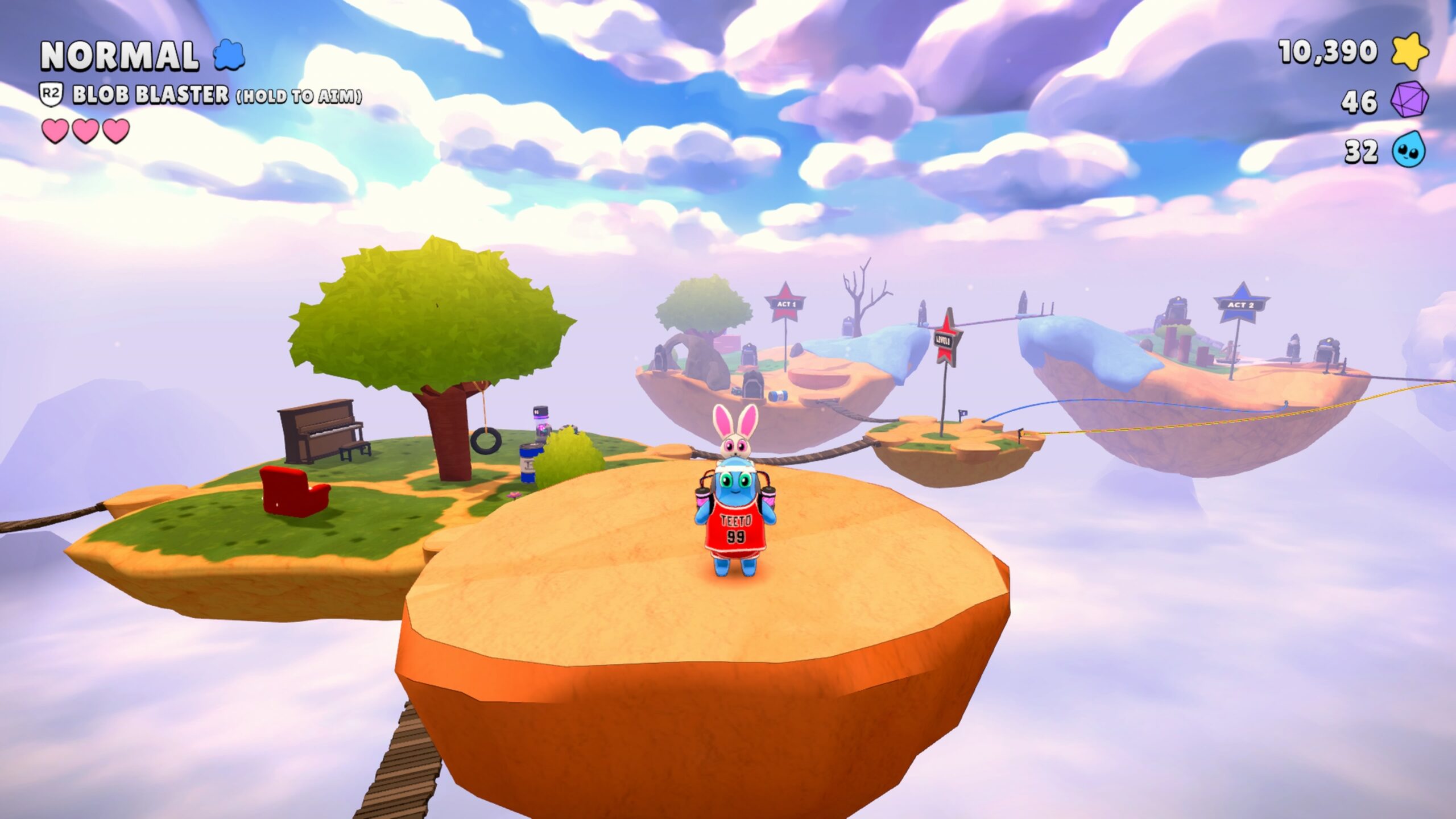
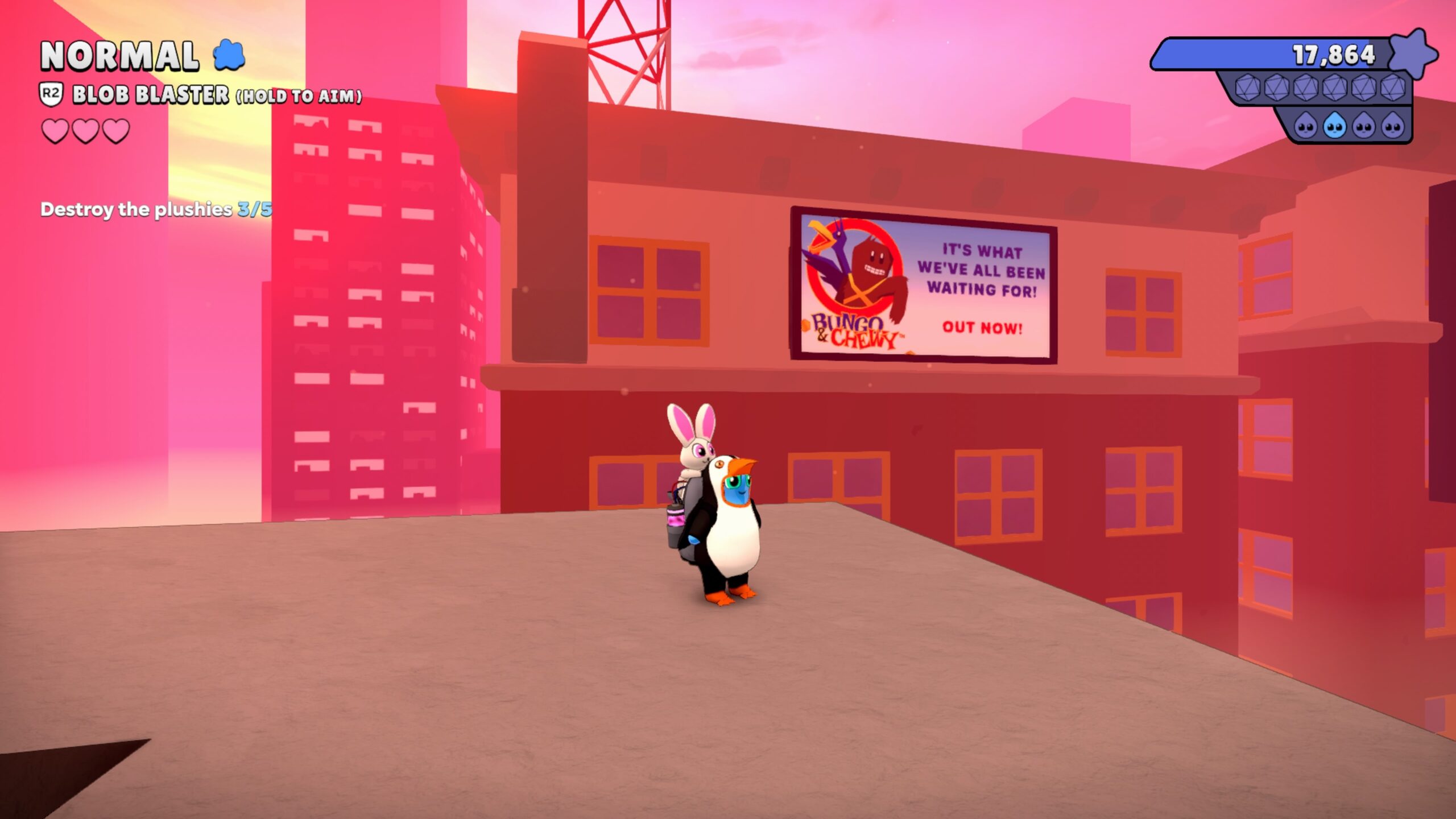
Although individual acts and their stages are normally themed together in platformers, these are all different. As such, you never really know what you’ll get when it comes to the next level. There’s a supermarket with talking beans, a forest with a sentient great tree and a being who doesn’t want her lemons stolen, a winter wonderland, a beach with a pirate ship, a sewer full of ooze, a rooftop with a view and more. Each level felt somewhat different, and a lot of effort was put into crafting them. It showed. These were fun, colourful and delightful stages to explore and complete.
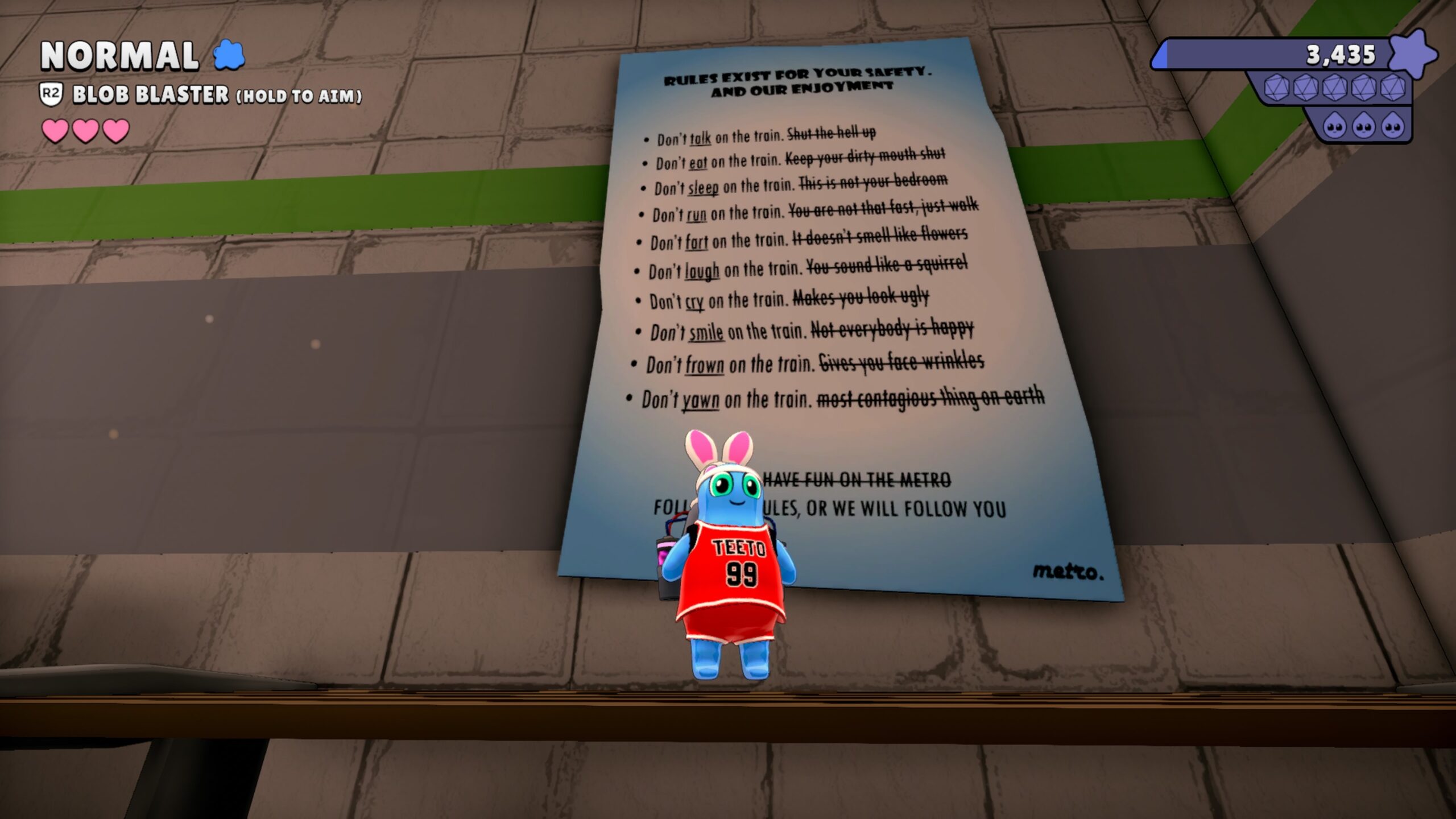
Teeto — which comes to us from a New Zealand-based developer called Eat Pant Games, which was founded by a husband and wife duo — is a creative game, and one that is full of humour. There are a number of comical side quests, characters and homages to memes, pop culture and TV shows. An announcer occasionally says things that are actually kind of funny, and then you meet a baby berry who’s full of enough existential dread for ten. As you carry it, it repeats things like, “Hope is just a candle, burning into nothing,” “Just end me,” “Rot comes for us all,” and “The worms are waiting for me.” I heard those, and his other lines, a lot because the game slightly glitched and acted as if I was carrying him for the rest of the stage.
There’s also an optional activity including a character named Bing Bong, who must be carried to the top of a hill. He utters funny lines, but when he came out with “Chanandler Bong” from Friends and “Hold me closer, Tony Danza,” I was pleasantly surprised and laughed. I’m a big fan of Friends, and Chandler especially.
Later on, there’s a stage set in a typical home, and the TV plays an imitation of the show. However, it’s called Fronds, and stars different plants. They did a really good job with it.
Needless to say, a lot of heart, soul and humour was put into this game. It wouldn’t all work, ot be worthwhile, if the mechanics, themselves, weren’t good. Thankfully, they’re really strong here. Teeto is a game that looks really nice, sounds really good and plays great. The 3D platforming is well crafted, and there are no notable issues on that front. Furthermore, the combat is solid and problem free. You just press the square button to attack, or can use a jump attack, which can also be helpful to target orange balls in mid-air, in order to bounce off of them.
Teeto may be a blue blob of who knows what, but he’s pretty agile, and can move and jump well. It’s not hard to gauge where you’ll jump to, and I only suffered a minimal amount of deaths from missing platforms. Furthermore, he’s able to glide using an umbrella, with the help of his bunny friend (who sits in his backpack). This was inspired by Banjo-Kazooie, and isn’t shy to hide it. There’s even a poster of the two.
This several hour long experience also features some unique and interesting boss battles, which are fun and slightly challenging. There’s the incredibly intelligent abominable snowman with a ripped and chiseled body, who quotes facts as he fights the duo. Then, there’s a massive garden gnome, a giant battle and more. They truly didn’t phone in any aspect of this title. It’s obviously a work of passion.
Before we move on, I need to talk about a very important part of the Teeto experience, which I probably should have mentioned earlier. That is, the fact that it has a very prominent, Kirby-esque, mechanic where you ingest things and get their powers. This is very important for getting around the different stages because, without these abilities, one wouldn’t get far. However, unlike in those games, you don’t ingest enemies. Just things around the environments, like chairs, fires, water springs, flowers, stones, and electricity.
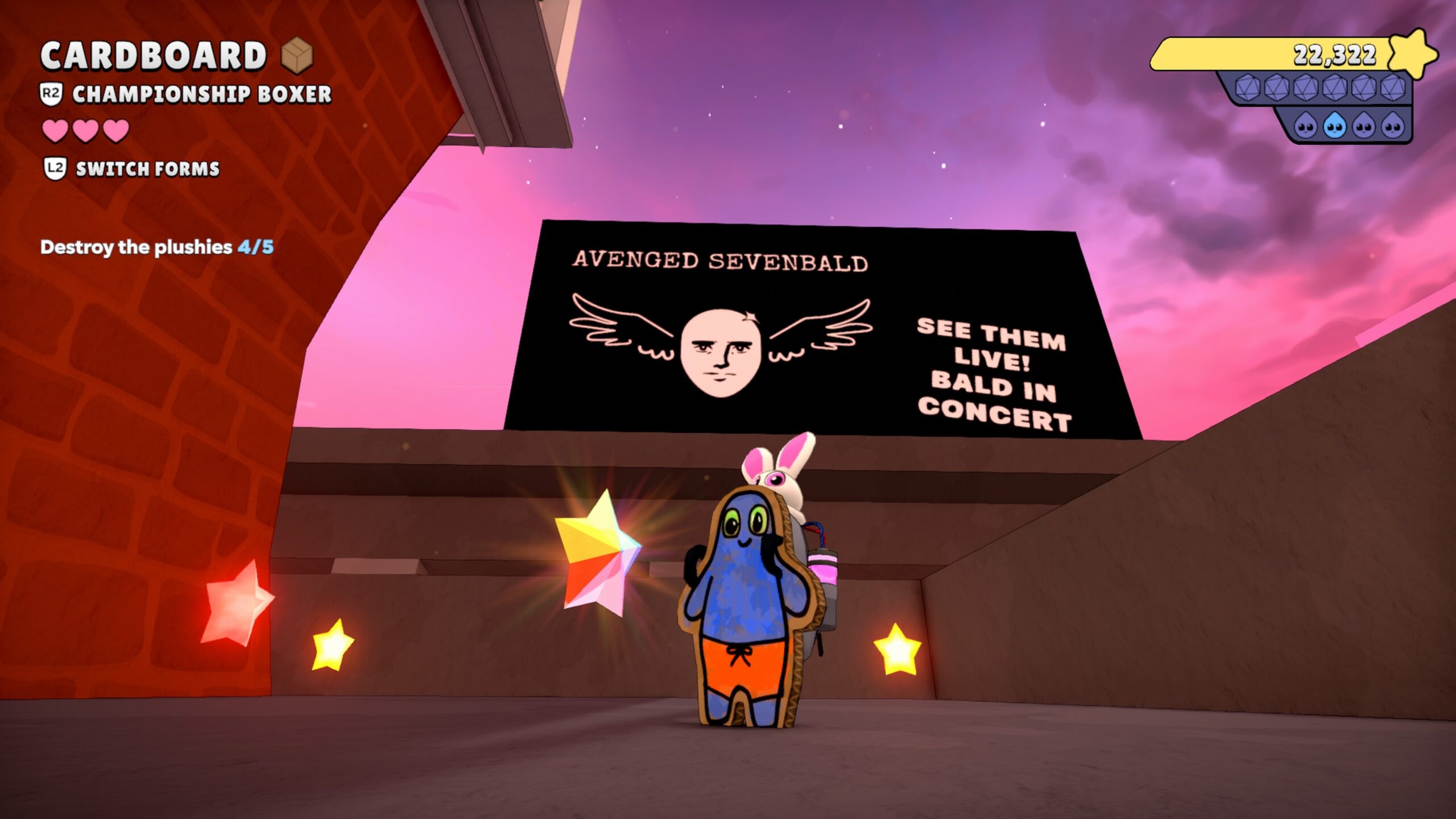
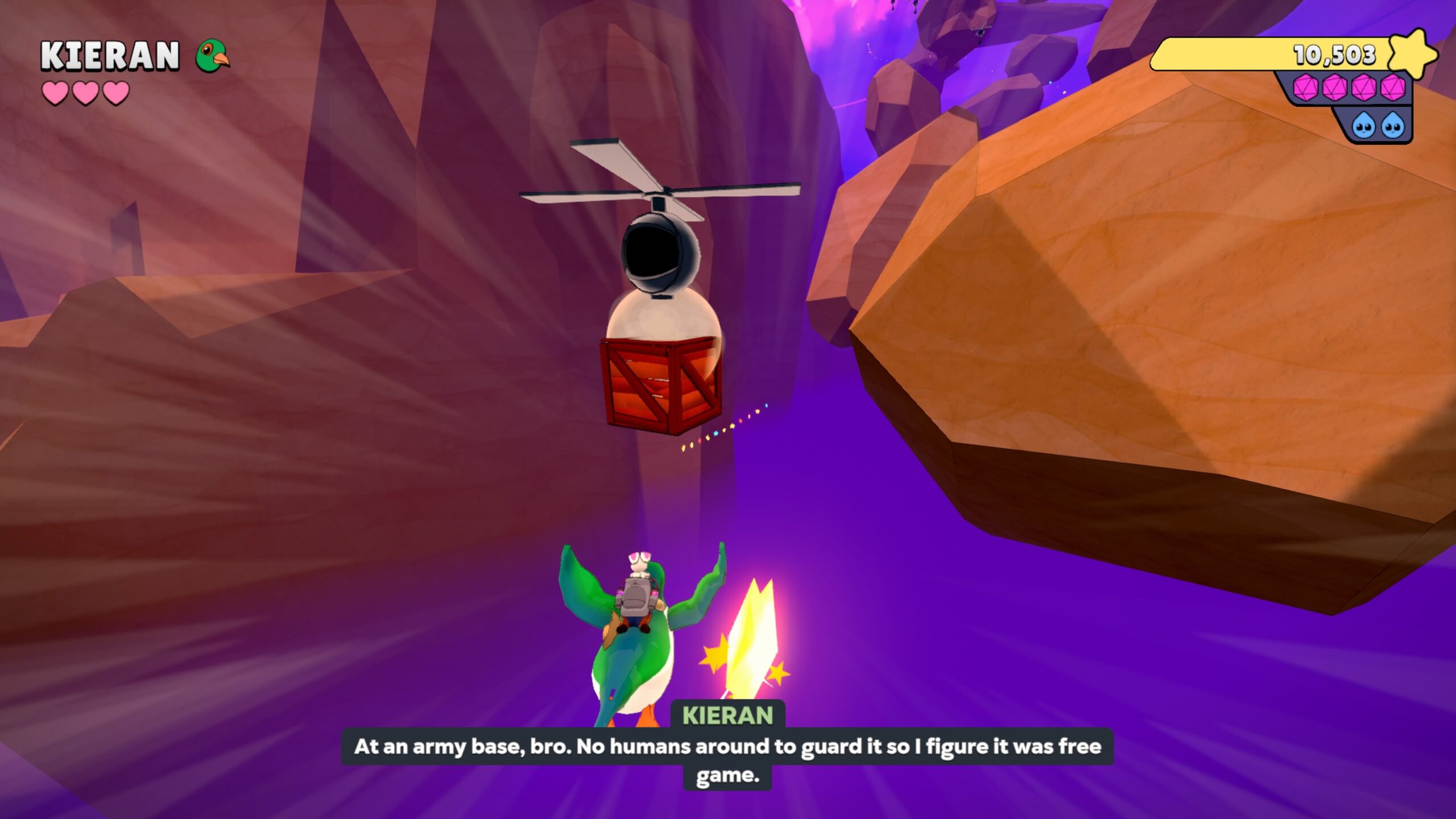
A lot of it is probably pretty self-explanatory, but when you become a chair it’s possible to shoot out little cushions for no discernible reason. Becoming water based lets Teeto put out fires or wet sand in order to make it easier to deal with; ingesting fire allows him to light fuses or melt ice; becoming a flower allows for swinging via vine arms; sucking up electricity lets things like trains and vacuums be turned on; becoming a stone allows for a heavy smash attack that can also cause unstable walls to crumble; magnets let the characters move red shelves/platforms and becoming a cardboard Teeto lets him shoot small boxes out (for no reason) and also allows him to slide through tiny cracks in walls. Cardboard Teeto was my favourite, as he looked amazing. I also liked pail and shovel Teeto, though, because that getup could dig up went sand.
This mechanic works really well, and becomes second nature very quickly.
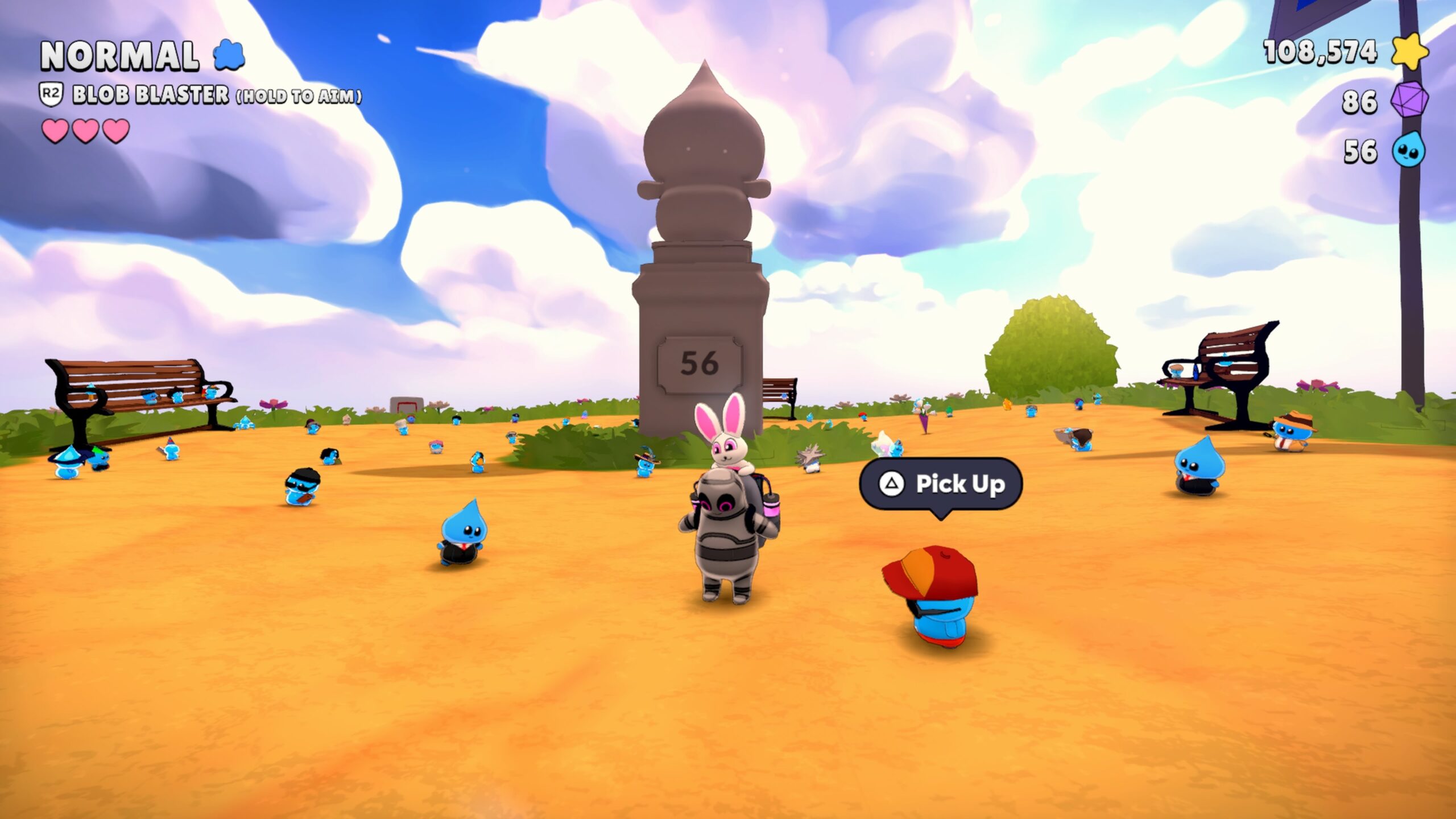
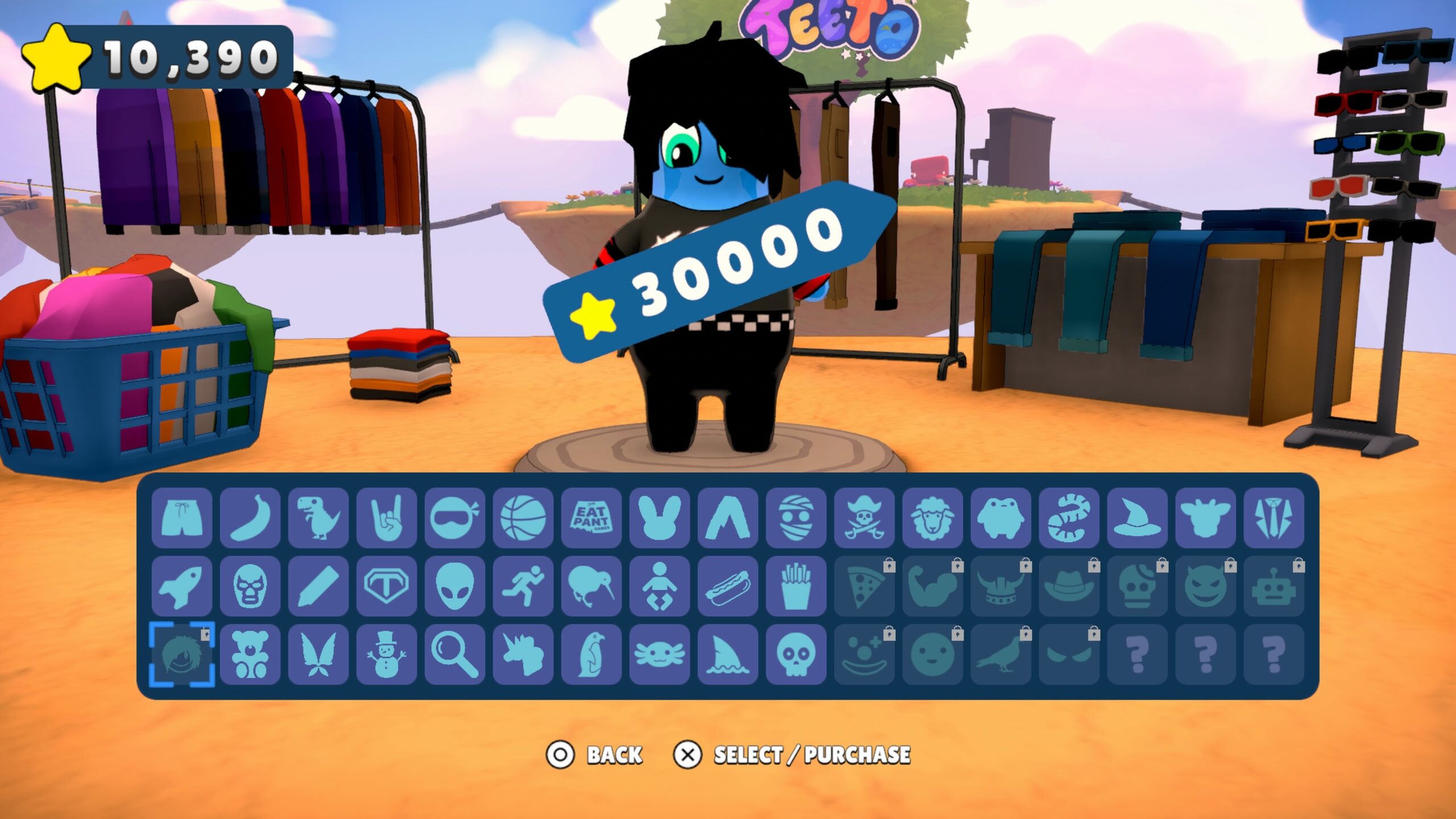
Not only is the aforementioned ability important and necessary when it comes to completing each level. It’s also required to find the many secrets that hide in each, and to complete some of the side quests given out by different NPCs. The collectibles in question include round, purple crystals, and themed Michaels. The former is required to unlock the gate to the next act, while the latter is just for fun, although you can throw them into the void or through a basketball hoop in the world hub. This explorable home base features access to every stage, as well as tributes to your accomplishments and a store. The store is where the star currency you’ve so diligently collected can be spent on many new costumes for Teeto, be it a skeleton, a mummy, French fries, a basketball jersey, a cowboy, a robot, an alien or many more. Not all costumes can be purchased though. Some need to be discovered in-game.
It’s explained that the little blue baby Michaels were Nory’s first attempt at creating a hero who could stand up against the shadow creatures. She failed, but they remained, cute as ever. There are at least two Michaels in every stage, and they’re all different. There’s Skater Michael, Emotionally Unavailable Michael, Punk Michael, Mailman Michael, DJ Michael, and so forth. It’s a really neat and well done collectible, of which I found almost 90%. They were really fun to search for.
Not all stages are typical, 3D platforming, affairs. There’s the odd one, or lengthy section of one, that is on rails (due to being carried or sliding). There are also some ‘endless runner’ style chase sequences, but these have ends. It’s all fun, and breaks things up.
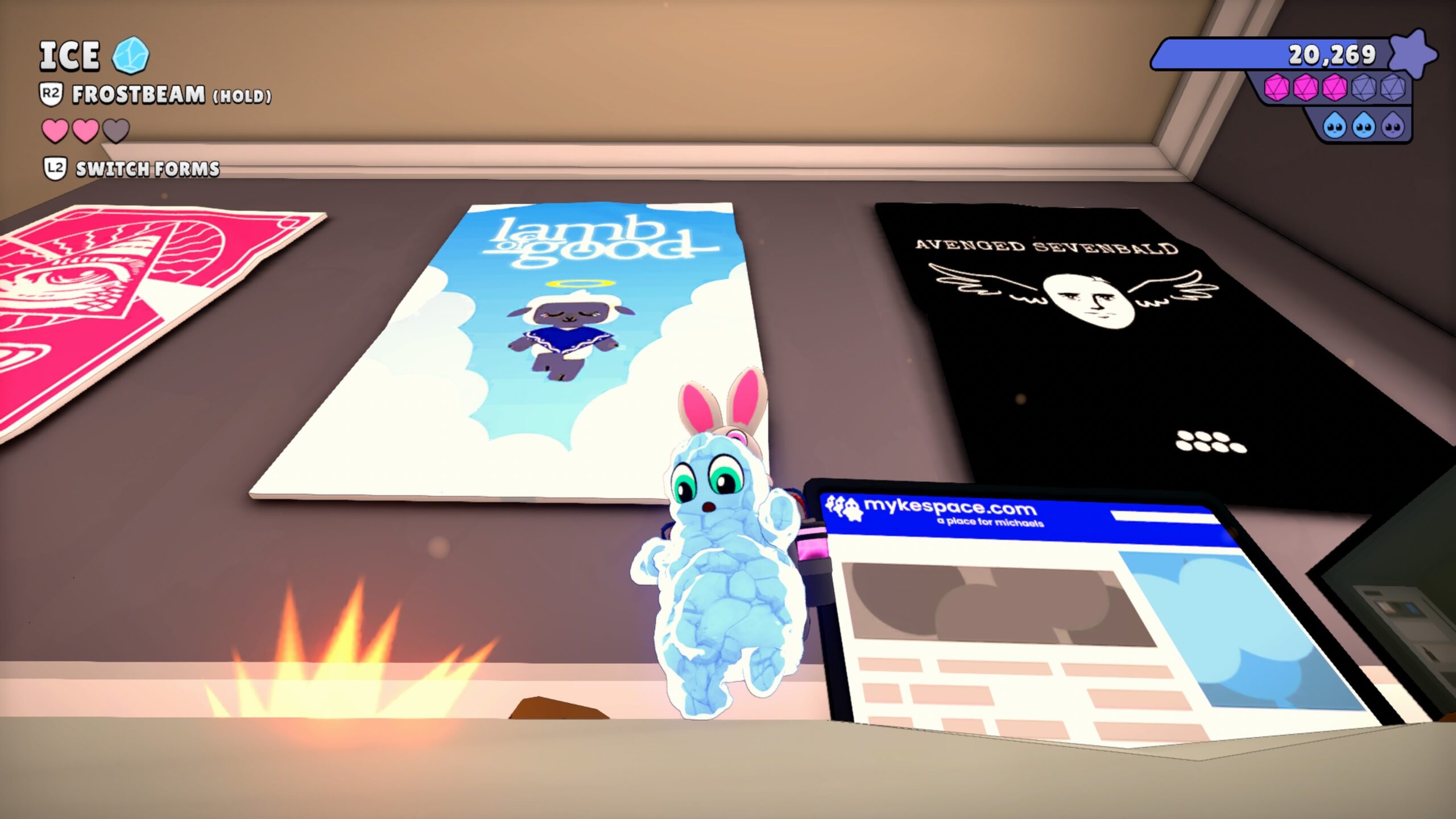
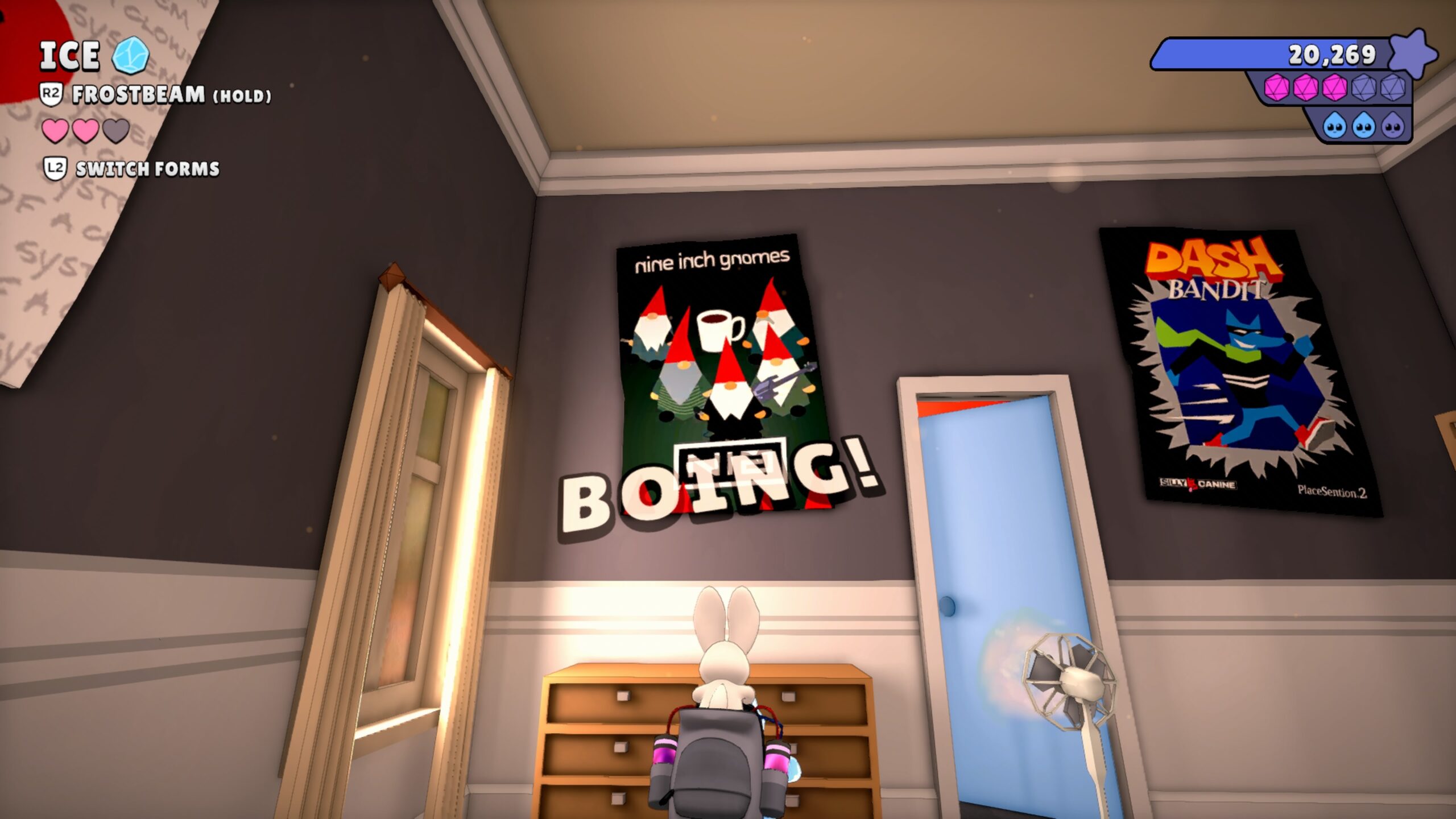
As mentioned above, Teeto is a colourful passion project that oozes love, care, effort and humour. Not only is it colourful, but it’s well made, both artistically and mechanically. The game looks really nice, has a lot of funny jokes hidden around its environments (like System of a Clown, Avenged Sevenbald and Nine Inch Gnomes posters, playing on the names of bands I listen to), and performs very well on the Pro. I only experienced two minor glitches, including the time when the berry kept speaking after being dropped and once when I was unable to jump and had to fall off a shelf to fix it. These were tiny and negligible inconveniences.
The audio is also pretty excellent, with really good voice acting, good comedic timing and strong writing behind it all. The music is also rather impressive, and does a good job of creating relaxing moments and high tension ones. It’s a good mix of soft and heavy.
With all that having been said, I don’t think I need to say more. As such, I’ll just leave you with this: Teeto is a very good game, and it’s a fantastic love letter to the games many of us grew up with. It was made with care, skill and love, and the result is one of the best indie games I’ve ever played. I can’t recommend it enough, and hope that it will soon come to XBOX so that I can play through it again!
Please note that Teeto does offer co-op, but I was unable to try it.
This review is based on the PlayStation 5 Pro version of the game, which we were provided with.