

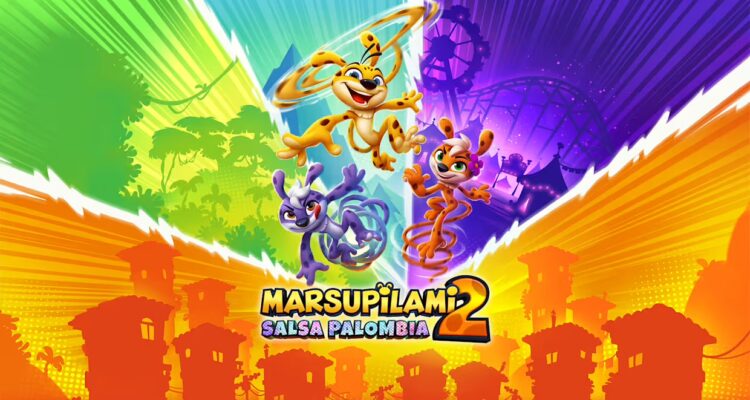
A strange melody has swept through the land of Palombia, and it’s left chaos in its wake. It’s the Mummy Queen again, and it’s up to a trio of marsupials to save the day, once again.
The premise shared above is the basis of a new platformer from Ocellus Services and Microids, called Marsupilami 2: Salsa Palombia. Those who played the first game will likely have known that, but if you’re like me and happen to be new to the series then it needed explanation. This was my first time playing one of these games, after being offered a review code, and I’m glad that I accepted.
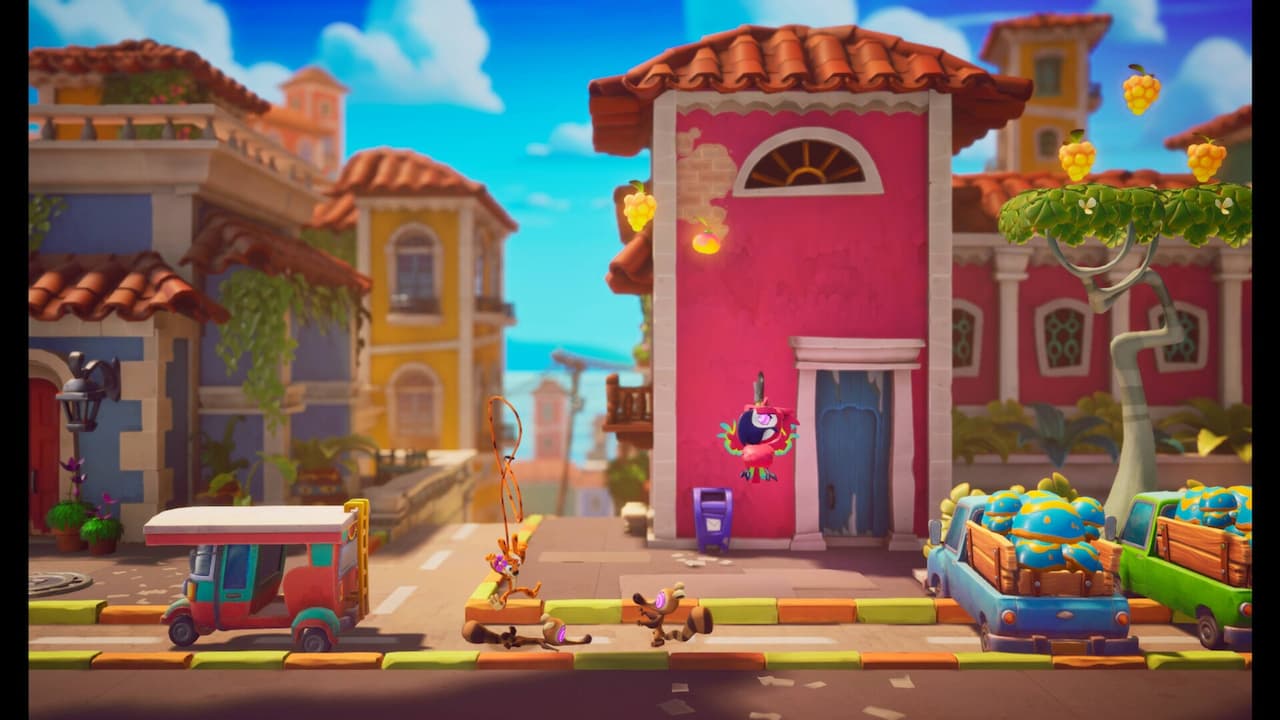
Things begin in the jungle, with a series of stages set amid foliage, vines and the like. Then, they move on to a Latin/South American style city, before venturing into a snowy wonderland and a mysterious fourth locale. Being that this is a colourful, 2.5D platformer similar to more modern Super Mario Bros. releases, one can expect each of these regions to be presented as stylized maps, with little dots representing each of their several stages.
As one progresses through this game, which probably took me around five hours to compete, they’ll collect many fruits. These are technically your score for each stage, but they’re also currency, which is used to unlock bonus stages in each world map. Fruit currency is also needed to unlock certain bonus challenges, called Cups, which task you will completing three short challenge maps. This usually involves breaking all pots, collecting every small music note or defeating every enemy within about thirty seconds, while trying not to get hit because that means death and going back to the start.
There are also large music notes, which act as collectibles akin to the large golden coins in Mario games. Make sure to try to find and collect as many of these as possible, because they are needed to unlock each region’s boss battle, then more are required to unlock travel to the final world. There are usually several to find in each level, and then up to three that are awarded based on how you do in each one. However, there’s another way to unlock three more from each stage: Salsa mode.
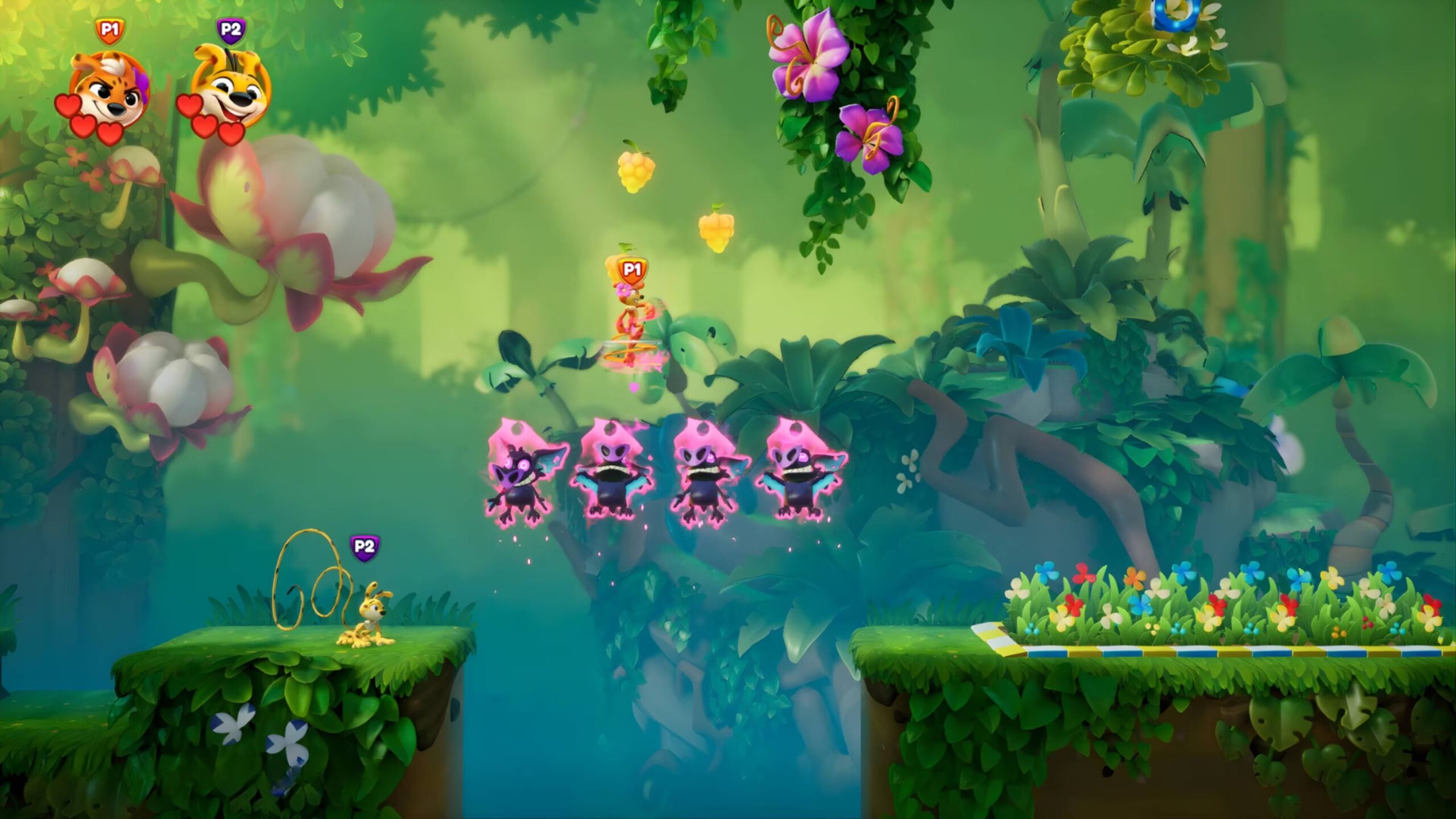
After completing a stage, one can go back and replay it in Salsa mode. This is where the fruits really matter, and it’s also the best way to gain a lot of currency quickly, so long as you do well.
Salsa mode presents a score multiplier system, which offers up to a 4x bonus for every piece of fruit collected. As you collect fruit, your multiplier will occasionally increase, and the fruits themselves will turn orange, then gold and then white and shiny. However, there’s a catch: waiting too long in between pieces of fruit will cause the meter to run out, and send you back to square one. The same is true of being hit by an enemy or some sort of environmental hazard, be it electricity, a vehicle or something else. It’s easy in principle, but difficult to do perfectly throughout an entire level. I managed it a couple of times, but often got too cocky or careless, or simply messed up. That said, losing your multiplier doesn’t mean you’ve failed the stage. It just means that your score will be lower than it could have been, and that you may only get one large music note at the end instead of two or three.
Each stage also has a hidden dojo, where you’ll have the chance to complete one of the aforementioned challenge rooms. Don’t worry if you can’t, because you can always retry them from the dojos located on each world map. That’s also where the cups are purchased/unlocked and played from. Furthermore, there are battles and time trial dojos that pit the player against a friend for unlockable cosmetics. I played solo, so I didn’t get to try this, but I did notice it and the fact that the game gave me the option to play with a friend from the start. It’s local co-op, which is difficult for me, though I’m glad it’s available.
Now, let’s talk about the actual gameplay, which features three different marsupials: Twister, Hope and Punch. They all have their own abilities, as you’d expect. Twister can use his turbo glide to bypass certain barriers or simply glide straight across, which can be helpful when there’s a small area to get through between two sets of spikes. Meanwhile, Hope has a spin jump, and Punch can turn into a bouncy ball by tucking himself in. The latter move kind of looks like a ball of yarn, and lets you bounce off of spikes instead of being damaged by them. It can also hurt enemies, or break certain objects, like big boxes and blocks of ice.
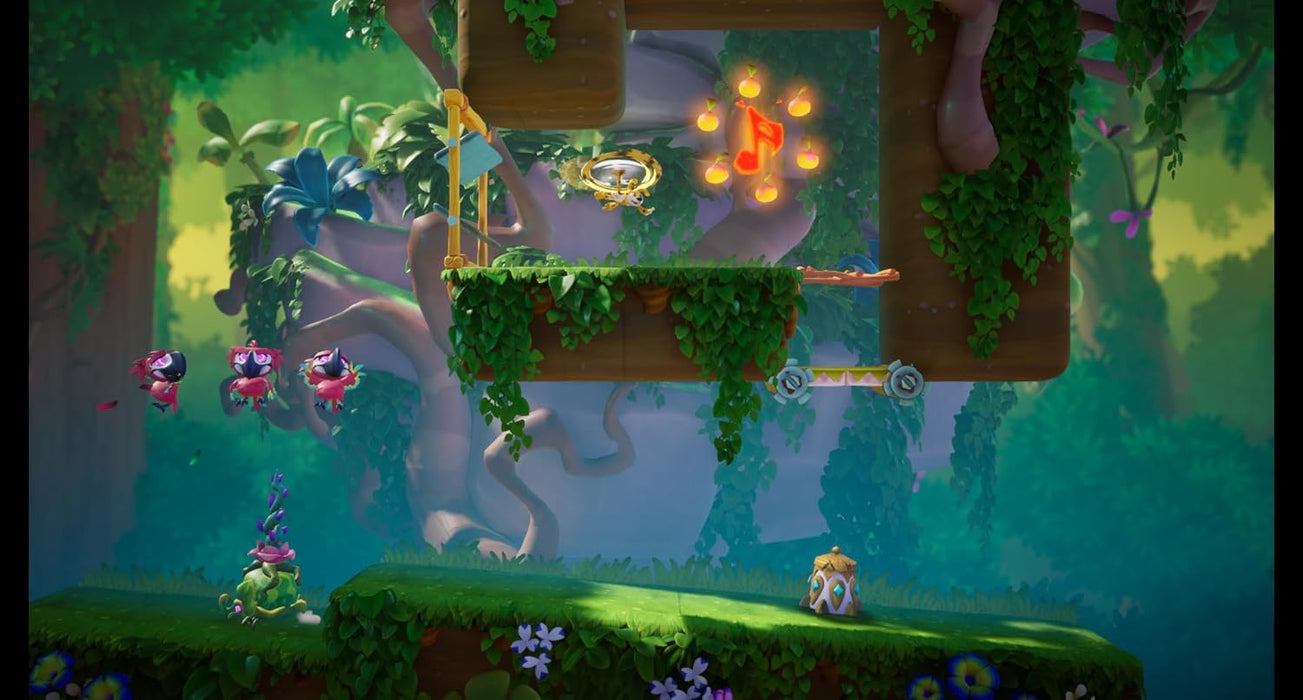
The player gets access to two of these three heroes in each stage, using a system that is predetermined and not based on user choice. It depends on the makeup of the level, which makes sense. I preferred when I was given Twister and Hope, because they moved faster, were more agile and had the best abilities. Punch was too heavy, and I never fully got the hang of his bouncing ball ability, although it did come in clutch at times. Of course, it was required for progression as well.
Since I played through Marsupilami 2: Salsa Palombia on XBOX, I had to press Y to change characters. It was easy, almost instantaneous and worked well. I got hit once when I made the switch at a stupid time, but that was on me.
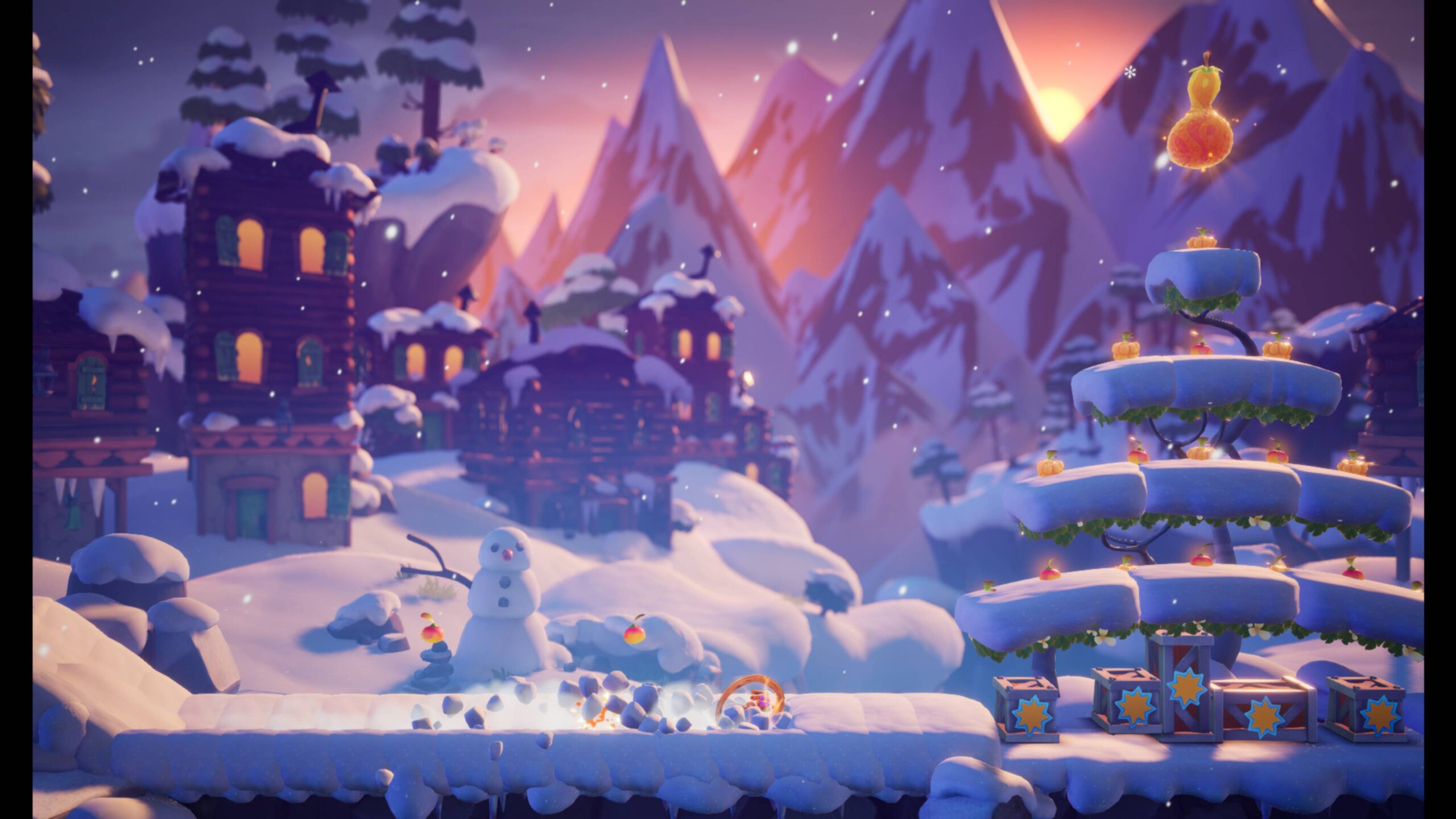
The core gameplay loop found herein consists of a lot of running, rolling (which hurts enemies, destroys flowers hiding fruit, and increases your speed), jumping, gliding and using the characters’ special abilities. There’s also a good amount of things to grab onto, in order to reach higher areas, use zip lines, or get across large expanses. It’s easy to jump from one to another, so long as you wait for the enemies in-between to move out of the way, or jump over them. Birds can be jumped on, and certain platform types act like trampolines (offering better jumps if you butt slam them), but purple enemies can only be bounced on by one character, using their spin jump. The others receive damage if they touch these foes, and you only get three hearts, though there are occasional health pickups and a very fair amount of checkpoints.
Side note: This game also offers three different difficulty modes, which can be changed to at any time. Easy mode makes it so that you can enjoy the story without worrying about hearts. I played on normal, and found the game to be satisfying in terms of challenge.
There isn’t much in the way of story, or even character introduction. Ghastly, music themed, creatures come out of a portal and chaos ensues, alarming the main characters and causing them to do something about it. That’s basically the gist of the opening cutscene, which looks nice. There’s no dialogue or real story depth, but that’s fine. This is a platformer, after all. It would have been nice if they’d introduced the main characters, somehow, as I don’t think I even learned their names while playing, unless I missed something.

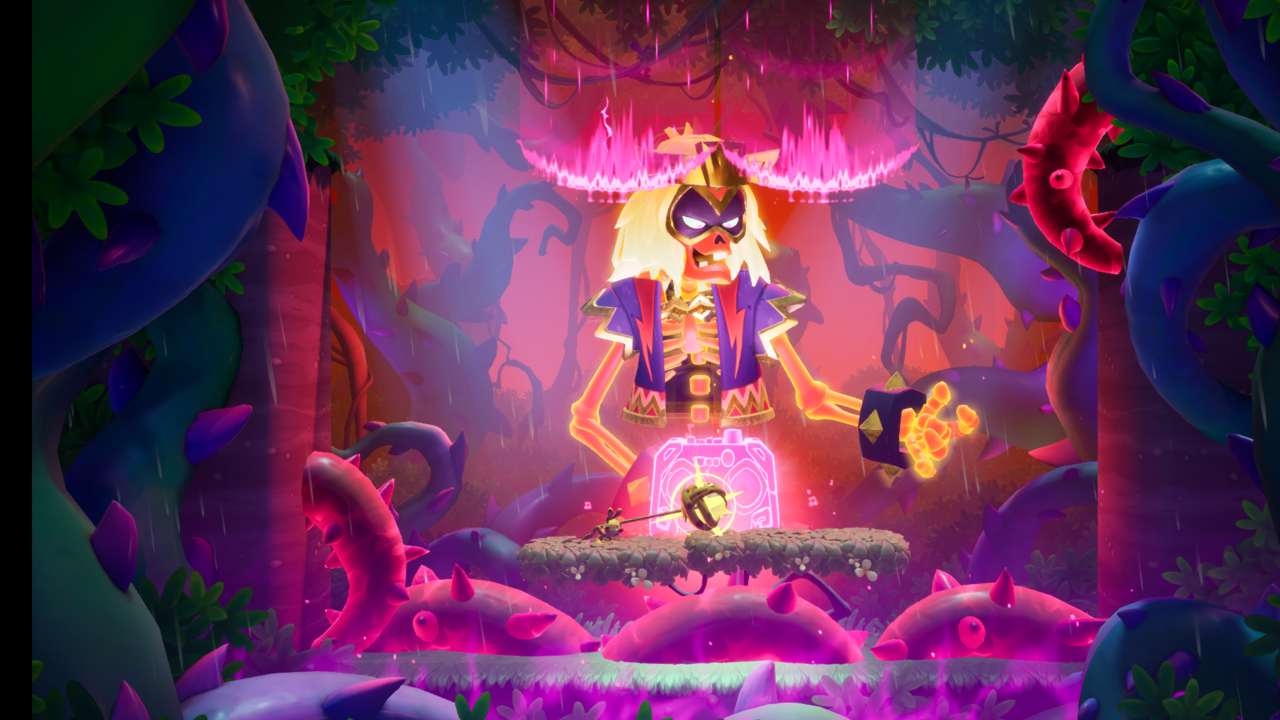
Those ghastly baddies act as the first three bosses, and they all embody a different style of music. For example, the first one — a skeleton who plays air guitar and drops pink elemental hazards — is a rock and roller, or metalhead. As such, the music found in each world is of a different style, and each stage has its own unique music. Furthermore, while playing in Salsa mode, the music is intensified. It’s all extremely good, too, and so nicely varied.
The first three bosses, themselves, are all pretty unique in terms of designs, mechanics and stage design. However, one thing remains true between them: the goal is to avoid being hurt until you can attack the magic boombox that they each carry and turn up before the battles begin. It’s all well done, and appropriately challenging. I admittedly laughed (but not meanly) when the dance floor opened and the final boss battle began with dancing.
All of the music theming, and even some of the gameplay, which features a good mix of platforming, basic combat and on rails segments, reminded me of Rayman Legends. That’s a great thing.
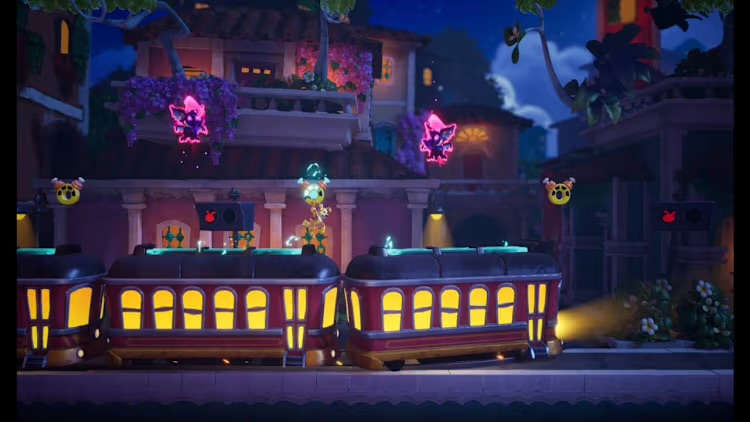
Marsupilami 2: Salsa Palombia is as colourful as it is musical, and it looks great. The cartoony look really works, and the different stages all feel like they were hand crafted with love and passion. In fact, the whole game oozes with it. There were numerous times where I was blown away by the visuals — especially as I got closer to the end.
There were no performance issues during my several hours with this game.
It’s very easy to recommend Marsupilami 2: Salsa Palombia to any fan of the platforming genre, and simply to those who like good video games. This is another home run from Ocellus Services, who really impressed me with The Smurfs: Dreams nearly two years ago. Now, I want to play the first game in this series, as I evidently missed something.
This review is based on the XBOX Series X version of the game, which we were provided with.