

Although I’ve admittedly never had much interest in the National Basketball Association, or other basketball leagues and tournaments, that hasn’t been the case with video games based on the sport. When I was a lot younger, I would often rent NBA Jam for my Super Nintendo, and spent a number of hours playing it solo and with friends. I also owned, and really liked NBA Street, as well as the first NBA Courtside with Kobe Bryant game for N64. Those aren’t the only ones I spent a decent amount of time with, but they’re the main titles of note.
Outside of NHL games, where I haven’t missed any of the more simulation-based games, I’ve gravitated more towards arcade experiences with other sports. Basketball is, perhaps, the most fun when it’s done right, with arcade mechanics and an addictive gameplay loop. That’s why I was looking forward to playing NBA The Run from Play by Play Studios.
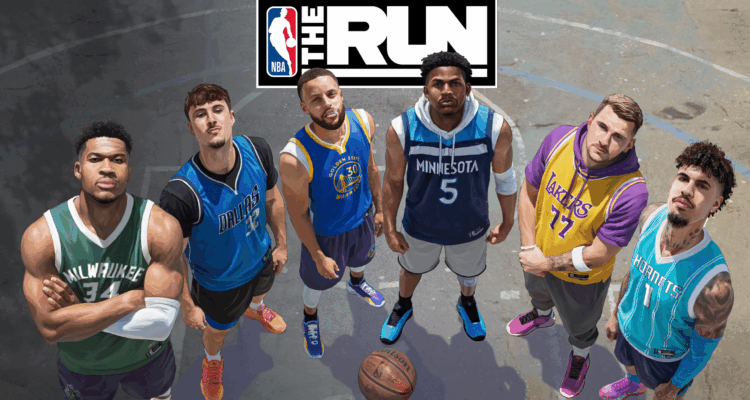
NBA The Run is a colourful, arcade, basketball experience that is fully licensed by the Association. It features a number of the stars of today, including but not limited to Stephen Curry, LeBron James, Kevin Durant, Giannis Antetokounmpo, Nikola Jokic, LaMelo Ball, Scottie Barnes, Kawhi Leonard (who’s not on load management here), and Devin Booker. Those are just some of the thirty-two available real-life players, which are bolstered by some made up, unlockable characters. Some of these stars also have unlockable rookie variants, but all have different jersey options that you can obtain and use.
There are no legends to be found as of yet, but I’ve heard rumblings that they’re coming. That’s good, because the newly created characters aren’t that interesting.
This is a three-on-three b-ball game, which is faster and more chaotic than the actual sport it’s based on. Players can dive for the ball and fill a meter in order to become ‘In the Zone,’ which significantly boosts their signature abilities, meaning things like guaranteed threes or dunks. All players are different, of course, as they are in real life, meaning that you’ll want to choose wisely. Each has his own strengths and weaknesses, and height makes a difference too. They essentially fall into types, like those who are great at threes, those who are strong dunkers and defensive wizards like Wembanyama. If your team doesn’t have one of those, you’re likely going to be in trouble.
What helps keep things somewhat interesting is the fact that each short match ends up being a randomized type. There’s an old school one, where it’s the first to seven and every type of basket only counts as one, there’s one where threes are worth more and another where dunks are prioritized. You’ll never know what each match is going to be, as it’s all randomized and chosen by the computer.
Due to the above, it’s important to pick a varied team, with different heights and skills. Certain rule variants will, understandably, put certain players at a disadvantage.
It’s important to mention now, that NBA The Run is an online only game. As such, there’s no single player career mode, tournament or even an arcade ladder for those of us who prefer to play solo. Instead, its three different game modes predominantly focus on online play with and against others. There’s crossplay, though, which helps keep the player count up.
Oddly enough, despite its focus on working together, and the fact that your squad stays together despite winning or losing, there’s no voice chat to be found in this game. As such, it’s very hard to communicate with your teammates, or call for the ball. It doesn’t help that some people are severe ball hogs, who rarely pass.
The game earns its title by being about taking runs at championships, through a knockout style tournament. This occurs in all modes, and means that there’s little room for error. Matches are usually a few minutes long, and either end when a set score is reached or a timer ends its countdown. This means that a full tournament run will only take you maybe fifteen minutes, making the experience about short bursts as opposed to long sessions.
Those who wish to control all three of their chosen ballers can do so in Knockout Solos. Here, one human player goes up against another, in a court based battle to see who moves on.
The best of the two main modes, though, is Knockout Squads. That’s where players team up with two others, in order to form a squad of three chosen stars. Then, they play against other squads, in a winner moves on capacity. Regardless of which mode you choose, though, the goal is to make it to the final match of the playoff bracket and win a championship. That’s easier said than done, though.
There is a third mode, but it won’t be applicable to everyone. Called Knockout Friends, it allows players to create their own tournaments with up to 48 players in total. You can create parties, and assign your tournament a code so that friends can access it. Sure, it is technically possible to play against bots here, but it’s still a live match and not the type of single player mode we’d like. The bots aren’t very good, and AI teammates flank the one player you get to control.
When a game begins, the ball is placed at centre court. After a short timer counts down, the first player to grab it gets control for their team. This usually involves diving towards centre. Of course, this rush can put one at a disadvantage when it comes to defending, if possession is lost from the get go.
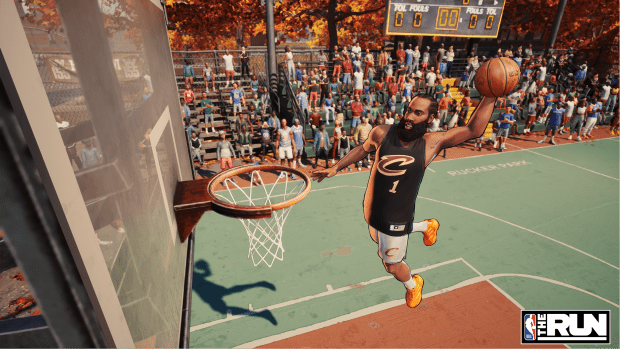
The core gameplay involves a faster-paced variant of basketball, where it’s easier to land shots and dunks than it is in real life. Blocking can be difficult, and you only get a certain amount of boost and steal attempts before your stamina depletes. It can get pretty chaotic, which is why I’m glad that the developers provided an option to grayscale one’s opponents, making it easier to delineate who’s who. It also helps that one team is skins, while the other is shirts.
Still, despite the ability to grayscale your opponents, I sometimes lost track of the ball due to all of the commotion. The camera isn’t perfect, and is partially responsible for this. Plus, switching players doesn’t always give you control of the one you’re hoping to assume next.
It’s possible to pull off some impressive special moves, but the controls can take getting used to. Competing against others who’ve gotten good at that can be difficult, too.
Playing defence can also be a challenge, as it doesn’t control or play out as well or as easily as offence does. Computer controlled players don’t follow the play incredibly well, blocks and steals feel inconsistent, and it can be hard to get back in time, especially if you’re playing solo.
Going in, I was hoping this would be the next arcade sports game to hook me, and wanted it to be something that I would keep coming back to. However, I came away feeling like it needed more time in the oven. While the gameplay can be pretty fun, it feels like something is missing and gets repetitive faster than it should. Furthermore, the controls and depth perception can be an issue at times; especially when the ball is loose. It’s an alright game, but not as immersive or as addictive, or as polished and fun, as some of the classics that came before it. Simply put, it lacks depth and content, and doesn’t feature enough arcade elements to feel unique. A lot of the gameplay is quite grounded.
There are also some questionable ball physics, and animations. I get that the developers were going for gameplay that rarely stops, and momentum that just keeps on going, but the ball will bounce in strange ways at times, and players will grab it when they’re in its proximity as opposed to realistically. Dunks and shots sometimes don’t look right either, due to this.
The fact that there isn’t a true single player mode is also really disappointing, I must admit. At least there’s a practice mode called Shootaround, where you can try things out by your lonesome.
Those who play a lot will rank up, after earning experience from every run. Credits will also be earned after each one, allowing for different things to be purchased from the store, including team logos to be used as icons, different banners, unique taunts and various types of dunks. It takes quite a while to earn enough credits to buy a lot of things, though, unless you win all the time. Thus, things can feel like a grind. It doesn’t help that some of the dunks are locked behind high level requirements, with the ones you start out with being quite basic. You can only equip four of them too.
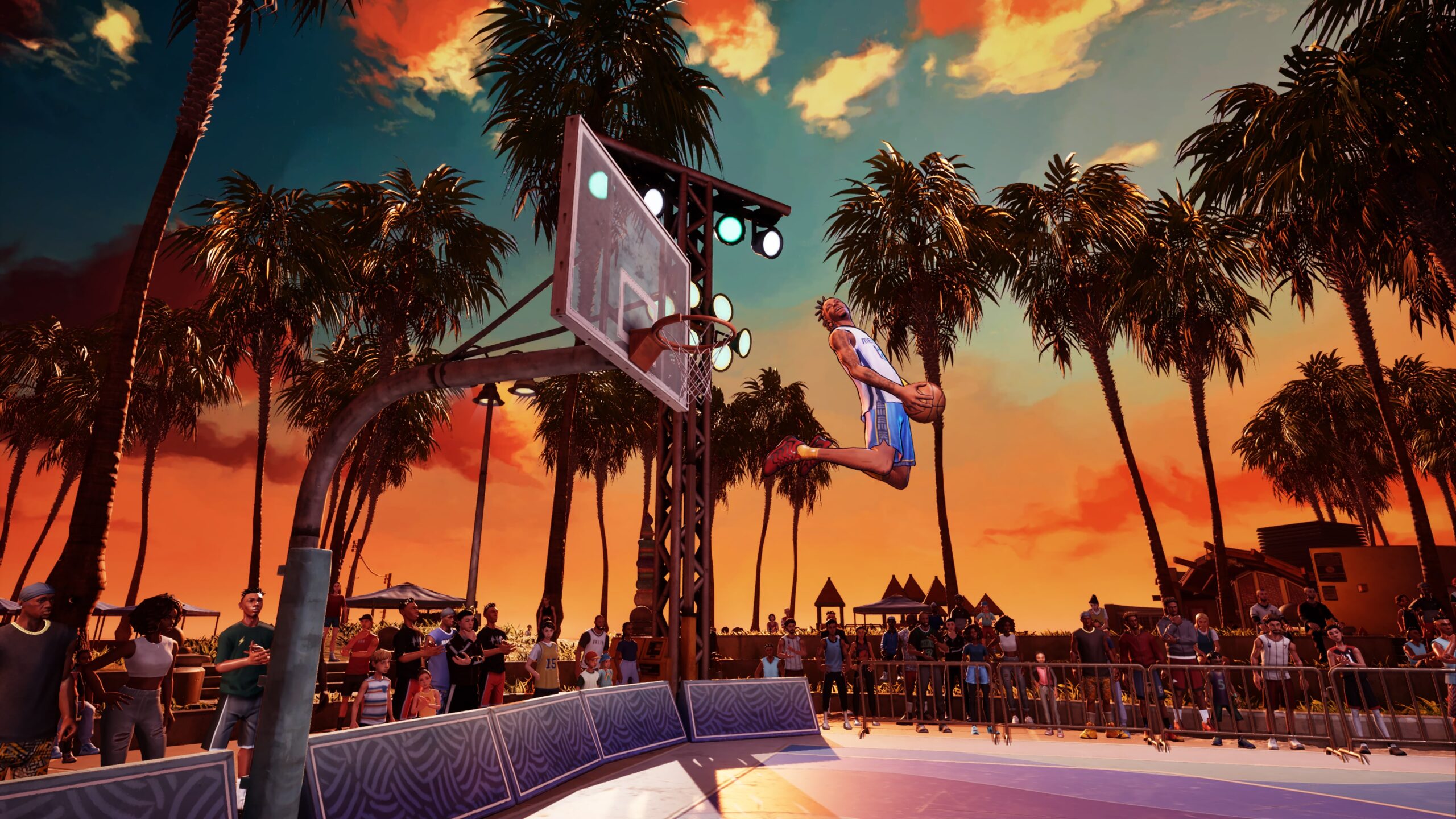
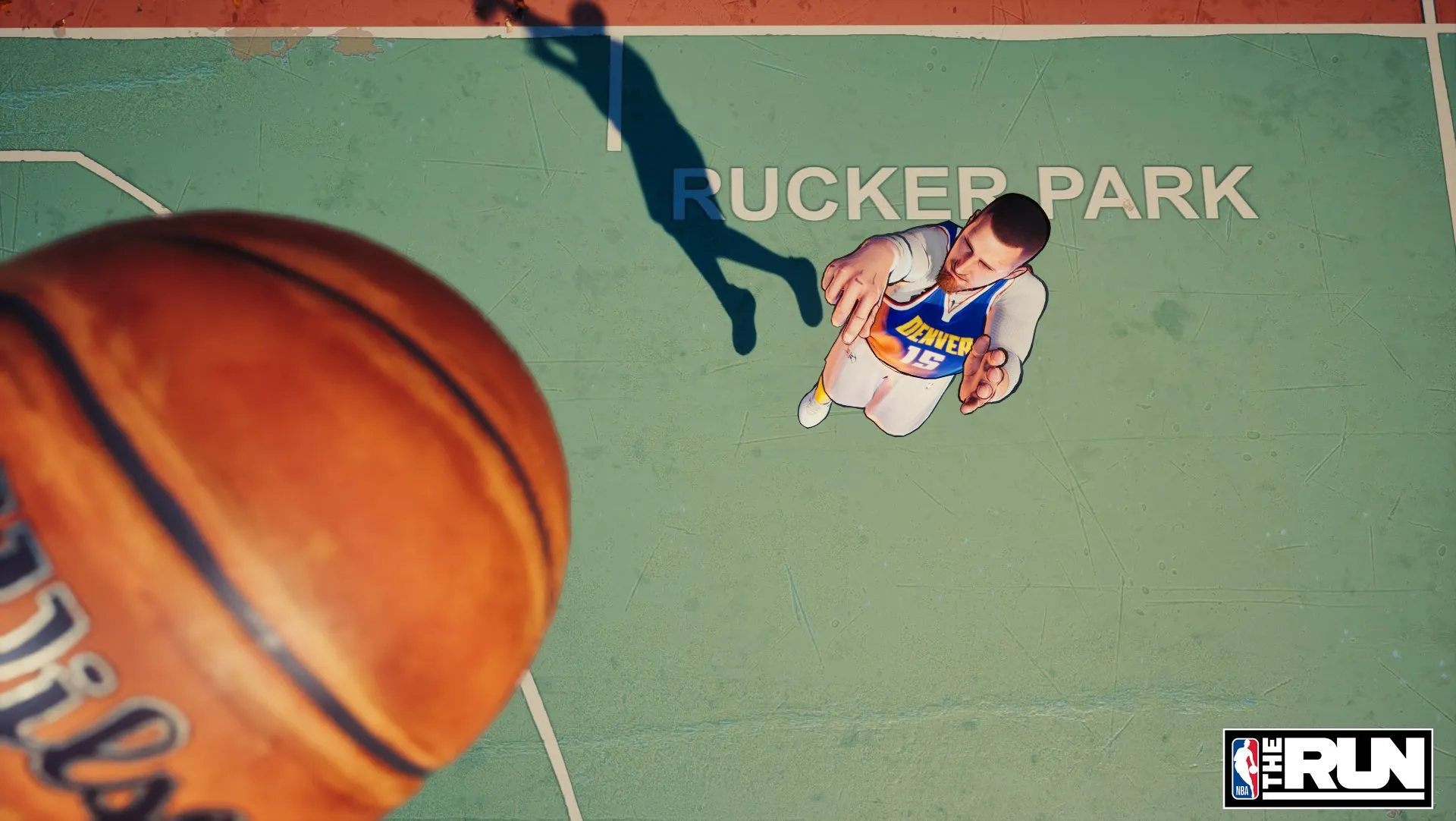
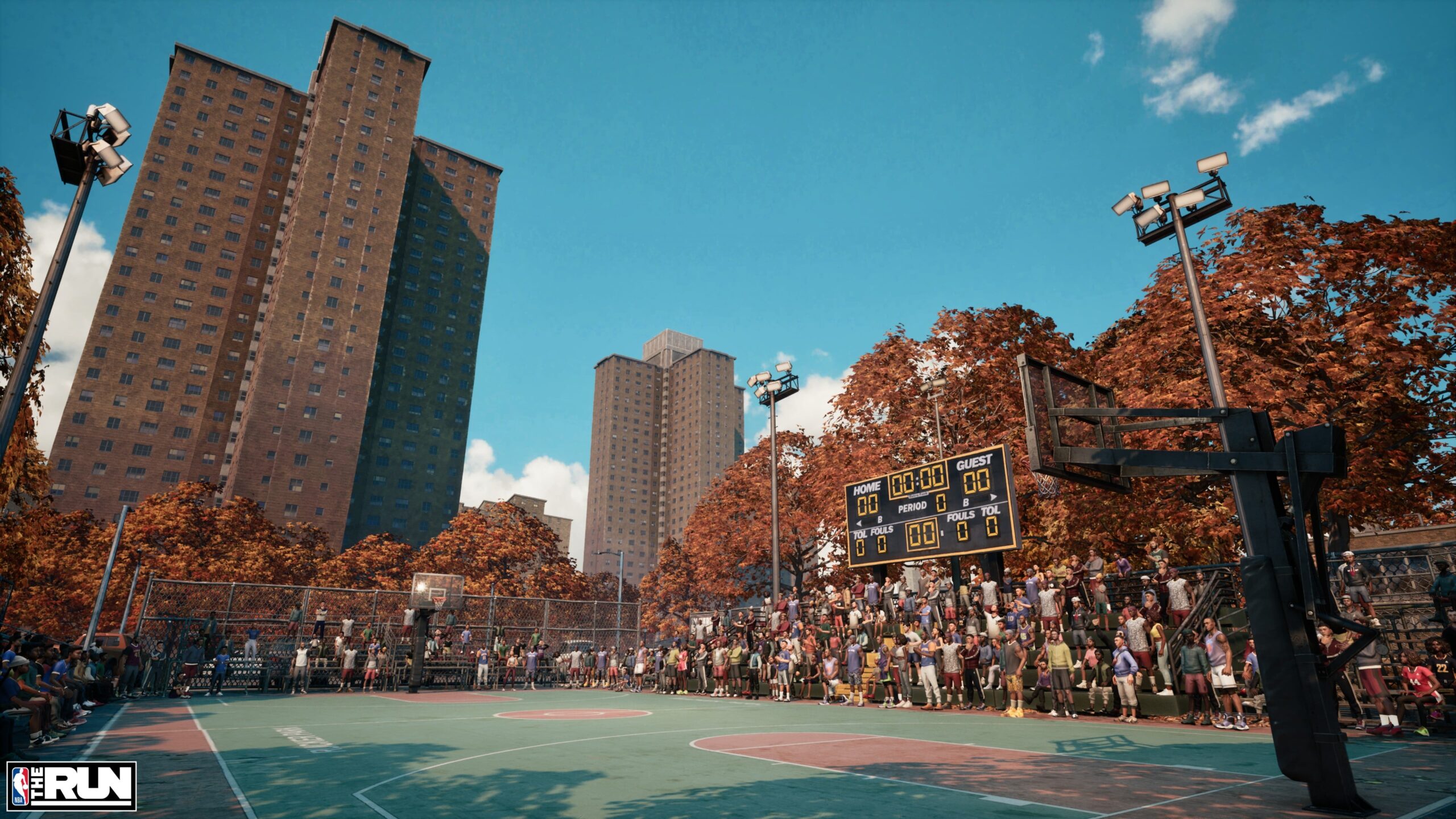
Although this is an NBA licensed game, the action takes place on different street courts and at varied locations. The list includes a Philadelphia elementary school that’s seen much better days, a tenement in the Philippines where people watch from different floors, Venice Beach, Rucker Park, Beijing and even a Toronto Raptors court in David Crombie Park. It’s also possible to occasionally play on finals variants of some of these.
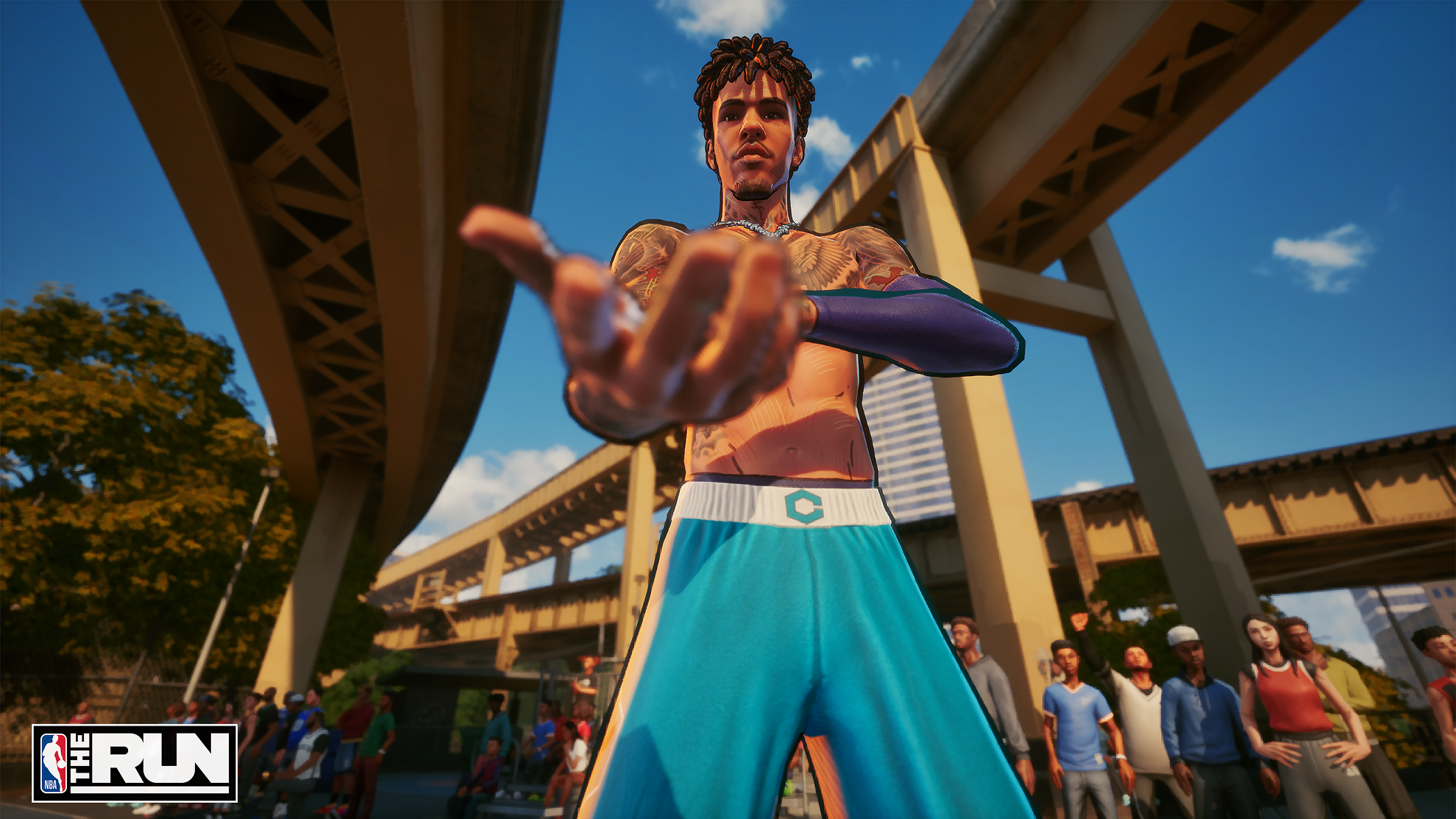
The courts, themselves, are all varied and colourful. Each one looks great, and different, and has its own atmosphere and style. There are also lots of people watching on, and sometimes things going on in the background. It’s all quite detailed, and looks great. The energy is noticeable, too.
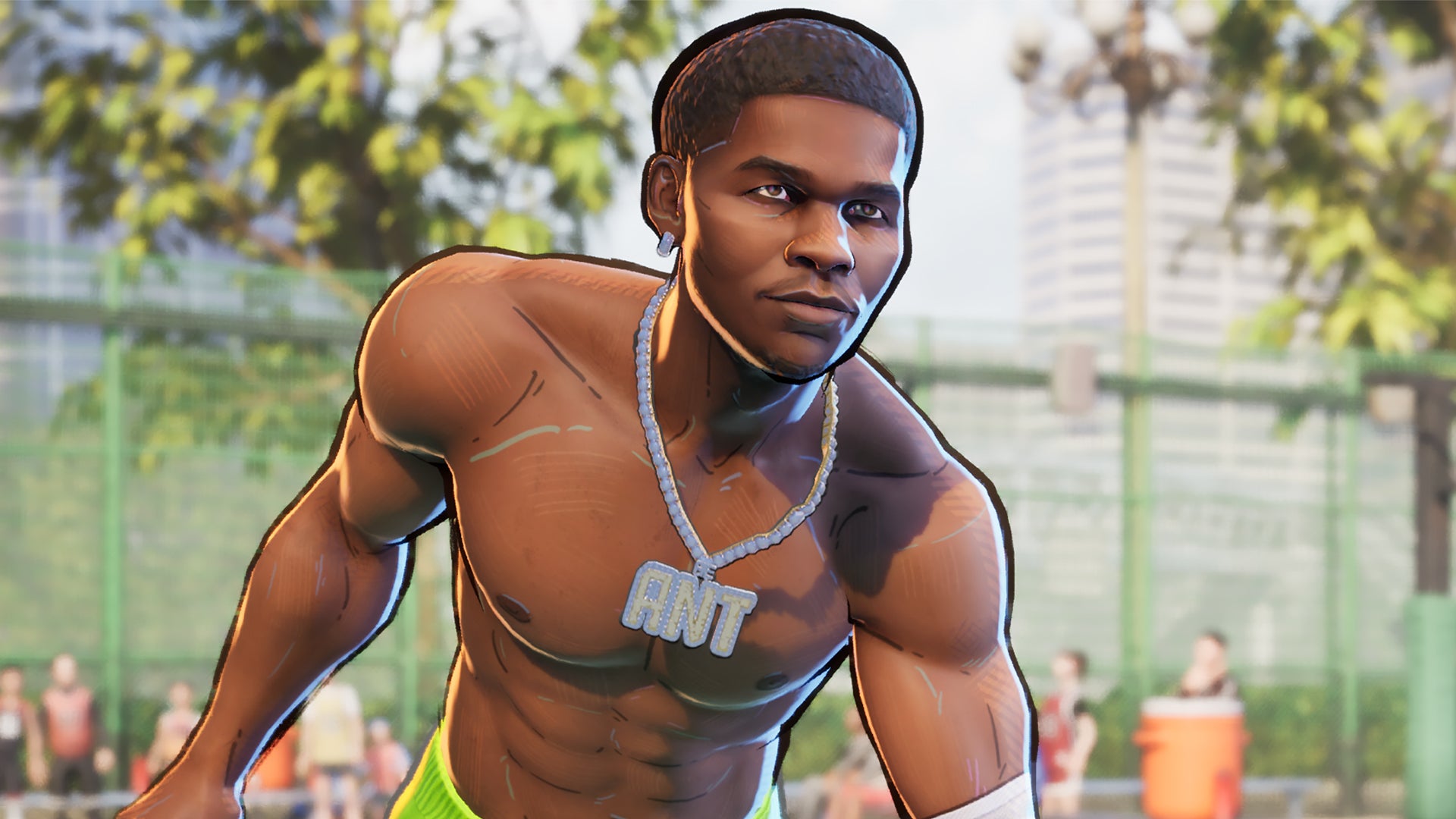
NBA The Run is a stylized game, as one would expect, meaning that it eschews accurate realism for a somewhat cartoony look that resembles Cel-shading. It’s colourful, pretty fast and features some exaggerated dribbles, ankle breakers and the like. The players all look true to form, but stylized nonetheless.
The audio is a mixed bag. While there are good sound effects, the likes of which you’d expect to find in an arcade leaning sports title, there’s also an announcer of sorts who can get kind of annoying. Apparently he’s a well known street ball legend and DJ named ‘Bobbito’ Garcia, and also known as Kool Bob Love and DJ Cucumber Slice. I’d never heard of him before.
Overall, NBA The Run is a decent arcade basketball game that can be pretty fun. It doesn’t reach the heights we were hoping it would, though, and feels lacking, both in terms of gameplay creativity and modes. It also gets repetitive quickly, has some inconsistencies and can feel like a grind. Hopefully the developers will add single player content down the road, because that’s a big void.
This review is based on the XBOX Series X version of the game, which we were provided.