

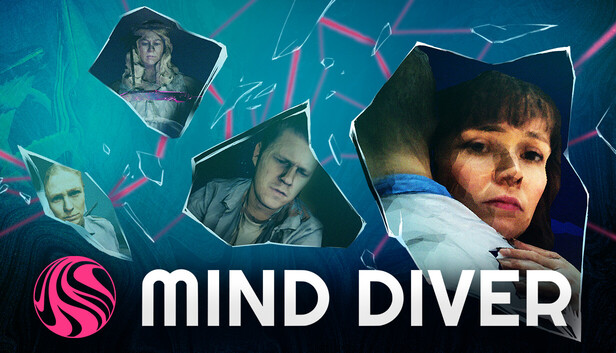
Memory is an interesting thing, given that it’s vital to our lives and relationships, but also cannot always be trusted. There’s a lot of science out there about it all, but this isn’t a science or medical journal, so we won’t get into that. Instead, let’s talk about a video game that deals with the subject.
Having begun as a student project, before being reworked into a full game, Mind Diver is now available on certain consoles. It’s a decently interesting, somewhat unique and strange form of puzzle game, which will appeal to a certain crowd. If you’re looking for something different, you may want to check it out.

We play as an unnamed Mind Diver, whose job it is to literally swim through a subject’s memories in order to help them remember things. This time around, we are called in to dive into a woman named Lina’s mind, in order to help her figure out where her on again/off again boyfriend, Sebastian, is. You see, he seems to have disappeared, and the odd thing is that this somewhat young woman’s memories are starting to disappear.
As you swim through Lina’s memories, with the help of advanced technology and the machine that powers it, you’ll venture into different regions of her mindscape. There, you’ll need to piece things together and solve object puzzles in order to complete and restore her memories. I’ll try to explain it as best I can.
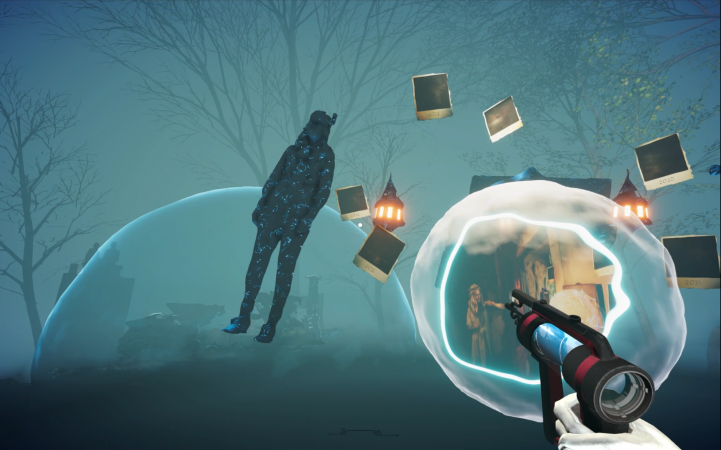
Each region has a main area, where something is happening, be it a party, a back alley or a back room of some building. There will be places to put items from her nearby memories, as well as dialogue to listen to from those involved in that event. You’ll then swim out to different contained scenes — and there’s usually a few per segment — in order to piece things together. This involves listening to dialogue, reading documents, finding items (or people) and then placing them in the right slots. Often, this requires grabbing an item from one scene and then swimming it over to another and putting it where it goes. This can be trial and error, and it’s kind of annoying when you get something wrong and then have to swim back to pick it back up again.
One part of the game features the time that Lina (a photojournalist from Slovakia) met Denmark born Sebastian at a protest. The main memory location is a back room, but you’ll swim out and explore the protest, them deciding to spend time together and what they did next. This will require listening to dialogue, matching the correct sign with the right protestor, finding a camera and more. I thought that the camera part would be easy, but it turns out that there are two different types, and I kept grabbing the wrong one.
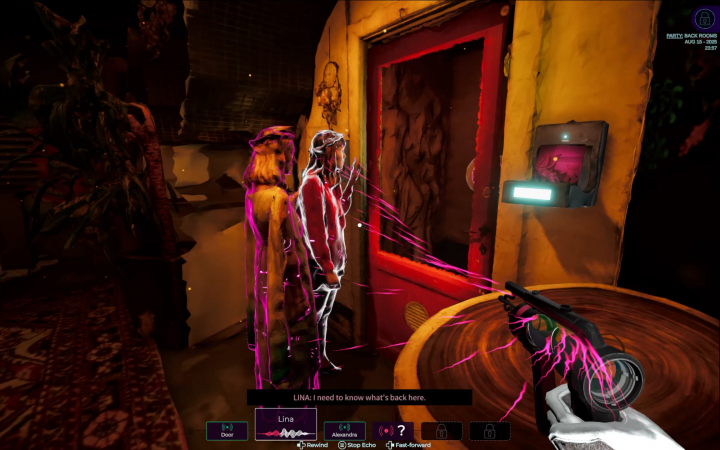
Mind Diver isn’t hard, per se; nor is it overly complex. However, it does boil down to trial and error at times, and the puzzles can be a tad obtuse. Then again, I’m not particularly good at puzzle games, and don’t play a lot of them. Plus, since there are multiple environments, and it’s not always clear what can be picked up and cannot be, things can become a bit tedious.
The story goes places I never expected it to, and is pretty interesting, albeit a bit out there. Then again, we are talking about a game where you essentially swim through someone’s memories. The premise is interesting, the idea is good and I respect what the developers were trying to do. I honestly respect this title more than I enjoyed playing it. The best thing about it is its deep and emotional story, which features some very tough subjects and handles them well, as opposed to its basic and slightly tedious gameplay.

Visually, Mind Diver is pretty unique. It’s presented from a first-person perspective, and the player has some sort of gun that can absorb things, people or animals from memory bubbles, and transport them from one area to another. Each memory is housed in a bubble, within a large area of water, which is occasionally accentuated by glowing squares, roots, giant character models and things like that.
The developers scanned actual actors, and used them to portray the major characters, while random people are often presented as silhouettes. These aren’t just straight, realistic, models though. Instead, they’ve been stylized in a way that is kind of retro.
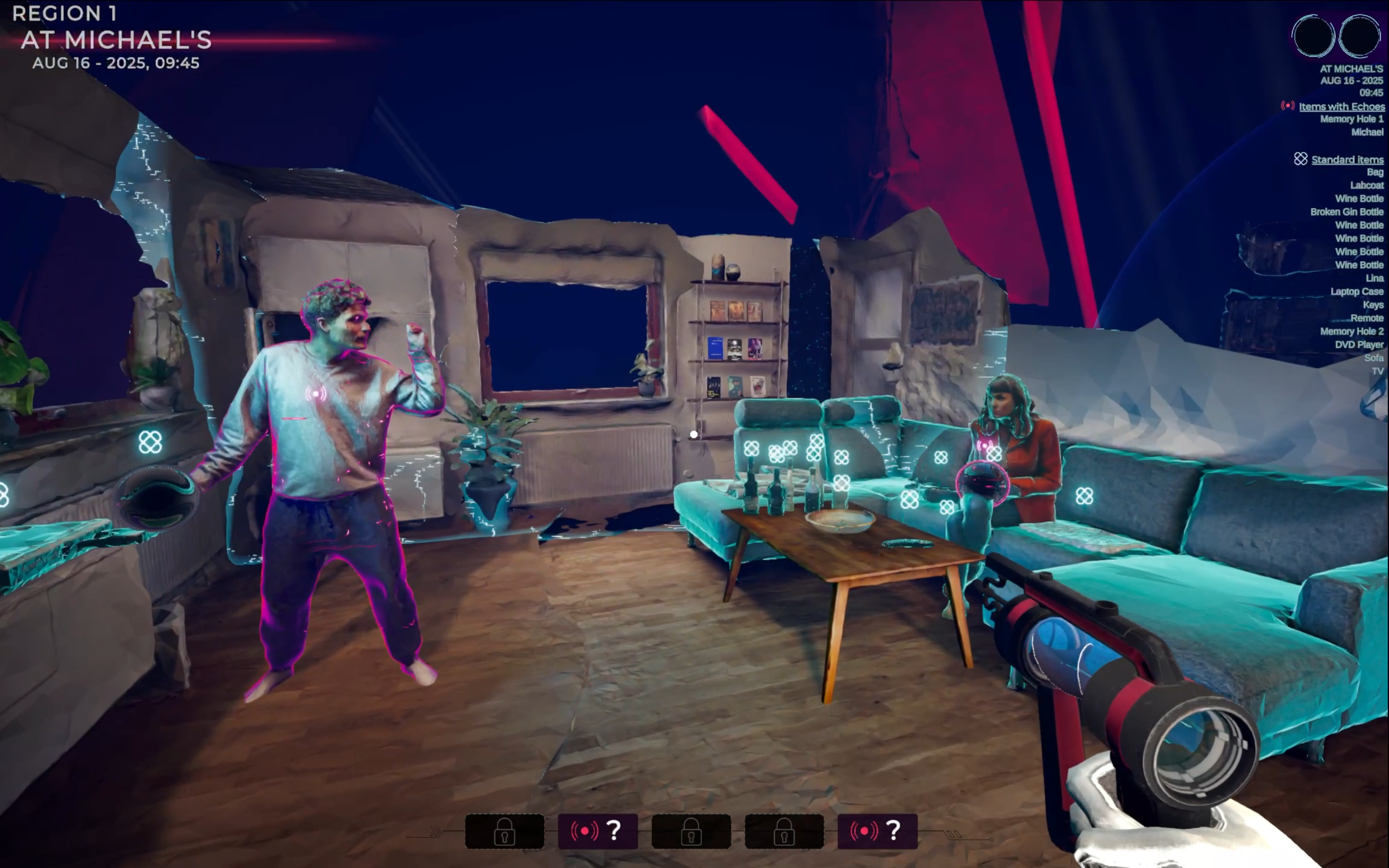
Combined, all of the above looks okay and does the job. Things do look kind of dated, and detail is lacking, but it looks fine. This is a small, and not overly long game, and its environments are small and contained.
There’s full voice acting to be found herein, and not just from the main two characters. Then again, I guess that was obvious when I mentioned audio files featuring dialogue from each scene. It’s good, and is joined by decent effects and music.
Mind Diver is an interesting concept, and an impressive student project, but it’s not the most enjoyable game to play. It tells an interesting story, but its puzzles and gameplay mechanics are basic and can be both tedious and obtuse. Overall, it’s just OK.
This review is based on the PlayStation 5 version of the game, which we were provided with.