

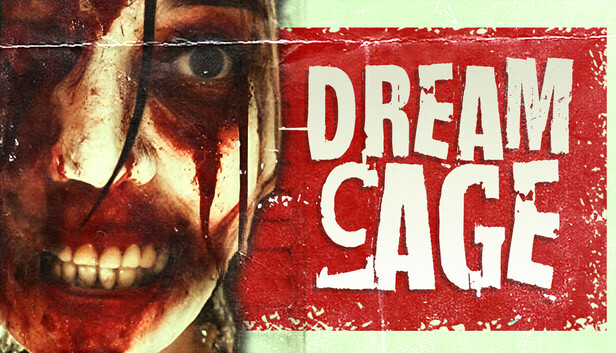
Independent horror games are plentiful, especially these days. As such, it takes a lot for one to stand out. A good premise is required, as well as smart scares, unsettling atmosphere and quality mechanics. Dream Cage, which was developed by just two people, got the first one right, so I hoped it would nail the rest. Unfortunately, that didn’t happen, and the result is a frustrating game that is as scary mechanically as it is otherwise.
Based on night terrors, which are an utterly horrible thing to hear about and surely unimaginable to experience, Dream Cage centres upon a man named Robert. The game is experienced through his eyes, as he deals with memory loss, nightmares, visions and — most importantly — night terrors.
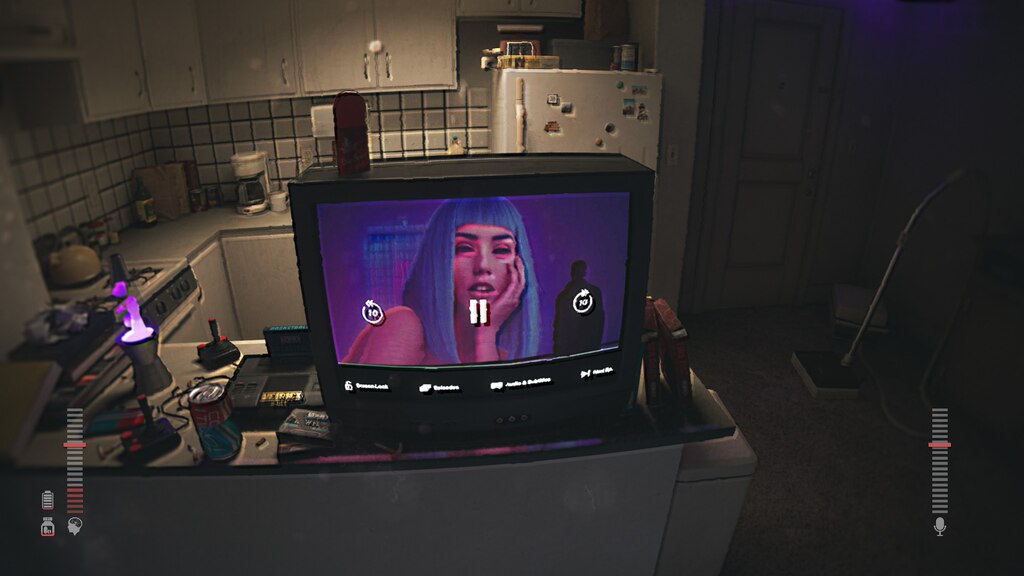
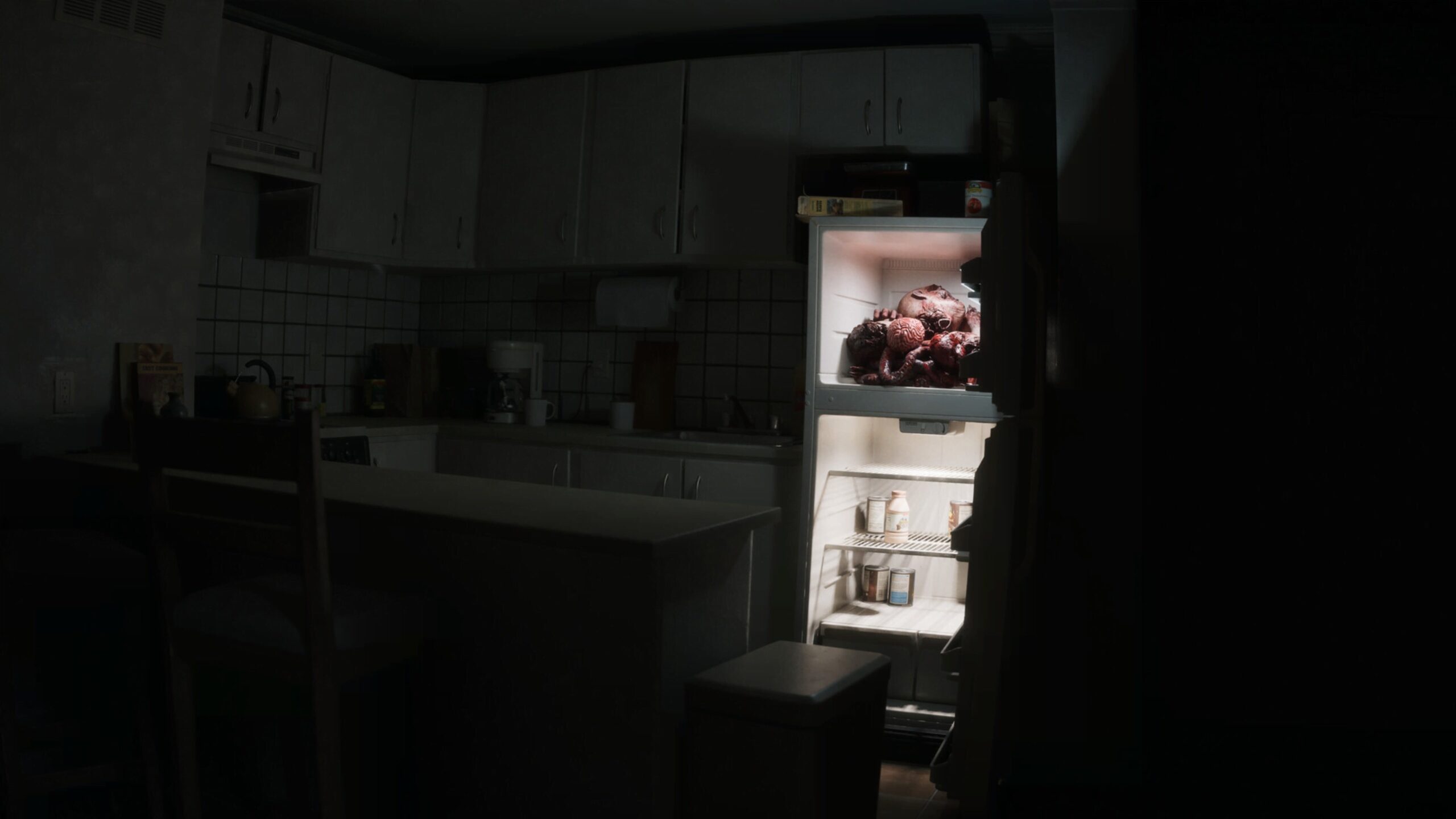
We first meet Robert in the 80s, during a time where he’s left alone most of each month because his mom works out of state. On this particular night, he’s playing Atari in his unkempt apartment, which consists of a big living room with a small kitchen attached, a small washroom, a tiny alcove for laundry and a bedroom. It’s a decent sized one bedroom apartment, but it’s said that his mom stays there once a month.
Loose journal pages suggest that Robert is having trouble with an older neighbour who doesn’t much like him, and may be phoning in fake noise complaints regarding his record player and his TV/Atari console. These can be found not only in this chapter, or on this particular night I should say, but during all five nights that this short experience takes place over. The journal entries help us piece together Robert’s life story, including relationship, work and mental wellbeing problems.
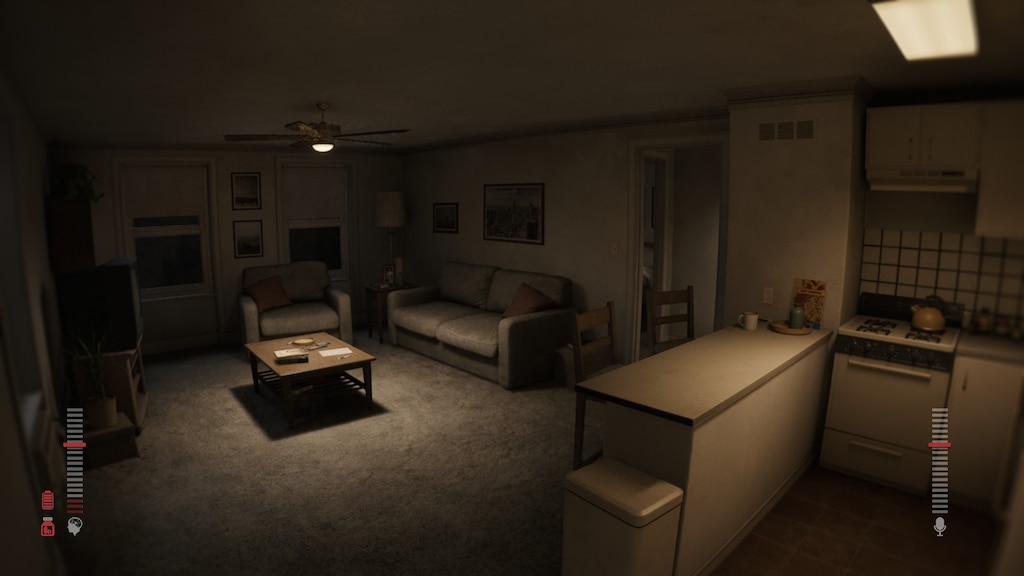
There’s little in the way of a menu, and there’s no introductory cutscene or tutorial outside of a ‘How to Play’ section in the barebones pause menu. It tells the player that they must search the apartment for a camcorder, find batteries to power it and use it to find anomalies that are not visible to the naked eye. All the while, Robert’s sanity/fear meter will increase, and apparitions will start to stalk him. Being touched by one means that the night must be started anew.
In order to lessen Robert’s fear and improve his sanity, one can find and take pills. Like batteries, these are often found in cupboards and laying out on top of desks or tables. The mechanic for taking these is quite slow, which made me wonder if the button I was pressing was even the correct one.
There are ten different anomalies to be found during each night, and Robert can only sleep when he’s found at least seven of them. After that, he experiences night terrors, during which gruesome deceased folks come into his bedroom and do disturbing things. The game says to stay silent during these segments, so I’m assuming one’s microphone factors into play. I didn’t think to set up a headset and use it, as I normally play single player games without one. Either way, I never failed any of these sections — I just looked around the room, watched the demons do their thing and then it progressed on to the next chapter.
Why do I keep saying chapter, and hinting that this game isn’t just set in the 80s? That’s because this isn’t a consecutive run of nights. The first one takes place when he’s a teen, the second one occurs during a time when he’s working from home, and then he keeps getting older over the course of the rest, while the furniture in the apartment changes too. At the end of the game, Robert is approximately fifty years old, and dealing with mental health and memory issues. I only saw the bad ending, and it didn’t clear things up much.
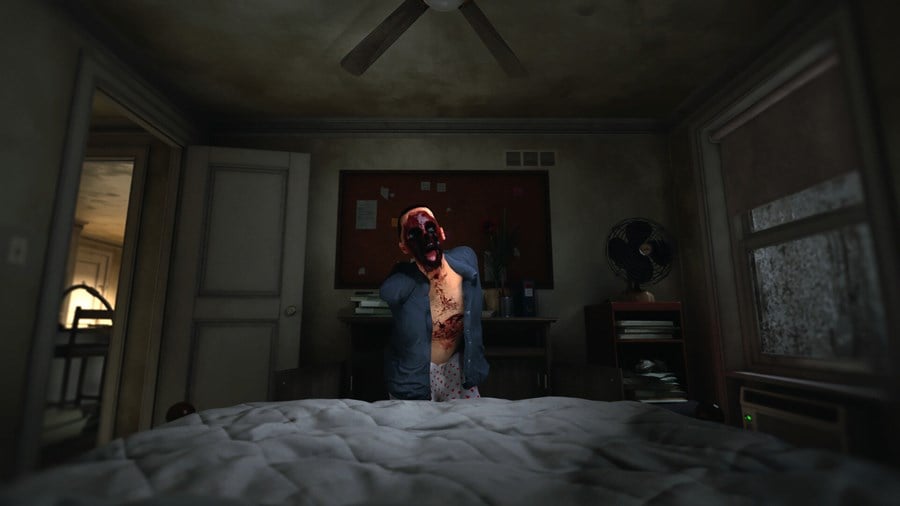
The core gameplay loop found in Dream Cage involves creeping through the apartment, finding batteries and pills, and trying to film as many of the anomalies as possible. All the while, you know that — once the sanity and fear meter gets to a certain level — ghastly creatures will start to walk around and look for you. Usually it’s just one, but one night had at least two.
The conceit and set-up are both pretty simple and straightforward, but the demons don’t always play by the rules. Sometimes they’ll just pop up and attack you. Other times, their detection skills will be better than normal. It can be really annoying to get five of the anomalies, then have something pop out and force a redo.
The main problem with Dream Cage is that it just isn’t fun to play. The idea behind it is good, but the execution is severely lacking. Playing through this game is intriguing, but frustrating, and I didn’t exactly enjoy my time with it. I wasn’t afraid so much as I was rushed and on edge, trying to find enough anomalies in order to get the nights over with. I died a lot, sometimes because I rushed, but other times because of the game’s design. Hell, if you put the camera down, you’ll have to find another battery in order to pick it back up, because using it once uses up an entire battery in this game.
Occasionally, the anomalies are obvious, like a TV or monitor left on, especially when the latter has hateful things written on it. Sometimes, they come in the form of gore, like entrails or something bloody. Other times, they’re random posters or small eyes drawn on the walls, which makes looking for them a crapshoot and a source of frustration. Early on, I kept trying to scan everything I could (by holding RT to use the camera and pressing the right stick in to scan every inch of the apartment). However, I eventually realized that — each time I’d scan something — my fear would increase. That would quicken the amount of time before the apparition appeared, and increase the need for pills.
It doesn’t help that, while the anomalies all stay the same during each attempt, the batteries and pill bottles change places when you die. The amounts made available to the player also never seemed consistent, and there were times where there’d be two batteries on top of each other or something like that.
I respect what the developers were going for, and appreciate what they tried to do. However, the core experience of Dream Cage involves too much frustrating needle-in-haystack searching, and the game can be unfair. It just isn’t very enjoyable.
In order to get the good ending, one must find all fifty anomalies. I wanted to do that, but felt lucky when I got to seven in each and could ‘sleep.’ I’m curious about what the good ending entails, but I don’t feel like dealing with all of the frustration involved in beating this game a second time; especially when I would need to find approximately fifteen more anomalies that I couldn’t the first time. I looked hard and thoroughly, too, or so I thought.
If the game were better, its story deeper and the whole thing more enticing, I maybe would have. It’s only an hour or two long. The frustration and clunky mechanics make me not want to though.
According to the developers, they spoke with people who actually deal with the real-life phenomenon known as sleep paralysis and sleep demons. I can’t say whether they nailed the experience because I’ve thankfully never dealt with it, but it does seem like they did a decent job of it at the very least. I do, however, wish that the nightmare sequences were more involved, because they don’t last long and there’s not a lot of interaction. Furthermore, this game was sold as being about sleep paralysis and sleep demons, but kind of baited and switched people by turning out to be a hidden item game with cumbersome and annoying mechanics.
On the presentation front, Dream Cage is serviceable. It’s the type of game that equates being scary with random loud noises, like knocks on the door that occur throughout each night, and other strange sounds. The predictable apparition movement and positioning, and a lack of true scares, makes it less than it could have been. That isn’t to say it isn’t scary to start, and that rushing to find the anomalies before you’re attacked isn’t unsettling. It’s just not what it could have been, or as effective as the trailer and premise suggested.
You’re stuck in one environment throughout the campaign, with that being this relatively small apartment. The layout never changes, but the way the rooms are set up does. For example, a desk is added and it features all of Robert’s work, and maybe his son’s DJing notes. The tiny room between the bedroom and the bathroom also changes, and only once features laundry machines. There are hints of a pet, but it’s never seen. At least these changes freshen things up slightly. Otherwise, this is a rather standard, forgettable and derivative looking first-person horror game.
Each night features approximately three different journal pages to pick up, but the achievement for doing so doesn’t always unlock until at least one is picked up a second time. That isn’t a huge deal. However, the text itself is so small that it’s quite hard to read, making it difficult to even get what story there is here.
The idea behind Dream Cage is better and more intriguing than the actual game itself. I appreciate and respect what the developers went for, wanted to do and all of that, but it just isn’t very fun to play. The story also isn’t deep enough to make the numerous gameplay issues easier to overlook, or make the frustration worthwhile. As a result, it’s hard to recommend this one.
This review is based on the XBOX Series X version of the game, which we were provided with.