

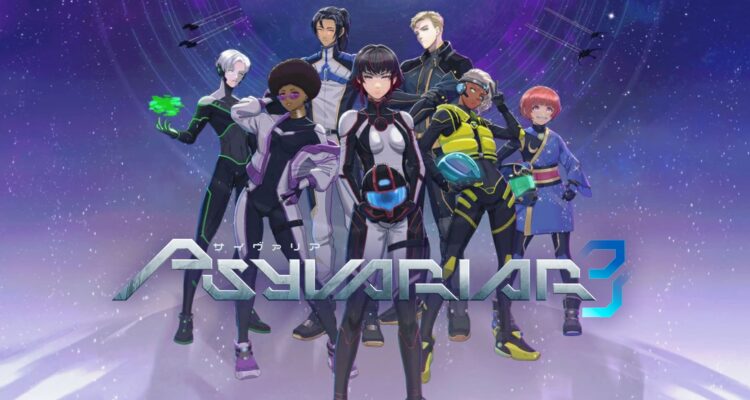
More than two decades ago, Success Corporation and TAITO teamed up to release a vertical shoot ‘em-up in the old arcade style. They called it Psyvariar: Medium Unit, and it released for the PlayStation 2, before spawning other titles on that same platform as well as others. Although I played a ton of games during that generation, both by renting and buying them, I don’t remember ever hearing about this game. Likely because it was a Japanese exclusive, and few made their way west! Then again, I hadn’t heard of any of the subsequent releases either.
That all changed the other week, when I got an email about a game called Psyvariar 3 coming out, and review codes being available. When I looked, I saw that I was given a Nintendo Switch 2 code, but had to return it because I don’t own that console. I ended up getting a PlayStation 5 code instead, and this review is based on that.
A Japanese, and anime styled, shoot ‘em up, Psyvariar 3 offers multiple game modes. There’s the base story campaign, one that doesn’t factor levels or difficulty settings in, a score attack mode where you do your best for two minutes, and a mission-based mode. The list also offers the opportunity to practice, or to tackle randomly generated levels if you wish, by entering a code in and seeing what you get.
The game begins by presenting players with a background and a wall of text that scrolls by above it. This provides backstory regarding the series’ incredibly convoluted plot, which deals with a struggling earth, a broken union of survivors and the creation of other bastions of humanity in space. Then, it goes on to talk about how human-like creatures were welcomed in, despite their strange abilities, how an AI network was rebuilt and then how things devolved into a new war. It was an overload of information that was a lot to take in at one time, and I struggled to keep track of it all. Surely, this could have been presented in a better and more helpful way, instead of paragraph after paragraph of convoluted information.
I don’t think the story is too important though, given the nature of this game. After all, it’s a vertical SHMUP, the likes of which you’d find in an old arcade.
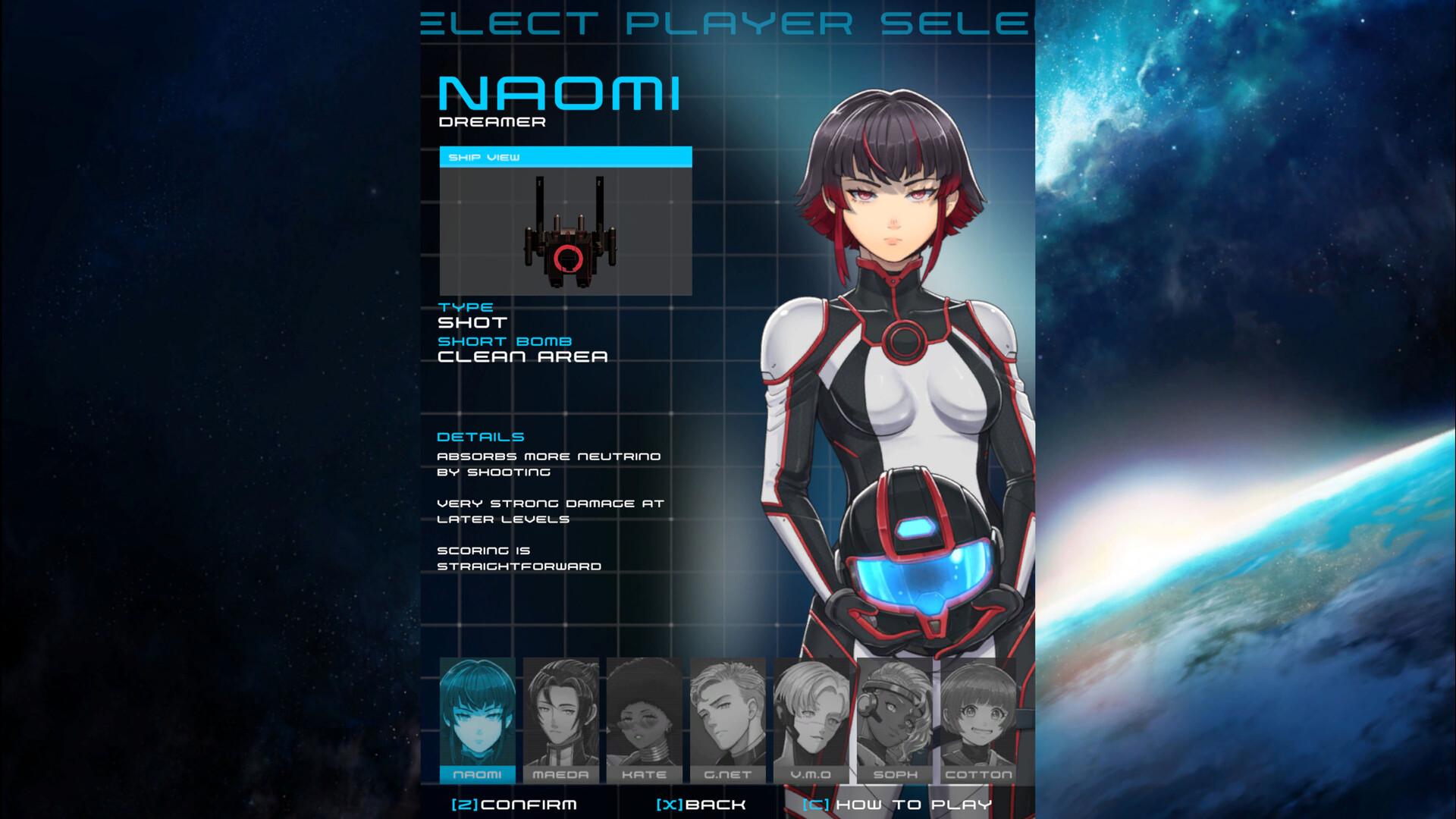
When you choose a mode, or begin the main ‘campaign,’ you’ll be tasked with picking from one of several different pilots, all of whom have an anime look and their own special abilities. There’s one that prefers close quarters attacks, meaning that her bullets don’t travel as far, one whose special ability is added shields for a limited time, and another who multiplies himself as his special. The others are different variations, and they all play differently. The goal, then, is to pick the pilot that fits your play style best.
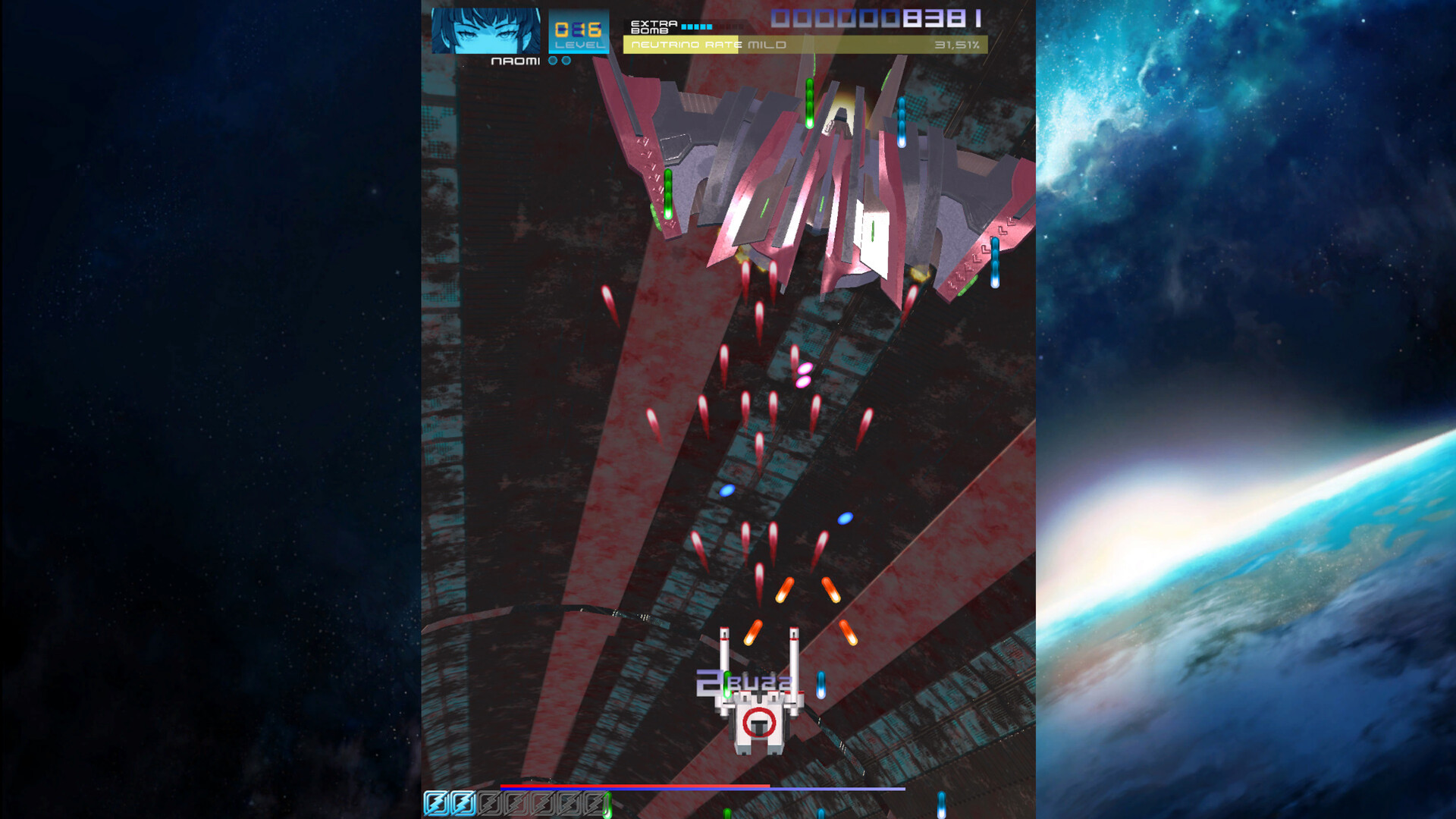
When you begin to play, you’ll spawn as a ship facing vertically, and will fly from south to north over different, generally space-themed, backgrounds. As you do this, you’ll shoot bullets and special attacks at enemies, which come in various forms, like different types of ships and boss crafts. The goal — as is usually the case with this tried, true and classic genre — is to avoid all of the many incoming projectiles as you attempt to attack and defeat each enemy. This is easier said than done, because the screen is absolutely littered with different coloured orbs and the like, each of which signifies an enemy bullet. It can be really hard to avoid all of them, making this game quite difficult and not very accessible overall.
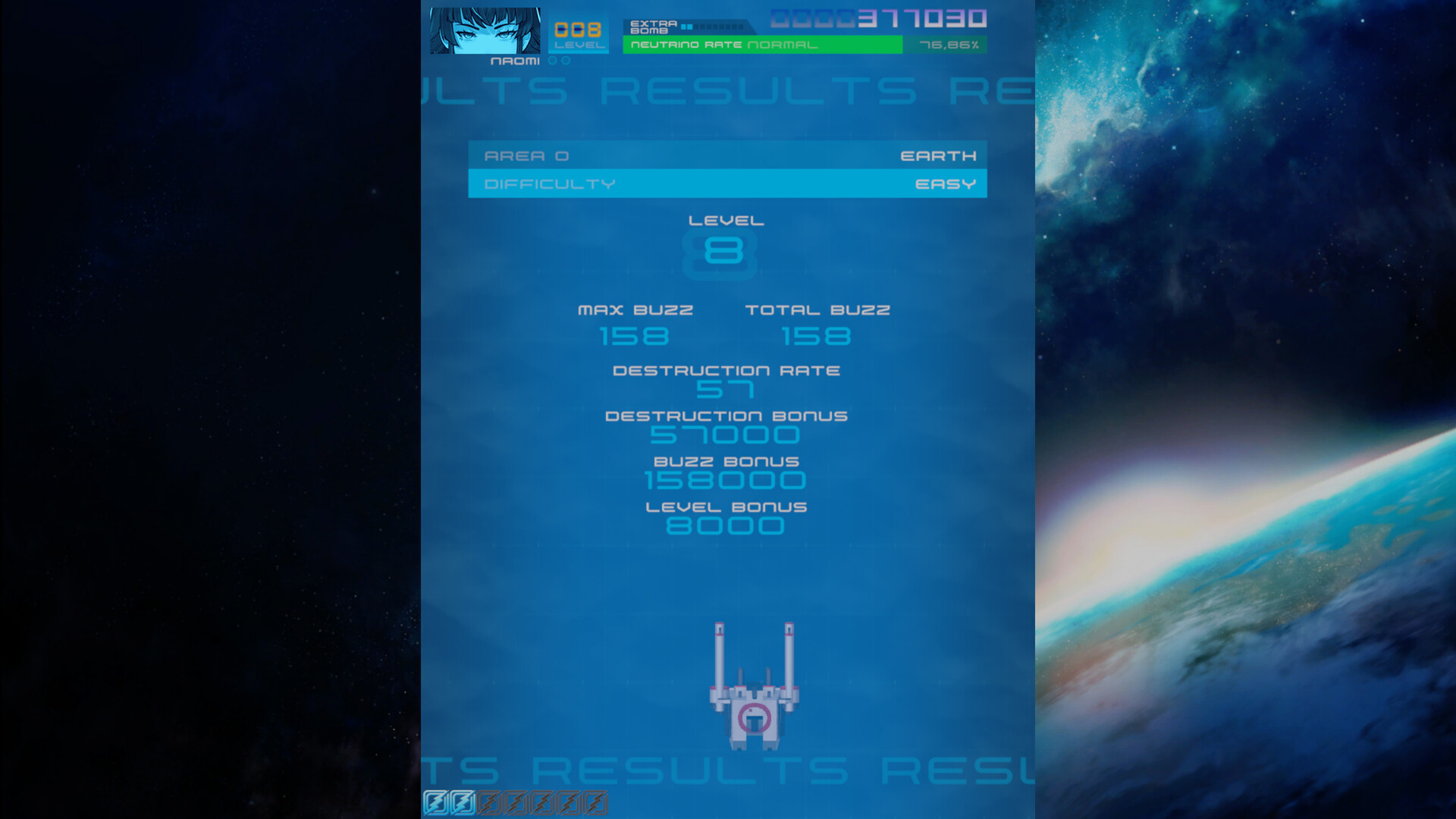
When I first started, I looked at the how to play screen and saw something about choosing a difficulty during the main mode. However, that option wasn’t presented to me the first time I tried it, but I died quickly. I later discovered that it doesn’t give you the opportunity to pick a difficulty until you complete the first stage, which doesn’t take too long. However, difficulties are based on the level of your ship.
You see, Psyvariar 3 features a system in which the player levels up as they play, and it happens very quickly. Every time an enemy bullet comes near you, it creates a buzz, and that seems to provide experience. It can also apparently make the player’s attack more powerful. I did notice that my ‘guns’ would improve as I played, but didn’t notice any real or easy to grasp rhyme or reason for this. I did level up surprisingly quickly, and probably could have picked normal because I was over level 20. However, I didn’t want to because, even on ‘easy’ this game was prohibitively difficult. That is, even though I played as the guy with the shields the most, and tried my best to get far. I only managed to make it several levels in before dying and exhausting my several continues. That was the best of my runs.
Over the years, I’ve played a number of these types of games, but I’ll never lie and say that they were a favourite, or something that I’ve ever been really good at. I’ve beat some, though. This is one that I haven’t been able to complete, however, as I died quickly in almost every mode I played. Sometimes, it was basically one hit and then it was game over. There are so many bullets and projectiles on screen, and it’s hard to avoid everything. The patterns are tough. I’d try to fly around them, and would roll out of the way, but it wasn’t enough to get far or do well.
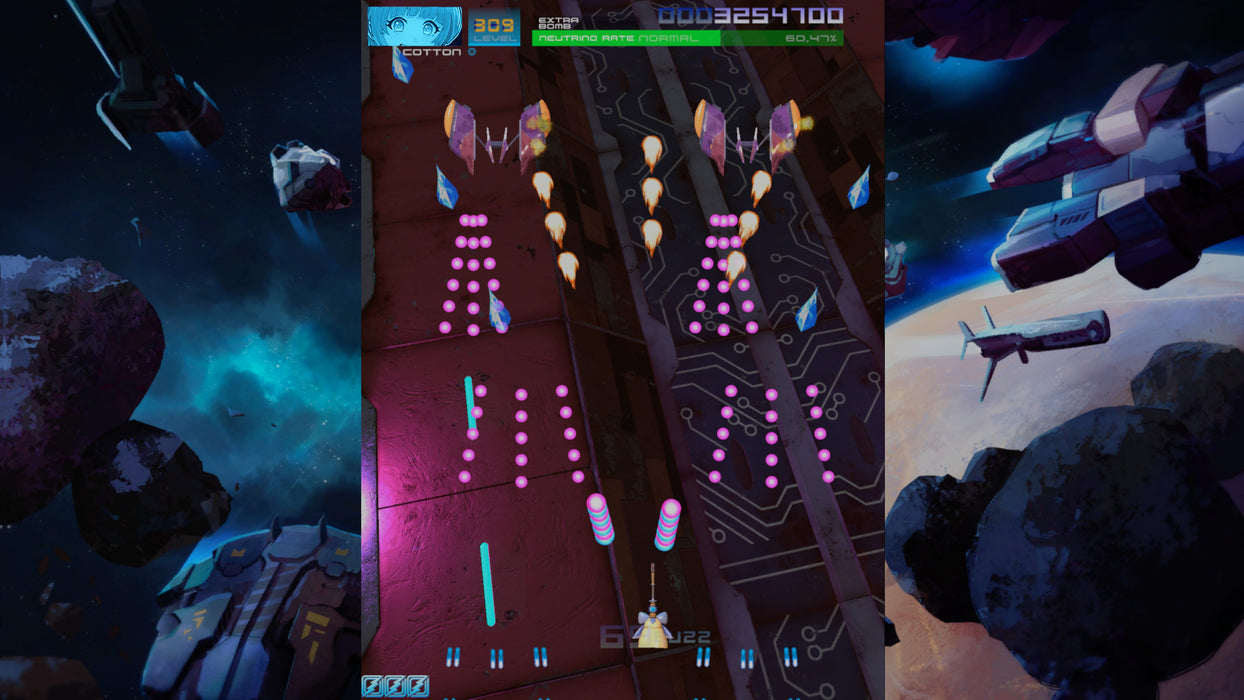
Presentation-wise, this is a kind of retro experience. The gameplay occurs in the middle of the TV screen, using a vertical slice. The rest of the screen is made up of borders. It all looks ok, with some 3D ships and lots happening on screen, but it feels and plays in dated fashion. Then again, it’s not like this type of gameplay needs a lot, and it was likely all retro inspired.
The music and audio are fine, but nothing really stood out to me during my time with this one.
Psyvariar 3 may have its fans, but I can’t say that I really enjoyed playing it. I went in with an open mind, and the hope that it would be accessible, but it was just too difficult and utterly chaotic. I respect what the developers were trying to do, but it wasn’t really for me.
This review is based on the PlayStation 5 version of the game, which we were provided with.